

Nord Stream 1 gas supply cut aimed at sowing uncertainty, Germany warns
Russia's Gazprom on Wednesday announced a further cut in the amount of gas it can pump through the Nord Stream 1 pipeline to Europe, a move Germany's economy minister said was aimed at sowing uncertainty and raising fuel prices.
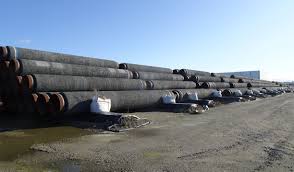
Russia's Gazprom on Wednesday announced a further cut in the amount of gas it can pump through the Nord Stream 1 pipeline to Europe, a move Germany's economy minister said was aimed at sowing uncertainty and raising fuel prices. The second supply capacity cut in as many days means that Nord Stream 1 will run at just 40% of its capacity. Gazprom initially blamed the cut on delays getting Siemens Energy equipment that is undergoing maintenance in Canada, which Germany's energy regulator said does not explain the cut.
Gazprom on Wednesday said it was further scaling down the use of Siemens-made equipment at the Portovaya compressor station near St Petersburg. "The Russian side's argument is simply a pretext. It is obviously a strategy to unsettle and drive up prices," Robert Habeck said in a statement following the latest cut, which will limit Nord Stream 1 flows to 67 million cubic metres per day.
Gazprom has not immediately replied to a request for comment. Flows via the Nord Stream 1 pipeline remained fairly stable at around 45 million kilowatt hours per hour up until 1500 GMT, data on the operator's website showed.
The development highlights the challenge faced by Germany, which depends on Russia for most of its natural gas, to find suitable alternatives to an energy supplier Europe's largest economy needs but no longer wants. It is also expected to make it much harder to fill Germany's gas storage facilities, which currently stand at 55.6% but need to be at 80% by October and 90% in November to get the country through the winter should Russia stop supplies.
"We can currently buy the necessary quantities from the market, albeit at higher prices," Habeck said, adding that while supply was secure, saving energy was the order of the hour. "Of course we will take measures on a state level if needed," he said a day after Germany decided to put Gazprom Germania, which was ditched by Gazprom in April, under long-term administration and back it with a 10 billion euro ($10.4 billion) loan. ($1 = 0.9606 euros) (Writing by Madeline Chambers and Christoph Steitz, editing by Thomas Escritt and Angus MacSwan)


 Google News