

Uganda Cancer Institute Delivers First VMAT Treatment for Child Tumour with IAEA Aid
“The IAEA’s training has not only expanded treatment options for children in East Africa, but also raised the standard of radiotherapy services in Uganda,” said Solomon Kibuddi, Head of the UCI’s Department of Radiation Oncology.
- Country:
- Uganda
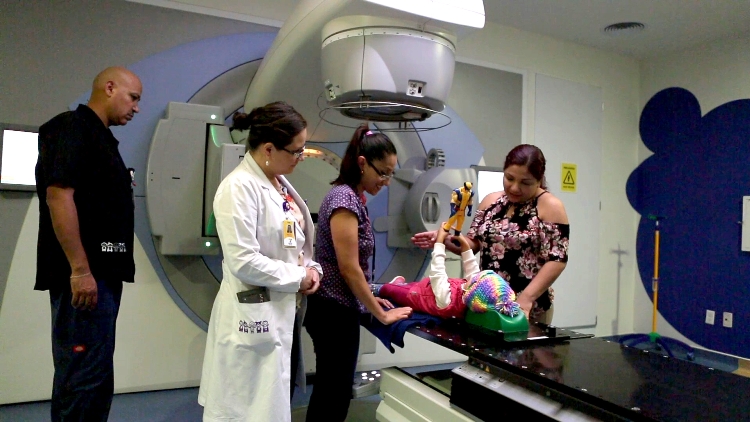
In a landmark achievement for cancer care in East Africa, the Uganda Cancer Institute (UCI) in Kampala has successfully treated an aggressive paediatric brain tumour using volumetric modulated arc therapy (VMAT) for the first time. This advanced radiotherapy technique was introduced with technical support and training provided by the International Atomic Energy Agency (IAEA).
VMAT represents a major leap forward in precision cancer therapy, shaping radiation doses to conform closely to the tumour while sparing nearby healthy tissue—particularly important when treating cancers of the brain and spinal cord in children. The milestone treatment builds on a national IAEA-supported project aimed at strengthening Uganda's radiotherapy services.
"The IAEA's training has not only expanded treatment options for children in East Africa, but also raised the standard of radiotherapy services in Uganda," said Solomon Kibuddi, Head of the UCI's Department of Radiation Oncology.
Addressing an Urgent Paediatric Cancer Burden
The case involved a 14-year-old girl with high-risk medulloblastoma, an aggressive childhood brain tumour that accounts for nearly one-fifth of paediatric brain cancers. These tumours grow quickly and can spread throughout the central nervous system, making early and effective treatment critical.
Alongside surgery and chemotherapy, radiotherapy is a core component of medulloblastoma treatment. The appropriate dose and distribution of radiation vary significantly depending on the child's age, tumour type, and extent of metastasis—highlighting the need for highly specialized techniques such as VMAT.
Globally, paediatric cancers remain a devastating challenge. According to the 2020 Lancet Oncology Commission, of the projected 13.7 million new childhood cancer cases between 2020 and 2050, more than 11 million children could die without expanded access to care, with 85 percent of deaths occurring in low- and middle-income countries.
Building Local Expertise Through IAEA Training
To help close this gap, the IAEA's Human Health and Technical Cooperation Programmes organized a national VMAT training course for UCI professionals. Around 35 radiation oncologists, medical physicists and radiation therapists received comprehensive instruction through hands-on sessions, case-based discussions, and clinical lectures.
"Since VMAT requires immense precision, participants learned each step of the paediatric radiotherapy workflow—from patient positioning and simulation to contouring, dose delivery and verification," explained Soha Salem, Radiation Oncologist at the IAEA and instructor for the course.
The training included specific sessions on managing paediatric medulloblastomas, including complex cases involving tumours that have already spread along the craniospinal axis.
A First for Uganda and a Milestone for Africa
Using the skills acquired from the IAEA training, UCI specialists successfully delivered VMAT craniospinal irradiation—the first time this form of treatment has ever been performed in Uganda—for the teenage patient's high-risk tumour.
"This is a milestone achievement for the Uganda Cancer Institute," Salem noted. "It is a clear demonstration of how training and capacity-building can translate directly into improved patient care."
Improving Childhood Cancer Outcomes
Cissy Bangidde, Principal Radiation Therapist at UCI, said the support has transformed their ability to treat complex paediatric cases:
"We are now able to treat craniospinal cases with VMAT, offering better target conformity and reduced radiation to organs at risk. This will significantly improve treatment outcomes for children."
The success of this first treatment highlights the impact of targeted international cooperation in strengthening cancer care capacity in low- and middle-income countries. With continued support, Uganda is now positioned to expand access to advanced radiotherapy, offering new hope for children facing life-threatening cancers.


 Google News