

Indian Railways Freight Growth Strengthens India’s $5 Trillion Economy Ambition
At the core of this transformation is Indian Railways, serving as the nation’s largest mobility and freight backbone—moving raw materials, finished goods and millions of citizens every day.
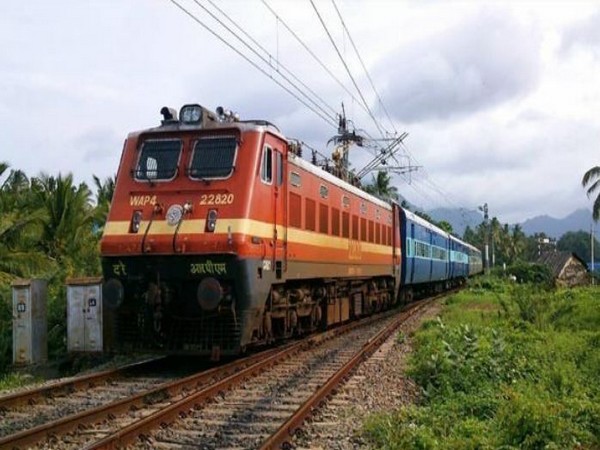
- Country:
- India
As India progresses steadily toward its $5 trillion economic milestone, the role of modern, integrated and efficient logistics has become indispensable. At the core of this transformation is Indian Railways, serving as the nation's largest mobility and freight backbone—moving raw materials, finished goods and millions of citizens every day.
Indian Railways currently carries over two crore passengers daily, connecting cities, rural hubs and industrial clusters, while simultaneously operating one of the fastest-growing freight networks in the world. This dual capability positions the Railways as a strategic enabler of economic growth, trade competitiveness, and inclusive development.
Record Freight Growth Signals Strong Economic Momentum
Data up to November 2025 shows sustained progress:
-
Total freight loading reached 1,070.8 million tonnes, up 3.3% year-on-year.
-
Remarkably, the Railways transported more goods in eight months of FY 2025–26 than during the entire FY 2013–14, when freight totaled 1,055 million tonnes.
In November alone, freight movement reached 135.7 million tonnes, marking a 4.2% increase compared to the previous year.
This growth reflects rising industrial activity and strong demand across multiple sectors. Key commodity categories contributing to the surge include:
-
Pig Iron & Finished Steel: +16%
-
Iron Ore: +9.7%
-
Fertilisers: +10.6%
-
Containers: +6.8%
-
Balance Other Goods: +23.6%
The diversification in cargo demonstrates resilience and a balanced shift from traditional coal-dependent freight to broader industrial and consumer-driven logistics.
Cost Efficiency and Sustainability: A Strategic Advantage
With logistics costs remaining a national priority, shifting more freight to rail offers tangible benefits. Rail transport is almost 50% cheaper than road freight, reducing costs for industries, MSMEs and exporters—fueling competitiveness in both domestic and global markets.
In addition to cost savings, rail transport significantly contributes to environmental commitments:
-
Reduced fuel consumption
-
Lower highway congestion
-
Substantial carbon emissions reduction
The modernization push—including Dedicated Freight Corridors, electrification, automated handling systems and upgraded terminals—aligns with India's Net Zero Carbon Emission roadmap, reinforcing rail as a greener alternative for heavy logistics.
Infrastructure and Digital Transformation Powering Growth
To sustain momentum, Indian Railways has accelerated capacity building and innovation, including:
-
Development of Dedicated Freight Corridors (DFCs)
-
Introduction of 20+ Gati Shakti Cargo Terminals
-
Expansion of end-to-end multimodal logistics hubs
-
Greater use of AI-based scheduling, digital freight booking and real-time tracking
These advancements are improving turnaround times, operational transparency and overall logistics efficiency—making Indian Railways a preferred partner for large industries and exporters.
A Strong Foundation for Viksit Bharat
The continued growth of freight performance signals strengthening supply chains and expanding industrial momentum—critical for India's journey toward becoming a global manufacturing and logistics powerhouse.
With a combination of affordability, scale, digital innovation and sustainability, Indian Railways is positioned not only as a transport utility but as a strategic catalyst for Viksit Bharat 2047—India's long-term vision for prosperity, global competitiveness and inclusive development.


 Google News