

SA Rebuts US Criticism as Lamola Defends G20 Leadership, Policies and Sovereignty
Rubio accused South Africa of adopting what he termed “radical” policies and emphasised that Washington would not tolerate such an approach.
- Country:
- South Africa
South Africa has issued a firm and comprehensive response to remarks by United States Secretary of State Marco Rubio, following his Substack newsletter in which he criticised Pretoria's leadership, the African National Congress (ANC)-led government, and South Africa's priorities during its 2025 G20 Presidency. Rubio accused South Africa of adopting what he termed "radical" policies and emphasised that Washington would not tolerate such an approach.
Rubio's Critique and Claims of a US-Led "New G20"
In his newsletter, Rubio attacked South Africa's emphasis on climate action, diversity and inclusion during the G20 summit. He also criticised the shift in protocol that saw global challenges — including the climate crisis — addressed at the very beginning of the Leaders' Summit. Despite difficult negotiations and the absence of the United States, South Africa succeeded in securing unanimous support for a G20 declaration aligned with its priorities.
The declaration committed major economies to:
-
Address global inequality
-
Reform international financial systems
-
Ease the debt burden on developing countries
-
Expand opportunities for Africa and the Global South
-
Accelerate renewable energy transitions
-
Strengthen multilateral cooperation for global peace and sustainable development
Instead of participating in these discussions, Rubio announced that the US would move forward with an alternative G20 format, declaring:
"America's G20 will propel us forward with innovation, entrepreneurship and perseverance… We're ready to lead the way in Miami."
The United States has already invited Poland to its 2026 G20 Summit in Miami — while excluding South Africa, a founding member of the original G20.
Lamola's Strong Diplomatic Response
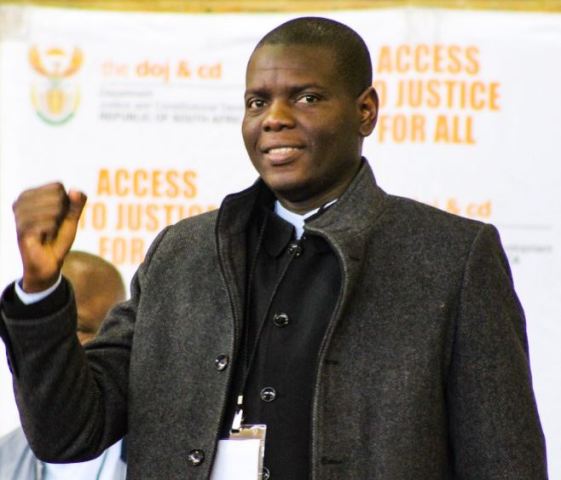
South Africa's Minister of International Relations and Cooperation, Ronald Lamola, issued an extensive statement defending the country's global leadership role. While congratulating the US on assuming the next G20 Presidency, Lamola said Rubio's comments required an honest and principled reply.
He stressed that South Africa did not undermine consensus within the G20, noting that the United States "chose not to attend" the meetings — making accusations of sabotage unfounded. Lamola further emphasised that as a founding member:
"South Africa has no unilateral right to be excluded from the G20."
SA's Philosophy of Global Cooperation and Ubuntu
Lamola highlighted that South Africa's G20 Presidency was guided by Ubuntu, inclusivity and equal partnership — especially for Africa and the Global South. He argued that this was not charity but a strategic necessity for long-term global stability and prosperity.
Delegates from around the world praised the warmth, hospitality and constructive atmosphere created by South Africa, contributing to what Lamola described as a successful and unifying summit.
Addressing US Criticism of Domestic Policies
Responding to Rubio's criticism of South Africa's internal policies, Lamola reaffirmed that the nation's transformation agenda is grounded in its Constitution and its struggle against apartheid. Quoting Nelson Mandela, he reiterated the need to dismantle the "excessive concentration of power in a few white hands"—a principle underpinning land reform and economic redress.
Lamola rejected claims that the government threatens Afrikaner farmers or promotes racial division. He pointed to:
-
Continued growth in the agricultural sector
-
Rising agricultural exports
-
Investor confidence maintained through a just, lawful approach to land reform
"No country with land grabs and invasion would reap such success," he wrote.
South Africa's Progress Since 1994
While acknowledging past governance failures such as State Capture, Lamola argued that describing South Africa's economy as a failure was misleading. He highlighted:
-
Expanded access to electricity and clean water
-
Improvements in human development indicators
-
Strengthened democratic institutions
-
Ongoing reforms to tackle corruption and revive economic growth
These achievements, he said, reflect a nation working steadily to overcome historical inequality while engaging constructively with global partners.
Call for Respectful Global Engagement
Lamola ended by urging the United States to adopt a respectful approach in international diplomacy:
"The world is growing weary of double standards… We do not seek your approval for our path, but we do seek, and will always extend, a hand of respectful partnership."
South Africa's response underscores its determination to defend its sovereignty, uphold multilateral cooperation and advance the interests of Africa and the Global South on the global stage.


 Google News