

UN Slams Myanmar’s Sham Elections as Violence Peaks Five Years After Coup
UN High Commissioner for Human Rights Volker Türk said the military-orchestrated vote represented a stark inversion of democratic practice, where participation itself became an act of survival rather than choice.
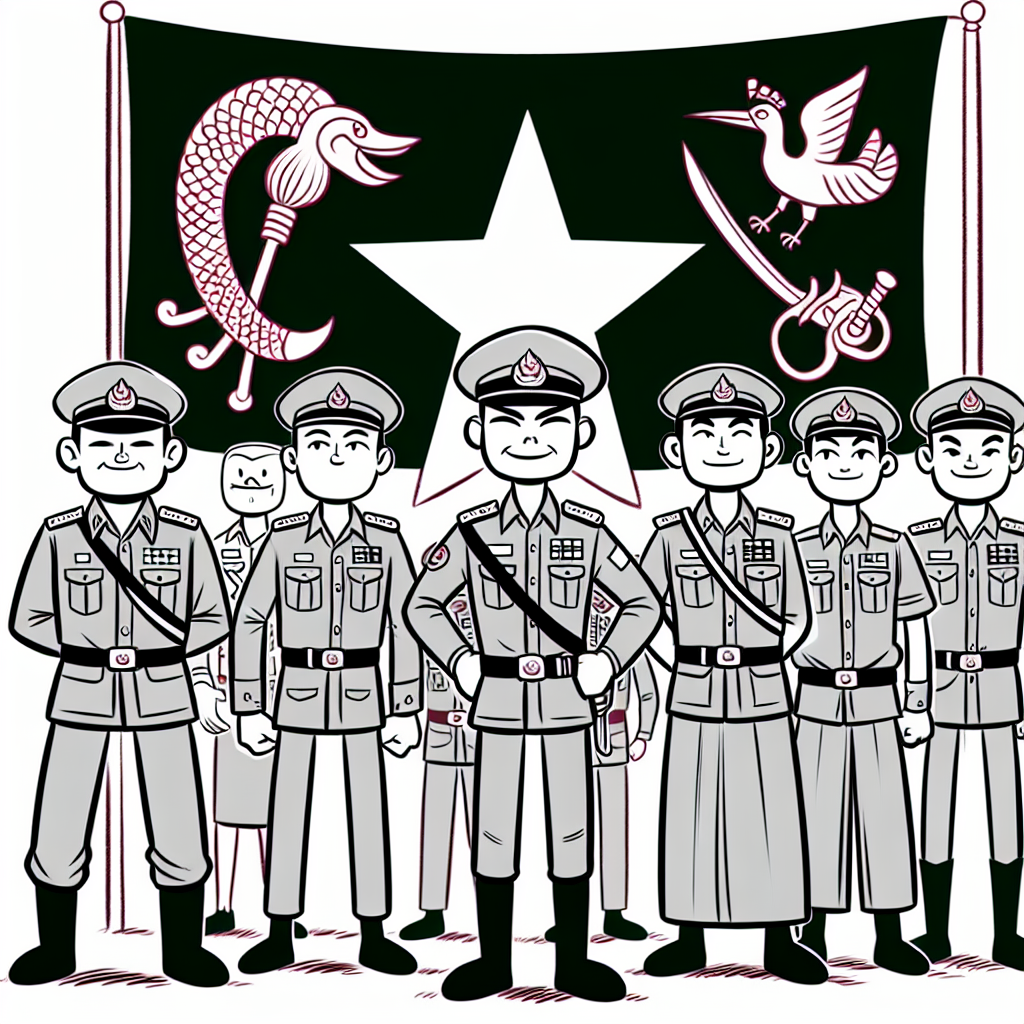
As Myanmar marks five years since the military coup, the United Nations Human Rights Office has delivered one of its most forceful indictments yet of the junta's attempt to legitimize its rule through tightly controlled elections—warning that the process not only failed democratic standards but actively intensified violence, fear and national fragmentation.
UN High Commissioner for Human Rights Volker Türk said the military-orchestrated vote represented a stark inversion of democratic practice, where participation itself became an act of survival rather than choice.
"After the military grabbed power from the democratically elected government, Myanmar lost half a decade of peace and development," Türk said, adding that the recent election "served only to deepen the despair of the people."
A Vote Defined by Fear, Exclusion and Force
According to UN-verified information, elections were held in just 263 of Myanmar's 330 townships—largely confined to urban areas under firm military control. Conflict-affected regions, displaced populations, and minorities, including the Rohingya, were systematically excluded.
During the voting period between December 2025 and January 2026, credible sources documented 408 military aerial attacks, killing at least 170 civilians. One airstrike alone, in Kachin State's Bhamo Township on 22 January, reportedly killed up to 50 civilians in a populated area with no confirmed combatant presence.
Opposition parties bore the brunt of repression. The National League for Democracy (NLD), which won Myanmar's last credible election in 2020, was banned outright, alongside dozens of other parties. Many political leaders remain detained.
Innovation in Repression
The UN highlighted how the junta deployed a newly imposed "election protection law" as a tool of mass repression—marking a grim innovation in authoritarian control. Under this framework, 404 people were arrested for acts as minor as online expression, with penalties reaching extremes, including a 49-year prison sentence for anti-election posts.
Voter coercion was reported nationwide. In Sagaing Region, more than 100 villagers were detained and forced to cast advance ballots. Elsewhere, citizens reported voting under threats of forced conscription, food deprivation, or loss of essential documents and education access.
"This was not an election—it was a coercive exercise designed to normalize rule by violence," Türk said.
Humanitarian Collapse Continues
Beyond political repression, the UN warned of accelerating economic and humanitarian collapse under military rule. Nearly one in four people now face acute food insecurity, and over one-third of the population requires urgent humanitarian assistance—figures expected to worsen without decisive international intervention.
Türk renewed calls for the immediate release of all arbitrarily detained individuals, including Aung San Suu Kyi and President Win Myint, whose whereabouts and condition remain unknown.
Call to Action: Act Now, Not Later
The UN Human Rights Chief urged governments, regional actors, media organizations and civil society to treat this moment as a turning point.
"Now is the time to find new pathways to restoring democracy and respect for all human rights, as demanded by the Myanmar people for half a decade," Türk said.
For journalists, policymakers, and early adopters of accountability-driven diplomacy, this is a critical moment to amplify verified evidence, reassess engagement strategies with the junta, and support international mechanisms aimed at ending violence and restoring civilian rule.
Silence and delay, the UN warns, will only entrench repression further.
ALSO READ
-
UN Expert Urges Malaysia to Halt Myanmar Returns as Refugees Face War and Violence
-
Malaysia’s Return of 1,476 People to Myanmar Raises UNHCR Fears Over Their Safety
-
Myanmar Market Airstrikes Kill at Least 50 as UN Urges Malaysia to Halt Deportations
-
UN Lists 214 Companies Linked to Israeli Settlements, Urges Action on Human Rights
-
Ethiopia Fighting Hits Schools and Cuts Lifelines as UN Warns Against Return to War


 Google News