

Buti Manamela Calls for Deeper Gender Reform in African Higher Education
Manamela pointed to South Africa as an example of both progress and persistent inequality.
- Country:
- South Africa
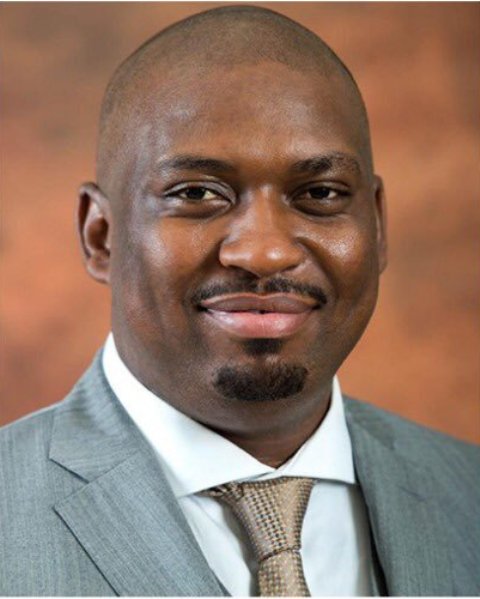
Higher Education and Training Minister Buti Manamela has urged African universities to move beyond surface-level gender parity and confront the deeper structural inequalities that continue to limit women's power, leadership, and long-term opportunities within the higher education system.
Delivering a keynote address at the 3rd Edition of the Times Higher Education (THE) Africa Universities Summit, Manamela warned that while significant gains have been made in expanding access for women, these advances have not translated into equal representation in decision-making, academic leadership, or economic outcomes.
Beyond Access: Redefining Gender Equality in Higher Education
Speaking under the summit theme, "Powering Africa's future through talent development, innovation and inclusion," Manamela positioned gender equality as a central issue shaping the continent's future—not merely an institutional metric or public relations concern.
"There is no neutral education system," he said, invoking Brazilian educator Paulo Freire. "Education either reproduces the world as it is or helps us transform it."
He stressed that debates around equity, diversity, and inclusion must focus on who accesses knowledge, who succeeds, who leads, and who is left behind, arguing that universities play a decisive role in shaping broader societal outcomes.
South Africa: A Success Story with Structural Contradictions
Manamela pointed to South Africa as an example of both progress and persistent inequality.
In 2023, women accounted for:
-
62.7% of total university enrolments
-
65.4% of all graduates
"These figures reflect decades of struggle, policy reform, and social change," he said, highlighting the role of democracy, public investment, and shifting societal norms in expanding access.
However, he cautioned that focusing solely on enrolment and graduation rates risks masking deeper inequalities.
"If we stop there, we tell the wrong story," he warned.
The Leadership Gap: Women Underrepresented at the Top
Despite dominating student populations, women remain significantly underrepresented in senior academic and leadership roles.
Among professors in South African universities:
-
1,129 are women
-
2,216 are men
This means women occupy roughly one-third of professorial positions, revealing a persistent leadership gap across the sector.
Manamela described this as a systemic contradiction—where women succeed academically but face barriers in transitioning into positions of authority, influence, and decision-making.
Inequality Across the Academic Pipeline
The Minister emphasized that gender transformation must be measured across the entire academic and professional pipeline, including:
-
Access and enrolment
-
Retention and progression
-
Graduation outcomes
-
Employment and career advancement
-
Leadership and institutional power
He noted that similar patterns are visible in Technical and Vocational Education and Training (TVET) colleges, where women form the majority of overall enrolments but remain underrepresented in traditionally male-dominated fields such as engineering and technical trades.
This imbalance, he said, reflects broader societal norms that continue to shape career pathways and limit opportunities.
Gains in STEM Not Translating into Equality
Challenging outdated assumptions, Manamela highlighted that women in South Africa are increasingly entering Science, Engineering and Technology (SET) fields.
However, participation alone has not resulted in equal outcomes.
Women in these fields still face disparities in:
-
Career progression
-
Research leadership roles
-
Income and earnings potential
This disconnect underscores the need for policies that go beyond access and address systemic barriers within institutions and labour markets.
NSFAS Driving Gender Transformation
The Minister also pointed to the National Student Financial Aid Scheme (NSFAS) as a key driver of gender inclusion.
Women currently:
-
Make up over two-thirds of NSFAS beneficiaries
-
Receive the majority of student financial aid funding
This highlights the critical role of targeted funding in expanding access and supporting participation among historically disadvantaged groups.
A Call for Systemic, Data-Driven Reform
Manamela called on higher education leaders to adopt a more comprehensive and evidence-based approach to gender equality—one that moves beyond headline statistics to interrogate power dynamics within institutions.
He urged universities to:
-
Track gender disparities across all levels of the system
-
Address barriers to leadership and career advancement
-
Reform institutional cultures and practices
-
Align education outcomes with labour market opportunities
Higher Education as a Mirror of Society
The Minister stressed that inequalities within universities are deeply connected to broader social and economic conditions.
"What happens in higher education is not only the achievement of universities—it reflects households, communities, social movements, and the democratic order," he said.
He warned that without addressing these interconnected dynamics, progress in education will remain uneven and incomplete.
Toward Real Gender Equality
Closing his address, Manamela reiterated that true gender equality requires transforming both institutions and the societies they serve.
The challenge, he said, is not simply to increase numbers, but to ensure equity in power, opportunity, and outcomes.
His remarks signal a shift in the continental conversation—from celebrating access to confronting structural inequality—at a time when African universities are being called upon to play a central role in driving inclusive development.


 Google News