

BRICS Youth Urged to Lead Global AI Governance as Chikunga Warns of 'Digital Inequality Divide'
Positioning BRICS as a counterweight to legacy global systems, Chikunga highlighted the bloc’s expanding influence.
- Country:
- South Africa
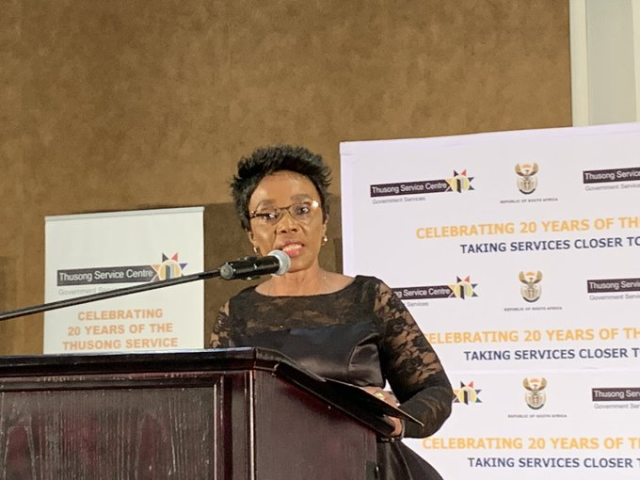
In a powerful call to action that places young innovators at the centre of a rapidly shifting global order, Minister of Women, Youth and Persons with Disabilities Sindisiwe Chikunga has challenged BRICS youth to take the lead in shaping global artificial intelligence (AI) governance—warning that failure to act could deepen inequality and entrench digital exclusion.
Delivering the keynote address at the 4th BRICS Youth Innovation Summit 2026, currently underway at the Tshwane University of Technology, Chikunga framed AI as one of the most decisive forces of the 21st century—one that will either advance shared prosperity or reinforce existing global power imbalances.
Held under the theme "Youth-Led Innovation for Sustainable Development", the summit has brought together emerging entrepreneurs, policymakers, investors, and innovators from BRICS+ nations and across the Global South, positioning itself as a critical platform for shaping future economic and technological trajectories.
AI Governance: A Defining Global Battleground
Chikunga's address underscored a central concern: that artificial intelligence is not neutral, and without inclusive governance frameworks, it risks becoming a tool of exclusion rather than empowerment.
"AI must work for people and their wellbeing—not the other way around," she said, urging young leaders to interrogate the foundations of digital systems.
She called on youth to confront key structural questions shaping the AI economy: Who owns the data? Who profits from algorithms? And who bears the cost when systems fail?
"Innovation in AI without democratic accountability is not progress—it is a new form of enclosure," she warned, drawing parallels between modern data extraction and historical patterns of economic exploitation.
Her remarks come amid growing global debates on AI regulation, data sovereignty, and ethical technology—issues that are increasingly shaping international policy agendas from the European Union to emerging economies.
BRICS: A Rising Force in Global Governance
Positioning BRICS as a counterweight to legacy global systems, Chikunga highlighted the bloc's expanding influence. Today, BRICS countries represent more than 45% of the world's population and over one-third of global GDP—making it one of the most significant geopolitical and economic alliances of the modern era.
"The architecture of global governance must reflect the world as it is—not as it was in 1945," she said, pointing to the need for more inclusive and representative decision-making structures.
Crucially, BRICS nations are home to the largest concentration of young people globally, giving them a demographic advantage in shaping future labour markets, innovation ecosystems, and consumption patterns.
With median ages as low as 19 in Ethiopia and under 30 in countries like India and South Africa, the bloc's youth population is expected to drive global economic growth over the coming decades.
Youth at the Centre of a Multipolar Future
Chikunga emphasised that young people are not merely beneficiaries of development—but active agents of change in building a more equitable global system.
She reminded delegates that BRICS leaders had already recognised youth as a cornerstone of sustainable development during the 15th BRICS Summit in 2023, where commitments were made to elevate youth leadership across sectors.
"The summit must be a space where young people hold governments accountable—to ensure that commitments made in their name translate into lived realities," she said.
A World of Interconnected Crises
In a stark assessment of the global landscape, Chikunga warned that today's challenges—from economic inequality and climate change to technological disruption—are deeply interconnected and systemic.
She argued that the post-World War II economic model, which promised shared prosperity through global trade and productivity gains, is no longer delivering equitable outcomes.
"That bargain has collapsed," she said, describing a world where inequality is widening, democratic institutions are under pressure, and technological advances are outpacing governance frameworks.
This context, she noted, places an even greater responsibility on youth to innovate not just technologically—but socially and economically.
Four Pillars for Youth-Led Transformation
To guide this transformation, Chikunga outlined a four-pillar framework for BRICS youth:
-
Defending sovereignty through innovation: Building indigenous technological capabilities and protecting data from external exploitation.
-
Reimagining economic models: Developing new frameworks grounded in industrial development, productive capacity, and inclusive growth.
-
Critically engaging with AI: Embracing innovation while questioning its societal impacts and risks.
-
Strengthening people-to-people ties: Expanding cultural, academic, and intellectual exchange as the foundation of long-term cooperation.
She stressed that the strength of BRICS will ultimately depend not just on trade or finance, but on the depth of relationships between its people.
"People-to-people relations are the infrastructure of lasting solidarity," she said.
Innovation with Accountability
The summit, now in its fourth year, has emerged as a key platform for fostering collaboration across the Global South, connecting young innovators with investors and policy leaders.
Chikunga commended organisers for sustaining the initiative, describing it as vital to building "a more just, humane and sustainable world."
However, she cautioned that innovation must be matched with accountability—particularly in emerging technologies where governance frameworks remain underdeveloped.
A Call to Action for a New Generation
Closing her address, the Minister delivered a message of urgency and empowerment, urging young people to take ownership of shaping the future.
"The world you inherit is not the world that was promised," she said. "But you are not inheriting it as passive recipients—you are here because you have chosen to act."
As artificial intelligence reshapes industries, economies, and societies, the role of youth—particularly in emerging economies—will be critical in determining whether this transformation leads to greater equity or deeper division.
With BRICS positioning itself as a key player in redefining global governance, the summit signals a growing recognition that the future of technology—and the rules that govern it—may increasingly be shaped beyond traditional Western centres of power.


 Google News