

Gauteng Launches Smart City Dashboard to Boost Service Delivery
The Gauteng government has increasingly embraced digital transformation technologies to modernise urban management systems and improve operational efficiency.
- Country:
- South Africa
The Gauteng Provincial Government (GPG) has launched a real-time digital monitoring platform called the Gauteng Smart City Performance Monitor, a major step towards strengthening municipal accountability, improving governance, and accelerating service delivery across South Africa's economic hub.
The advanced dashboard system will monitor the performance of all 11 municipalities in Gauteng Province by tracking key indicators related to governance, financial management, infrastructure delivery, climate resilience, disaster preparedness, and municipal administration. The initiative forms part of Gauteng's broader strategy to build technologically enabled, data-driven, and citizen-responsive municipalities under its long-term smart city development vision.
Provincial authorities said the digital platform is designed not only to improve government oversight but also to enhance public transparency by allowing residents to access municipal performance data in real time. Officials believe this will strengthen accountability, encourage community participation, and improve public trust in local governance systems.
According to the Gauteng Department of Cooperative Governance and Traditional Affairs (COGTA), the Smart City Performance Monitor is a central component of the Local Government Turnaround Strategy (LGTS), adopted in October 2024 to address long-standing service delivery challenges and governance inefficiencies affecting municipalities across the province.
The department stated that the strategy serves as a coordinated framework aimed at resolving persistent municipal bottlenecks while simultaneously advancing the province's ambition of building resilient, digitally integrated, and future-ready cities.
The Gauteng government has increasingly embraced digital transformation technologies to modernise urban management systems and improve operational efficiency. The broader smart governance ecosystem includes integrated CCTV surveillance networks, the LIMIT land invasion monitoring system, and smart water management dashboards aimed at improving infrastructure protection, public safety, and resource management.
Officials explained that the use of real-time digital monitoring tools is expected to strengthen intergovernmental coordination and enable faster responses to emerging service delivery issues. The system is also intended to support evidence-based policymaking and improve the efficiency of municipal planning and resource allocation.
The Gauteng government reported several early gains achieved under the Local Government Turnaround Strategy over the past year.
One of the most notable improvements has been in municipal audit outcomes. Resolved audit findings increased significantly from 35 percent during the third quarter of the 2023/24 financial year to 55 percent during the same period in 2024/25. At the same time, non-compliance findings declined from 35 percent to 27 percent, while two municipalities successfully maintained clean audits.
The province also reported progress in strengthening municipal staffing and institutional capacity. The filling of senior management positions improved from 70 percent in March 2025 to 86 percent by March 2026. All Municipal Manager and City Manager posts are currently occupied, while nearly 88 percent of critical technical positions have been filled.
Financial performance indicators also showed some positive movement. Provincial government debt payments amounting to R209.24 million had been received by March 2026, while debt settlement arrangements were secured with most municipalities regarding obligations to Rand Water. Several municipalities also improved their current account payments to key service providers.
Despite these improvements, Gauteng authorities acknowledged that major financial and infrastructure challenges remain. Municipal debtors reached R173.3 billion by March 2026, while municipal debt owed to Eskom increased to R31.27 billion, highlighting ongoing fiscal pressures within local government structures.
Provincial officials said efforts are continuing to strengthen municipal revenue collection systems, improve financial controls, enhance governance mechanisms, and accelerate infrastructure investment programmes.
Infrastructure and service delivery interventions remain a key focus area under the turnaround strategy. Municipalities are implementing measures to reduce non-revenue water losses, improve maintenance expenditure, modernise water management systems, and strengthen infrastructure resilience.
Authorities noted that additional interventions aimed at protecting public infrastructure, reducing water leakages, and improving service delivery outcomes are being prioritised under the smart city and municipal turnaround framework.
The Gauteng Provincial Government emphasised that the Local Government Turnaround Strategy is not a temporary initiative but a long-term institutional reform programme aimed at rebuilding municipal capacity, improving accountability, and restoring public confidence in local governance systems.
Officials said the province's smart city vision is anchored in principles of integration, innovation, digital transformation, and cooperative governance, all of which are seen as critical for supporting future urban growth and economic competitiveness.
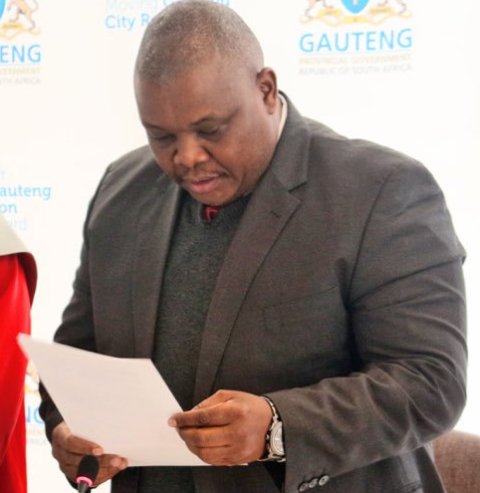
Speaking during a municipal performance progress briefing, Gauteng COGTA MEC Jacob Mamabolo highlighted the importance of collaboration between national, provincial, and local governments in addressing service delivery challenges.
Mamabolo stated that stronger integration and coordination through Intergovernmental Relations structures are essential for resolving the 13 priority challenges identified by Gauteng Premier Panyaza Lesufi during the State of the Province Address.
He stressed that long-term solutions require coordinated planning and implementation rather than fragmented responses or political blame-shifting. According to him, government institutions are increasingly recognising that collaborative governance is essential for addressing the complex urban, financial, and infrastructure challenges facing municipalities.
Experts say Gauteng's move towards smart governance reflects a growing global trend in which cities are using digital technologies, real-time data systems, and integrated management platforms to improve urban administration, infrastructure planning, public safety, and service delivery efficiency.
As South Africa's economic powerhouse, Gauteng's efforts to modernise municipal governance through technology-driven reforms are expected to play an important role in shaping the future of urban management and smart city development in the country.


 Google News