

DWS Condemns Kai !Garib Over Failure to Address Water and Sanitation Crisis
The municipality depends largely on the Orange River and a canal managed by the Kakamas Water User Association as its primary water source.
- Country:
- South Africa
South Africa's Deputy Minister of Water and Sanitation, Sello Seitlholo, has strongly criticized the Kai !Garib Local Municipality in the Northern Cape for failing to implement corrective measures aimed at resolving longstanding problems in its water and sanitation services. The criticism follows the release of the Department of Water and Sanitation's (DWS) latest Blue Drop and Green Drop regulatory assessments, which revealed a dramatic decline in the municipality's performance.
Blue Drop and Green Drop Scores Reveal Severe Decline
Kai !Garib Local Municipality serves as a Water Services Authority responsible for providing water supply and wastewater management services to the towns of Kakamas, Keimoes, Kenhardt, and Vredesvallei. Despite repeated interventions and compliance directives from the Department of Water and Sanitation, the municipality has failed to reverse years of declining service delivery.
The latest Blue Drop assessment paints a troubling picture of drinking water management within the municipality. According to the DWS, Kai !Garib's 2023 Blue Drop score plummeted to just 16.20%, a dramatic decline from the 71.42% achieved in 2014. More concerning is the fact that all 16 municipal water supply systems have now been classified within the critical performance category, indicating significant risks to water quality management and service reliability.
The municipality's wastewater management performance has deteriorated even further. The 2024 Green Drop assessment awarded Kai !Garib a score of only 0.3%, compared to 13% in 2021 and 34% in 2013. Wastewater treatment facilities in Keimoes and Kenhardt recorded a complete failure with scores of 0.0%, while the Vredesvallei Wastewater Treatment Works has remained non-operational for more than three years.
These results underscore the municipality's inability to maintain critical infrastructure and comply with national water and sanitation standards, despite repeated warnings and regulatory notices from the department.
Aging Infrastructure and Environmental Risks Raise Alarm
The municipality depends largely on the Orange River and a canal managed by the Kakamas Water User Association as its primary water source. The canal originates from a weir near the settlement of Marchand and serves both municipal water systems and extensive irrigation activities supporting the region's agricultural sector, particularly vineyards surrounding Kakamas.
However, decades of ageing infrastructure and insufficient maintenance have severely undermined service delivery. According to the Department of Water and Sanitation, the municipality has failed to implement adequate measures to address persistent sewage overflows from manholes, malfunctioning pump stations, deteriorating stormwater systems, and poorly maintained oxidation ponds across the four towns.
The continued deterioration of wastewater infrastructure has resulted in contamination of local watercourses, creating serious public health risks for residents and causing environmental damage to surrounding ecosystems. Communities continue to face the threat of exposure to untreated wastewater, while pollution of water resources places additional strain on already vulnerable environmental systems.
Officials have warned that unless immediate corrective action is taken, the situation could worsen further, potentially leading to broader water quality failures and increased health hazards.
Government Investments Have Yielded Limited Improvements
In an effort to address infrastructure shortcomings, the Department of Water and Sanitation has invested significant financial resources into the municipality's water and sanitation systems.
More than R12 million was allocated through the Water Services Infrastructure Grant (WSIG) for the refurbishment of the Kakamas Water Treatment Works. In addition, a further R7 million was provided for upgrades to the Vredesvallei Wastewater Treatment Works. Both projects were completed in December 2025.
Despite these investments, the latest regulatory assessments indicate that service delivery outcomes have not improved as expected.
The municipality has also attempted to develop longer-term solutions. In 2023, it submitted a feasibility study to the Department of Water and Sanitation proposing the construction of a new wastewater treatment works in Kakamas as well as a bulk water supply system designed to serve Kakamas, nearby villages, and surrounding commercial farming operations.
While these proposals could provide sustainable solutions in the future, government officials have expressed concern that existing infrastructure continues to deteriorate faster than improvements can be implemented.
Deputy Minister Demands Immediate Corrective Action
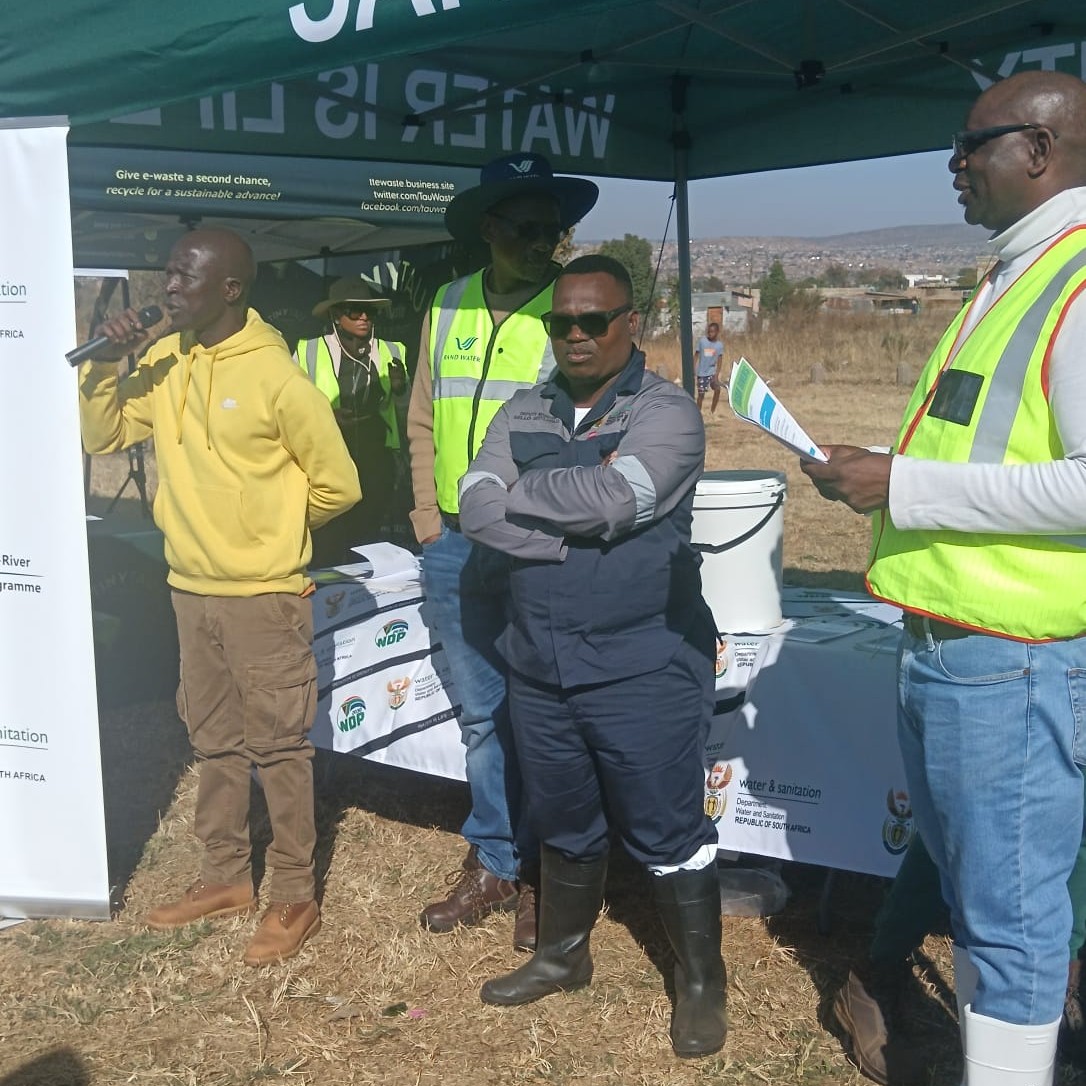
During his visit to the municipality on 29 May, Deputy Minister Seitlholo personally inspected the oxidation ponds in Kakamas and met with municipal leadership to assess progress on previously agreed remedial measures.
Following the inspection, he instructed the municipality to urgently develop and implement a comprehensive corrective action plan. The plan must identify areas of failure, outline specific corrective activities, provide technical upgrade and restoration strategies, detail progress on critical wastewater systems, and include clear implementation timelines along with measurable performance targets.
Seitlholo emphasized that the municipality's challenges have reached a level that requires coordinated intervention from multiple spheres of government.
"Water and sanitation services in Kai !Garib municipality have reached a critical state, and the reality is that this municipality requires joint interventions from the Departments of Water and Sanitation and Cooperative Governance and Traditional Affairs. The intervention should also be done as per the reforms that were proposed at the Water and Sanitation Indaba held in 2025," he said.
The Deputy Minister has ordered the municipality to submit its corrective action plan before the end of June. The Department of Water and Sanitation will continue monitoring implementation closely to ensure that timelines are met and that infrastructure restoration efforts result in improved access to clean drinking water and dignified sanitation services for affected communities.
As pressure mounts on local authorities, the coming months will be critical in determining whether Kai !Garib can reverse years of decline and restore confidence in essential water and sanitation services across the municipality.


 Google News