

Don't Miss! Eta Aquariid meteor shower outburst peaking tonight; 120-160 meteors per hour expected
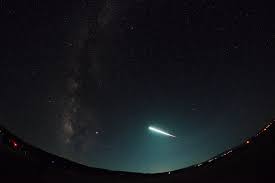
The Eta Aquariid meteor shower, one of the most anticipated celestial events of the year, is set to peak on the night of May 4th and 5th. This year's shower is expected to be an outburst, meaning that there will be an unusually high number of meteors visible in the sky, with 120-160 meteors per hour expected.
"A meteor shower is like a normal rain shower, with 50-60 meteors per hour. An outburst is like a thunderstorm, with greater than normal meteor activity expected. A meteor storm is like a tornado, where meteor rates are over one thousand per hour," said Bill Cooke, lead of NASA's Meteoroid Environments Office at the agency's Marshall Space Flight Center in Huntsville, Alabama.
The Eta Aquariid meteor shower is associated with Halley's Comet. As the Earth passes through the dense debris left behind by the comet, the small particles burn up in the Earth's atmosphere, creating a stunning display of shooting stars. Moving at 148,000 mph, some of these fireballs leave glowing trains in their wake that last for several seconds to minutes.
While the Eta Aquariid meteor shower is visible from both the Northern and Southern Hemispheres, they are more visible from the Southern Hemisphere as the radiant point is higher in the sky. The best time to observe the shower is after midnight, but the peak times are from 3-4 a.m. until dawn.
To best observe the Eta Aquariid meteors, find a dark location away from city lights and lie down. Allow your eyes to adjust to the darkness, and keep an eye on the sky.
Get outside! The eta Aquariid meteor shower outburst to peak the night of May 4-5.Meteors will be observable after midnight, but the peak times are 3-4 a.m. until dawn.Learn more HERE>> https://t.co/LUajHMr1T8 pic.twitter.com/2PToksOeTL
— NASA Marshall (@NASA_Marshall) May 3, 2023
After the Eta Aquariid meteor shower, there are two other major meteor showers that stargazers can look forward to in the coming months. The first is the Perseid meteor shower and the second major meteor shower is the Orionid meteor shower, which will be visible in August and October, respectively.


 Google News