

Gender Equality Must Be Central to Global Climate Action, Says UN Women
“Failure to adopt a robust GAP would set back gender equality and human rights,” warned Sarah Hendriks, Director of Policy, Programme, and Intergovernmental Division at UN Women.
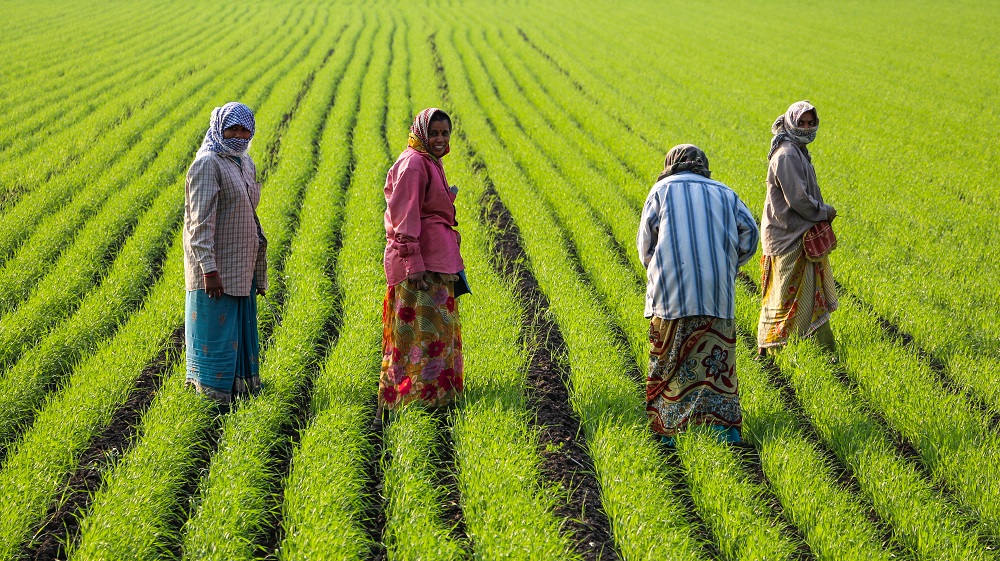
As global leaders gather in Belém, Brazil for the 30th UN Climate Change Conference (COP30), UN Women is calling for the adoption of a transformative, well-funded, and accountable Gender Action Plan (GAP) — a framework to ensure that gender equality remains a core element of climate policies and decision-making.
The new GAP, expected to be finalized at COP30, will shape the next decade of climate governance, determining whether women's rights and leadership stay at the forefront of global environmental action or risk being sidelined.
"Failure to adopt a robust GAP would set back gender equality and human rights," warned Sarah Hendriks, Director of Policy, Programme, and Intergovernmental Division at UN Women. "It would signal that women's leadership and experience are expendable in the climate fight."
What's at Stake at COP30
UN Women emphasized that climate change is not gender-neutral. Women and marginalized groups face disproportionate impacts, particularly through displacement, food insecurity, health risks, and loss of livelihoods. Climate-induced droughts, floods, and resource scarcity often deepen existing inequalities, pushing vulnerable populations further to the margins.
Globally, women make up a large share of agricultural workers and are responsible for managing household energy and water needs — roles that are directly affected by environmental degradation. Yet, they remain underrepresented in climate decision-making spaces, from community leadership to international negotiations.
A strong Gender Action Plan at COP30, UN Women argues, is not merely symbolic but strategic — essential for designing effective, inclusive climate solutions that reflect the needs and capacities of all communities.
Building on the First Gender Action Plan
The first Gender Action Plan, adopted at COP23 in 2017, was instrumental in embedding gender considerations across the UNFCCC process, influencing areas such as adaptation, mitigation, finance, technology, and capacity building.
That plan led to greater participation of women in national climate delegations, the inclusion of gender budgeting in climate finance, and stronger linkages between gender equality and resilience-building policies.
However, progress has been uneven, with limited financing and inconsistent implementation across countries. UN Women warns that without renewed commitment, the momentum achieved under the first GAP could stall.
UN Women's Calls to Action
Ahead of COP30, UN Women has laid out four key priorities for a new, transformative Gender Action Plan:
-
Address Root Causes of Inequality: Tackle systemic barriers that make women more vulnerable to climate change, ensuring accountability and measurable implementation.
-
Ensure Adequate Resourcing: Allocate predictable and sufficient funding for gender-responsive climate action, especially for grassroots women's organizations.
-
Protect Women's Rights: Guarantee that climate policies safeguard the rights and dignity of women and girls in all their diversity, including Indigenous, rural, and displaced women.
-
Uphold Civic Space and Human Rights: Support and protect women environmental human rights defenders, whose advocacy is vital to advancing climate justice.
"The adoption of a strong GAP at COP30 will be a defining moment for global commitment to gender equality," said Hendriks. "It will also test the integrity of the UNFCCC as a platform for inclusive, rights-based climate governance."
Launch of the Gender Equality and Climate Policy Scorecard
To mark the opening of COP30 on 10 November, UN Women and the Kaschak Institute for Social Justice for Women and Girls launched the Gender Equality and Climate Policy Scorecard — the first tool to evaluate how countries integrate gender equality into their national climate commitments.
The Scorecard analyzed 32 Nationally Determined Contributions (NDCs) submitted under the Paris Agreement, measuring progress across six dimensions:
-
Economic security
-
Unpaid care work
-
Health and well-being
-
Gender-based violence
-
Participation and leadership
-
Gender mainstreaming in policy
The findings show mixed progress. While most countries recognize women's vulnerability to climate impacts, far fewer acknowledge their leadership in solutions. Ten countries across five regions demonstrated strong, multi-dimensional approaches, while sixteen took only partial or limited steps. Alarmingly, six countries made no gender-responsive commitments at all.
Areas such as women's economic empowerment have received some attention, but issues like unpaid care work, health impacts, and protection from gender-based violence remain under-addressed.
A Pivotal Moment for Gender and Climate Justice
UN Women will present the Scorecard findings at its COP30 side event, organized with the Government of Liberia and the Kaschak Institute, titled "Gender-Responsive Climate Action: Unleashing and Accelerating Implementation of the Paris Agreement." The event will take place on 20 November, from 2–3:30 p.m. at the Government of Liberia's pavilion.
Through this dialogue, UN Women aims to highlight how gender equality strengthens the effectiveness of climate solutions, ensuring that policies are both environmentally and socially sustainable.
"Gender equality is not a fringe concern but a central pillar of climate action," said Hendriks. "Empowering women to lead climate transitions benefits entire societies — from resilience to innovation."
The Road Ahead
As COP30 convenes in the heart of the Amazon — a region emblematic of both climate vulnerability and biodiversity resilience — the stakes for global climate and gender justice have never been higher.
A transformative, well-resourced Gender Action Plan could ensure that the next decade of climate action is not only greener but more just and inclusive. Without it, advocates warn, the global community risks undermining decades of progress toward women's empowerment, sustainable development, and human rights.


 Google News