

Study of Supernova Sheds Light on Nearby Universe
Core-collapse supernovae occur when stars much heavier than the Sun run out of nuclear fuel, leaving them unable to resist gravitational collapse.
- Country:
- India
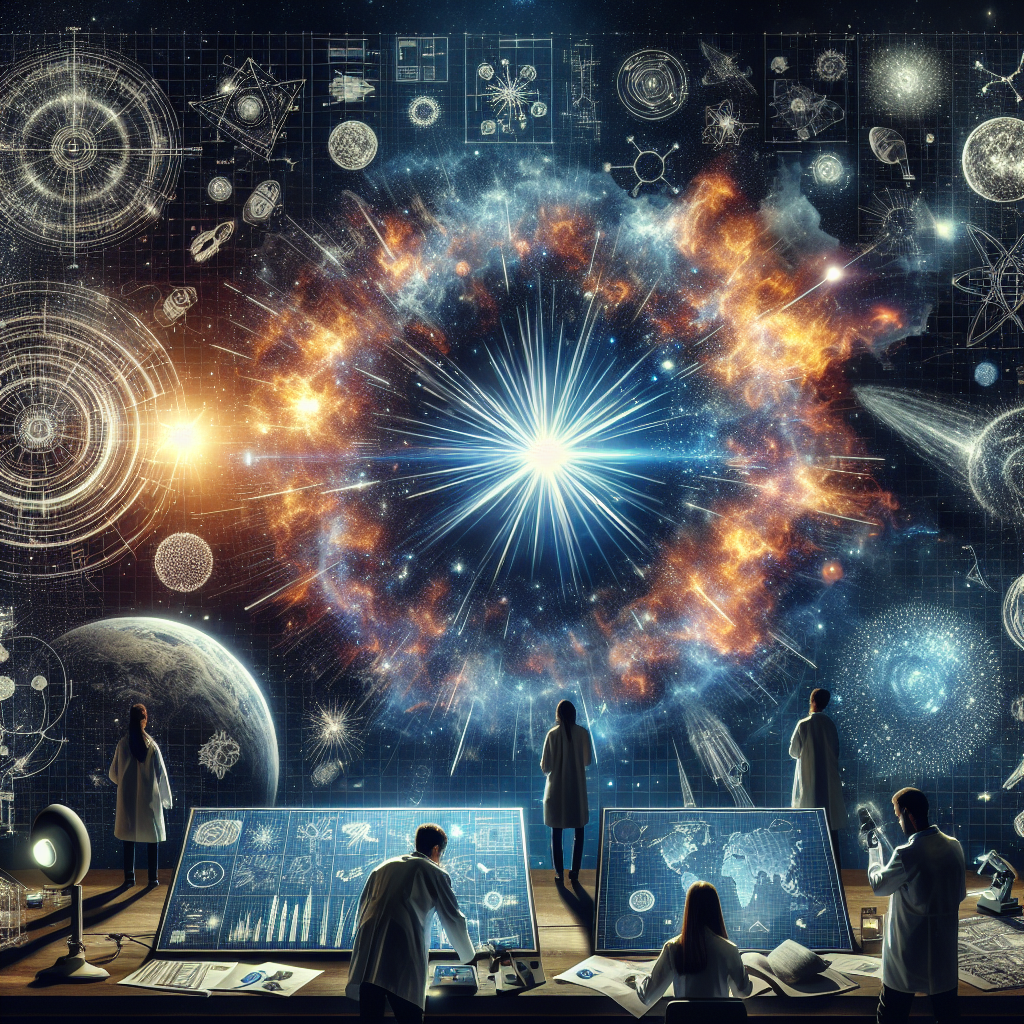
The supernova SN 2023zcu, discovered in December 2023 at the edge of the spiral galaxy NGC 2139 located roughly 90.7 million light-years away, is providing astronomers with a rare opportunity to study the violent death of massive stars and measure cosmic distances. Core-collapse supernovae occur when stars much heavier than the Sun run out of nuclear fuel, leaving them unable to resist gravitational collapse. In the case of SN 2023zcu, a red supergiant star about twelve times the mass of the Sun exploded, creating a shock wave that ejected its outer layers into space. This explosion not only shines brightly across vast distances but also disperses heavy elements, which eventually become the building blocks of new stars, planets, and life itself.
Tracking the Plateau and Measuring Cosmic Distances
Type IIP supernovae like SN 2023zcu are characterized by a plateau in brightness caused by hydrogen recombining in the star's outer layers, allowing astronomers to observe a stable and predictable phase in the light curve. This plateau and the hydrogen-dominated spectra make it ideal for distance measurements using the Expanding Photospheric Method, which compares the actual size of the supernova's expanding surface with how bright it appears from Earth. Using this method, scientists estimated the distance to SN 2023zcu at about 27 megaparsecs, providing a precise measure of the local universe. Frequent photometric and spectroscopic observations from both ground-based and space telescopes captured the early shock, plateau, and nebular phases, enabling scientists to study how the explosion unfolds and how new elements form in the aftermath.
Understanding Progenitors and Cosmic Impacts
Detailed modeling of the supernova's bolometric luminosity allowed researchers to estimate that the original star had a mass of approximately twelve times that of the Sun and an explosion energy around 2 × 10⁵¹ ergs, which aligns with typical red supergiant explosions. Early spectra indicated minimal interaction with surrounding gas, suggesting the star had lost very little mass before exploding. During the nebular phase, emission lines from oxygen, calcium, iron, and magnesium reveal the chemical elements synthesised in the explosion. Observing SN 2023zcu in real time enhances scientists' understanding of supernova physics, stellar evolution, and how these cosmic events contribute to enriching the universe with heavy elements. This study, published by researchers at ARIES, India, along with international collaborators, demonstrates the importance of high-cadence monitoring in refining distance estimates and probing the life cycles of massive stars.


 Google News