

AI-Driven Badminton Analysis: Enhancing Shot Detection and Player Performance Strategies
Researchers from Chung Yuan Christian University and National Central University have developed an advanced method for analyzing badminton games using machine learning models, achieving high accuracy in shot detection and classification. This innovative approach combines shuttlecock tracking and player action detection, offering significant improvements in sports analytics and practical applications for enhancing player performance and strategies.
 CoE-EDP, VisionRI
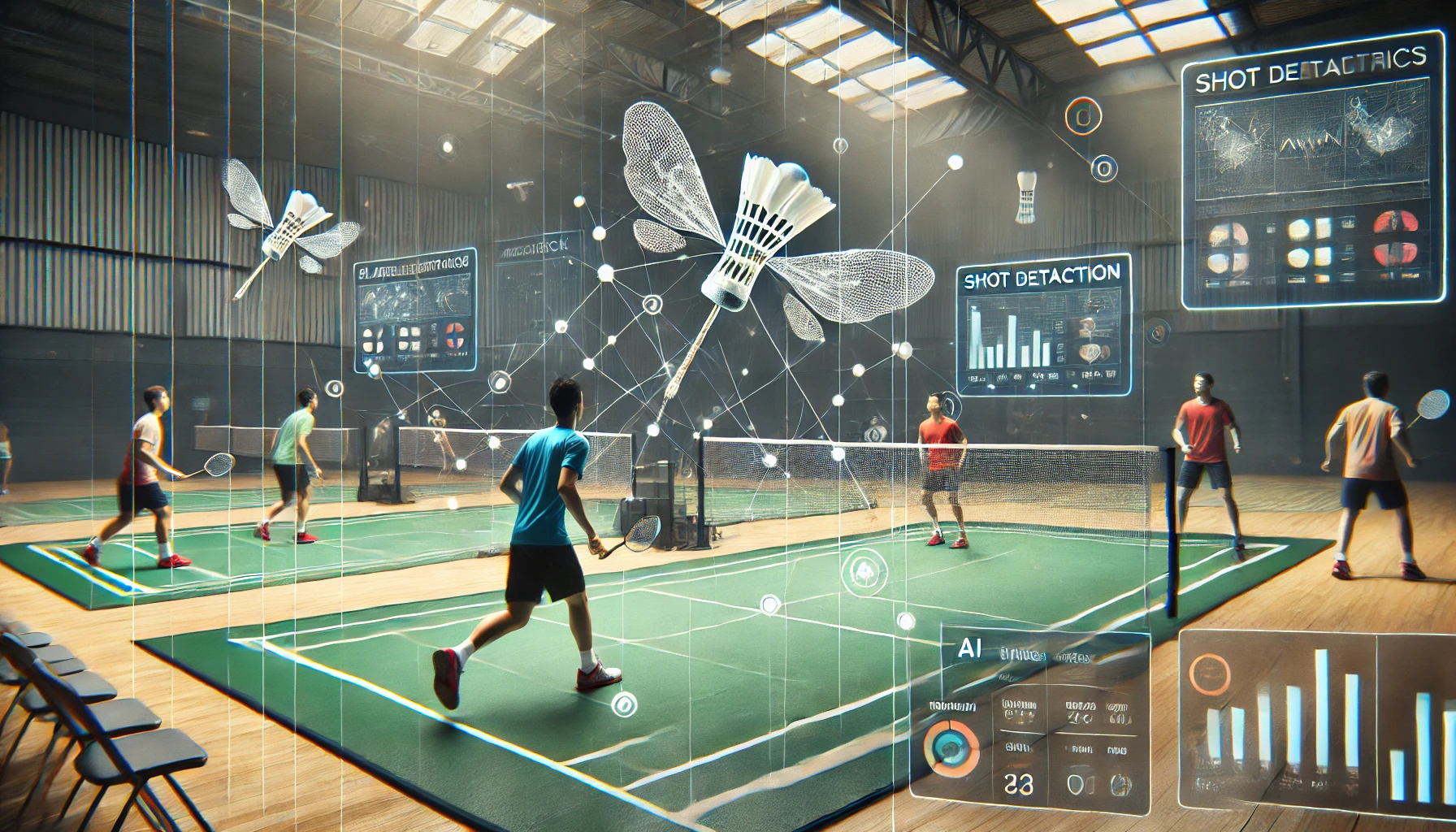
A recent study from Chung Yuan Christian University and National Central University in Taiwan, presents an innovative method for analyzing badminton games using a monocular camera. The research, conducted by Yi-Hua Hsu, Chih-Chang Yu, and Hsu-Yung Cheng, focuses on extracting the shuttlecock's flight trajectory and detecting player swings to accurately identify and classify shots during rallies. This groundbreaking approach leverages advanced machine learning models to provide more precise and actionable insights into badminton game dynamics.
Harnessing Advanced Machine Learning Models
The proposed method employs TrackNet, a deep neural network specifically designed for tracking small objects, to capture the shuttlecock's flight path. Concurrently, the YOLOv7 model is utilized to detect whether a player is swinging. Both models, while advanced, have their limitations, including detection misses and false detections. To overcome these issues, the researchers introduced a shot refinement algorithm. This algorithm integrates the detection results from both TrackNet and YOLOv7 to accurately determine the exact moment a player hits the shuttlecock, thus refining the shot extraction process.
Impressive Results from Real-World Testing
The researchers tested their method on 69 matches from Badminton World Federation (BWF) videos, encompassing 1582 rallies. The results were remarkable, demonstrating an accuracy of 89.7%, a recall rate of 91.3%, and an F1 score of 90.5%. These metrics represent a significant improvement over the use of TrackNet alone, which yielded an accuracy of 58.8%, a recall rate of 93.6%, and an F1 score of 72.3%. Furthermore, the accuracy of shot type classification at three different thresholds was 72.1%, 65.4%, and 54.1%, all of which were superior to the results obtained using TrackNet alone. This demonstrates the effectiveness of the proposed method in recognizing different shot types and accurately classifying them, contributing to the enhanced understanding of game strategies and player performance.
Revolutionizing Sports Analytics with Data-Driven Approaches
The research highlights the increasing importance of data-driven approaches in professional sports. Traditionally, analyzing the performance of players and developing training methods relied heavily on manual observation and recording, which were time-consuming and prone to human error. The advent of advanced machine learning models and automated analysis systems like the one proposed in this study marks a significant shift in sports analytics. By automating the extraction and analysis of critical game data, these systems provide coaches and players with more precise insights, enabling them to develop more effective training plans and strategies.
Practical Applications and Future Prospects
One of the key innovations of this study is the combination of shuttlecock tracking and player action detection to refine shot identification. The TrackNet model, with its deep neural network architecture, is specifically tailored to track the fast-moving shuttlecock, which often presents challenges due to its small size and high speed. By learning the visual features and trajectory patterns of the shuttlecock, TrackNet can accurately predict its flight path. However, the study acknowledges that relying solely on the shuttlecock's trajectory can lead to inaccuracies, especially when the shuttlecock is occluded or exits the frame. This is where the shot refinement algorithm plays a crucial role, combining the trajectory data with action detection results from YOLOv7 to pinpoint the precise hitting moments.
The proposed method's success is not only reflected in its high accuracy rates but also in its practical applicability. By using videos captured from a monocular camera, the system can be implemented with existing badminton footage without requiring additional hardware. This makes it a cost-effective solution for teams and organizations looking to enhance their game analysis capabilities. Moreover, the system's ability to provide detailed analytics, such as shot types, player movements, and scoring area distribution, equips players with the knowledge needed to improve their performance and develop targeted strategies against opponents.
The study's implications extend beyond badminton, offering potential applications in various other sports disciplines. The principles of combining object tracking with action detection and refining results through advanced algorithms can be adapted to analyze different types of sports, each with its unique challenges and requirements. As sports continue to embrace technology and data analytics, the methodologies developed in this research could pave the way for more sophisticated and efficient analysis systems, ultimately contributing to the advancement of sports science and athletic performance. This research underscores the transformative impact of integrating machine learning and computer vision in sports, highlighting a future where data-driven insights are integral to competitive success.
- FIRST PUBLISHED IN:
- Devdiscourse


 Google News