

Clinical-ready AI tool boosts breast cancer detection via decision tree algorithms
The system is structured around a client-server architecture designed to provide scalability, remote accessibility, and robust data security. On the client side, a lightweight graphical application allows physicians to enter diagnostic information and interact with the system's outputs. The server side handles data processing, algorithm execution, and centralized storage of diagnostic history.
 COE-EDP
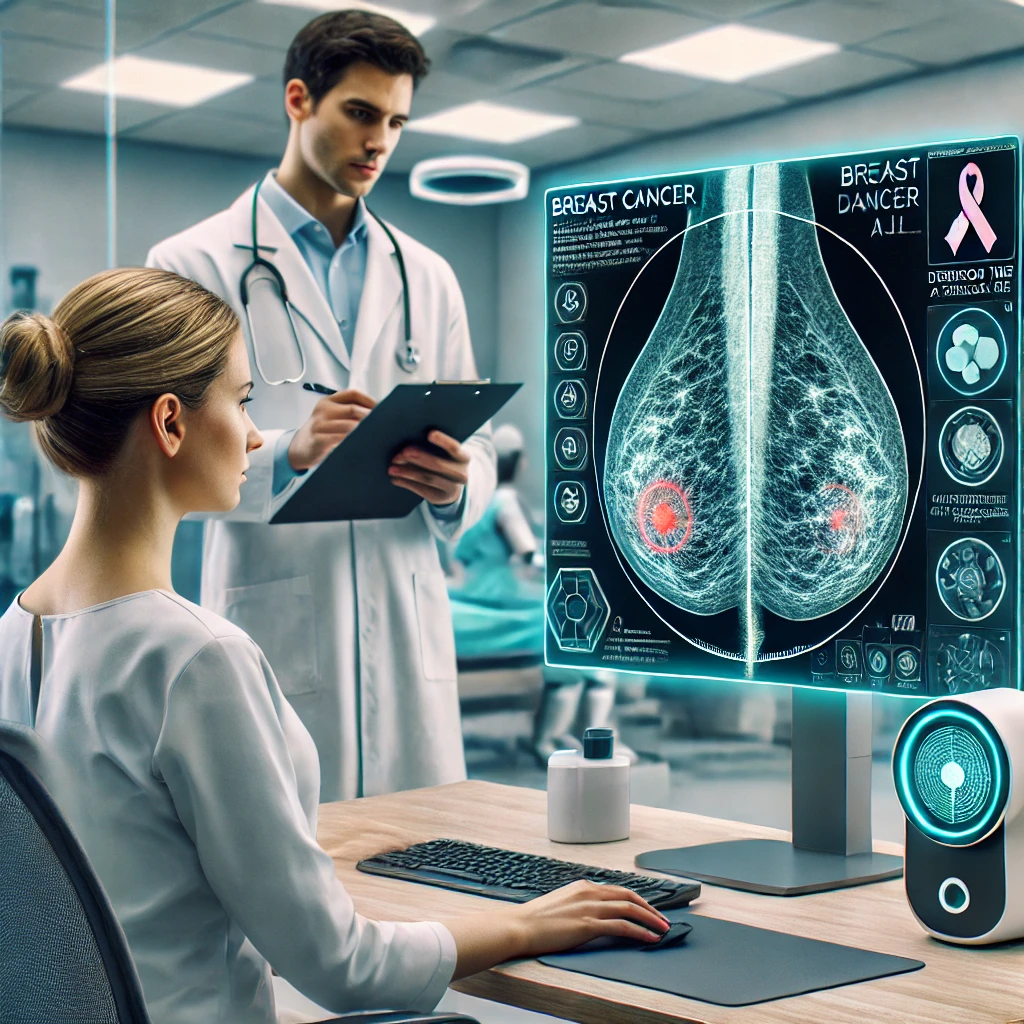
Researchers have developed a new computer-aided diagnosis (CAD) system, BREAST-CAD, to improve breast cancer detection accuracy using machine learning algorithms and a real-time client-server architecture. The system, detailed in the study "BREAST-CAD: A Computer-Aided Diagnosis System for Breast Cancer Detection Using Machine Learning" published in Technologies (2025), is designed to support clinicians in making faster and more accurate breast cancer diagnoses by integrating artificial intelligence into their daily workflow.
Developed through a three-phase methodology, BREAST-CAD builds upon prior literature, machine learning model training, and software implementation to deliver a functional diagnostic platform. The study evaluated multiple algorithms including Naive Bayes (NB), K-Nearest Neighbors (KNN), Support Vector Machines (SVM), and Decision Trees (DT). The DT model outperformed others in accuracy, leading to its integration into the final software. Embedded in a client-side application and linked to a centralized server, the system enables clinicians to input patient data and receive immediate AI-driven diagnostic predictions. The architecture also ensures secure data storage and remote accessibility, offering a significant advance in scalable diagnostic support systems.
How does the BREAST-CAD system improve existing diagnostic Methods?
The BREAST-CAD system addresses longstanding limitations in manual and semi-automated diagnostic approaches by combining machine learning with real-time clinical usability. At the core of the system is the use of Fine Needle Aspiration (FNA) cytology, a widely accepted technique for evaluating breast lesions due to its minimally invasive nature, low risk, and suitability for outpatient settings.
Traditional diagnostic methods using FNA data often rely on subjective interpretation, leading to variability in results. BREAST-CAD enhances the process by standardizing data interpretation through algorithmic modeling. The researchers conducted a detailed review of machine learning applications in breast cancer diagnostics spanning 2000 to 2024, identifying the most effective algorithms for classification tasks based on cytological features.
The four selected models, NB, KNN, SVM, and DT, were trained using a curated breast cancer dataset. Each model was tested for accuracy, precision, and computational efficiency. Among them, the Decision Tree classifier demonstrated the best performance, making it the preferred model for deployment in the diagnostic interface. The system processes patient inputs such as clump thickness, uniformity of cell size and shape, and other FNA-derived metrics to predict the probability of malignancy.
Crucially, BREAST-CAD is not merely a backend algorithm but an integrated clinical tool. The model is embedded in a user-friendly graphical interface that allows clinicians to input diagnostic parameters and receive immediate, interpretable predictions. This streamlining of diagnosis, alongside centralized storage and secure data management, distinguishes BREAST-CAD from many academic proof-of-concept models that lack clinical deployment readiness.
What technical innovations define BREAST-CAD's architecture?
The system is structured around a client-server architecture designed to provide scalability, remote accessibility, and robust data security. On the client side, a lightweight graphical application allows physicians to enter diagnostic information and interact with the system's outputs. The server side handles data processing, algorithm execution, and centralized storage of diagnostic history.
This separation ensures that data and processing can be securely managed even across multiple endpoints, such as different clinics or hospitals. The server executes the embedded Decision Tree model, which rapidly processes the input and transmits the prediction back to the client. By doing so, BREAST-CAD avoids the common constraint of local-only computation, enabling wider access in connected medical networks.
Another innovation lies in the system's ability to update diagnostic models centrally. As additional training data becomes available, the model can be retrained and redeployed from the server without needing to manually update the client application—ensuring consistency and scalability in clinical environments.
Moreover, the real-time prediction capability bridges the gap between machine learning theory and healthcare practice. Unlike batch-processing diagnostic platforms, BREAST-CAD is built for immediate clinical decision-making. Predictions are rendered in seconds, enabling integration into standard diagnostic workflows without disrupting patient consultations.
The developers also ensured that the software interface met usability and clinical adoption standards. By keeping the design intuitive, the system allows even non-specialist practitioners to interpret machine learning outputs confidently, thus extending its utility beyond high-tech medical centers to general clinics and regional hospitals.
What are the broader implications for AI integration in healthcare diagnostics?
The system addresses the twin priorities of accuracy and accessibility, making it a model for future AI-driven diagnostics that aim to balance technical sophistication with deployment feasibility.
One of the key takeaways from the study is the importance of real-time, integrated systems over static machine learning evaluations. While many research studies validate models using archived datasets, BREAST-CAD brings that functionality into live clinical use, enhancing physician decision-making at the point of care.
The centralized nature of the architecture further supports institutional data policies and compliance needs, such as maintaining patient confidentiality, ensuring data integrity, and enabling retrospective audits. This architecture also sets the stage for longitudinal data collection, which can be used to improve predictive accuracy over time through model retraining.
Furthermore, the modular nature of the system allows for future expansion. Although the current model is optimized for FNA cytology, the same architecture could be adapted for use in other diagnostic domains, such as lung cancer screening, cervical cytology, or dermatological assessments. With appropriate retraining and model substitution, the BREAST-CAD platform can evolve into a generalized AI-based diagnostic suite.
The BREAST-CAD is based on a client-server model, making it easy to deploy in low-resource environments where expert oncological services may be unavailable. Clinicians in remote or underserved areas can benefit from centralized AI support, potentially improving early cancer detection rates and treatment outcomes worldwide.
- FIRST PUBLISHED IN:
- Devdiscourse


 Google News