



Mantashe Tables R2.86 Billion Budget to Strengthen Energy Security and Mining Sector Growth
“We are tabling this Budget Vote during a difficult period in the global economy,” Mantashe said.
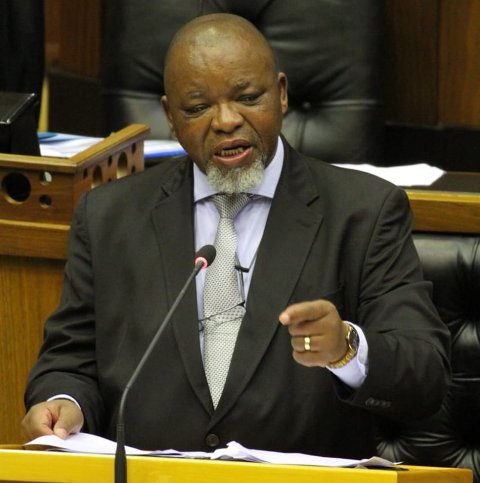
Minister of Mineral and Petroleum Resources Gwede Mantashe has tabled the Department of Mineral and Petroleum Resources' R2.86 billion budget in Parliament, outlining government's strategy to strengthen South Africa's energy security, expand mining sector growth, and accelerate petroleum and critical minerals development amid growing global economic and geopolitical uncertainty.
Presenting the Budget Vote, Mantashe said South Africa faces mounting international challenges linked to geopolitical tensions, energy supply disruptions and a sluggish global economy, particularly the ongoing instability in the Middle East.
"We are tabling this Budget Vote during a difficult period in the global economy," Mantashe said.
He stressed that energy security has become inseparable from national stability and economic resilience.
"This budget is our strategic response to these geopolitical realities, a commitment to protecting the livelihoods of our people, securing our energy future, and anchoring our economy against the rising tides of international instability and price volatility," he said.
Major Allocations to Key Mining and Energy Institutions
The budget includes substantial operational allocations to entities operating within South Africa's mining, petroleum and geoscience sectors.
The allocations include:
-
R70.46 million for the South African Diamond and Precious Metals Regulator;
-
R94.98 million for the Petroleum Agency South Africa (PASA);
-
R666.9 million for the Council for Geoscience (CGS);
-
R328.7 million for Mintek, and
-
R4.89 million for the Mine Health and Safety Council.
Government said these allocations are aimed at strengthening regulatory oversight, geological research, mineral beneficiation, exploration support and mine safety.
Funding for Mine Rehabilitation and Strategic Projects
The budget also includes several project-specific allocations focused on environmental rehabilitation, energy development and small-scale mining support.
These include:
-
R23.48 million for the Mine Rehabilitation Research Project;
-
R140.87 million for rehabilitation of derelict and ownerless mines;
-
R48.1 million for implementation of the Shale Gas Project;
-
R33.83 million for the Mine Water Ingress Project, and
-
R31.12 million for the Artisanal and Small-Scale Mining Project.
Officials said the projects are intended to address environmental risks, improve sustainability and support emerging mining enterprises.
Government Pushes Petroleum Security and Refining Expansion
A major focus of the budget is accelerating development of South Africa's upstream petroleum industry and expanding refining capacity.
Mantashe argued that energy security remains an economic necessity and national priority despite criticism from environmental lobby groups.
"The fact remains that petroleum security is not a theoretical debate, but an economic necessity and a national imperative," he said.
The Minister called for urgent processing of the South African National Petroleum Company Bill (SANPC Bill) to enable full operationalisation of the South African National Petroleum Company as a strategic state-owned entity.
According to Mantashe, the SANPC would allow greater state participation in the oil and gas sector as envisioned under the Upstream Petroleum Resources Development Act (UPRDA).
Government Assures Stable Fuel Supply
Mantashe also sought to reassure South Africans regarding concerns over fuel availability amid global supply chain disruptions.
"While global fuel supply challenges persist, I would like to assure the people of South Africa that we have sufficient fuel supply to meet demand, and that our fuel supply remains stable," he said.
The Minister said government continues working closely with industry stakeholders to monitor fuel supply conditions and maintain transparency.
Mining Sector Remains Economic Cornerstone
Despite global economic headwinds, Mantashe said South Africa's mining sector continues to demonstrate resilience and remains central to the national economy.
According to the Minister:
-
Mining Gross Value Add reached R477 billion in 2025;
-
The sector contributed approximately 6.3% to GDP, and
-
Mining royalties increased to R11.8 billion in 2025 compared to R10.6 billion in 2024.
The growth was driven largely by:
-
Strong iron ore exports;
-
Manganese exports;
-
Improved commodity prices, and
-
Strong sectoral performance during most of 2025.
However, Mantashe acknowledged that rising electricity costs continue placing severe operational pressure on mining companies, especially deep-level gold and platinum group metal operations.
Critical Minerals Strategy Moves Into Implementation
The Minister declared that government has moved decisively from policy planning to implementation regarding the Critical Minerals and Metals Strategy.
"Today, we are happy to share with you that the era of passive policy is over. We have moved decisively from blueprint to battlefield," Mantashe said.
He stressed that South Africa aims to position itself as a major global player in the rapidly growing critical minerals market, which is increasingly important for clean energy technologies, batteries and industrial manufacturing.
"We are transforming our mineral endowment into a catalyst for industrialisation, investment, and economic growth," he added.
Geoscience Mapping Expanded to Attract Investment
One of the central pillars of the strategy is expanded geoscience mapping and mineral exploration.
Through the Council for Geoscience, government is investing in high-resolution geoscientific data aimed at reducing exploration risks and attracting investment.
Mantashe revealed that national onshore geoscience mapping coverage has increased from below 5% in 2019 to approximately 20% in the 2025/26 financial year.
The Council for Geoscience plans to continue expanding mapping activities across both onshore and offshore areas.
Virtual Core Library Introduced
The Minister also highlighted the launch of the Virtual Core Library during this year's Mining Indaba.
The digital platform is intended to improve access to geological information and unlock greater economic value from South Africa's mineral resources.
Officials described the platform as a strategic national asset capable of improving exploration efficiency and investment attraction.
Junior Mining Exploration Fund Supports Projects
Government's R400 million Junior Mining Exploration Fund has already funded 13 exploration projects across the country.
Exploration activities are currently underway at sites including:
-
Giyani, and
-
Bothaville.
The initiative aims to support junior mining companies and encourage greater participation in mineral exploration activities.
New Mining Legislation Moving Through Parliament
Mantashe informed Parliament that the Mineral Resources Development Bill is currently undergoing legal certification at the Office of the Chief State Law Advisor before being submitted to Cabinet.
The Bill is expected to be introduced to Parliament during the second quarter of the year.
Meanwhile, the Mine Health and Safety Bill — aimed at embedding compliance as a core operational function — is already before Parliament.
According to the Minister, the legislation will:
-
Strengthen accountability;
-
Tighten operational requirements;
-
Improve enforcement measures, and
-
Advance the sector's "zero harm" objective.
Mine Fatalities Reach Historic Low
Mantashe noted that the mining industry has made significant progress towards improving mine safety.
The sector recorded a historic low of 41 fatalities in 2025.
However, he cautioned against complacency and referred to the recent Ekapa mining disaster, which claimed five lives.
"The Ekapa disaster, which claimed five lives, is a stark reminder that complacency has no place in this industry," he said.
Investigations into the incident are currently underway.
Focus on Economic Stability and Energy Security
The budget reflects government's broader efforts to stabilise the economy, improve energy security and position South Africa competitively within the evolving global minerals and energy landscape.
Officials say the combination of petroleum development, critical minerals expansion, geoscience investment and regulatory reform is intended to strengthen industrial growth, attract investment and create long-term economic opportunities.
ALSO READ
-
EC doubles security arrangements for Falta repoll in West Bengal
-
No place for personal enmity in politics: G Sudhakaran on swearing-in Vijayan as MLA
-
Nationwide chemists' strike evokes mixed response in Bengal
-
Tata Power EV arm expands charging network on Delhi-Mumbai Expressway
-
FOREX-Dollar steady near six-week highs on rate-hike bets, war uncertainty


 Google News