

IndiGo signs pact to explore potential of using sustainable aviation fuel in aircraft
- Country:
- India
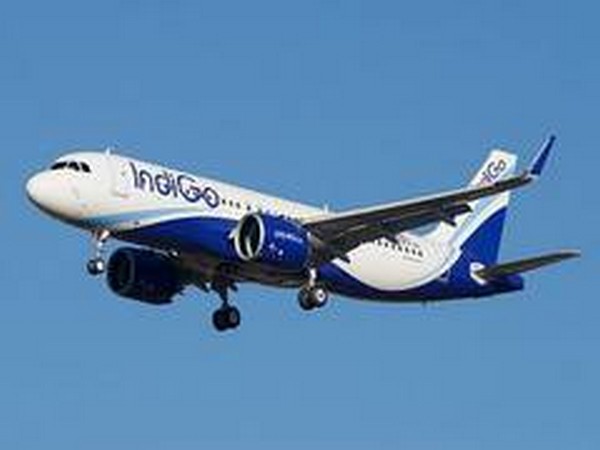
IndiGo is exploring the potential of using sustainable aviation fuel (SAF) in aircraft and the airline has signed a memorandum of understanding (MoU) with an international SAF provider, a statement said on Friday.
However, the carrier did not reveal the name of the SAF provider.
Commercial aviation is responsible for about 2-3 percent of the global carbon emissions. Swedish climate activist Greta Thunberg has given up flying to reduce her personal carbon footprint, boosting the ''flight shame'' movement in Europe and other parts of the world.
In a report titled ', IndiGo Green' released on Friday, India's largest airline stated that it knows that the SAF is not in mass production currently.
However, knowing the importance of SAF, IndiGo is exploring the potential of using it and is in talks with its manufacturers globally, it said.
''The utilization of SAF commercially is still a few years away but as a leader in Indian aviation, we have already embarked on this journey by signing our first MoU with an international SAF provider,'' it added.
IndiGo said it is currently taking up the following steps to reduce its aviation turbine fuel (ATF) consumption to decreased its carbon footprint — fleet modernization; implementing weight reduction measures on board; optimizing flight routes; improving flight operations; and following fuel-efficient best practices.
''At IndiGo, we also believe that the use of all the above practices combined together cannot match the impact which can be created by sustainable aviation fuels (SAF). However, we also understand that SAF is not in mass production,'' it said.
The airline said it saved 4.67 lakh tonnes of aviation turbine fuel between 2014-15 to 2020-21.
The carrier said it aims to reduce its carbon dioxide (CO2) emission by 18 percent per available seat kilometer (ASK) in 2022-23 as compared to 2015-16.
ASK measures the passenger-carrying capacity of the airline and it is calculated by multiplying the total number of seats in flights to the total number of kilometers flown by them.
The airline measures CO2 efficiency using the ASK intensity ratio, which is metric tonnes CO2/1,000 ASKs. One MT CO2 is equal to 316 kg of fuel.
As per the International Air Transport Association (IATA), it is defined as 'any fuel that has the potential to generate lower carbon emissions than conventional kerosene on a life cycle basis.
The International Civil Aviation Organization (ICAO), a United Nations specialized agency, in some cases uses 'alternative fuels' as its terminology, and it is defined as 'any fuel that has the potential to generate lower carbon emissions than conventional kerosene on a life cycle basis. ICAO also uses the term 'sustainable aviation fuel'.


 Google News