

Are People Coping with Surging Inflation: Let’s Pull Back the Curtains
Exploring the U.S. economy's challenges & prospects, from surging inflation & fiscal policies to the labor market's growth & the Fed’s strategic aims.

In recent months, the world watched as the dollar treaded a fluctuating path, with a drop against major currencies, nudged by a drop in U.S. Treasury yields. On the one hand, the greenback demonstrated resilience against the euro and sterling; on the other, it showed susceptibility to data, raising concerns of a potential fall should employment figures turn gloomy.
Recent employment and inflation data painted a perplexing picture. Sean Callow, a senior currency strategist at Westpac, eloquently encapsulated the scenario, stating, "The dollar rally is looking quite tired." But is this the end or just another hiccup?
As economist's eyes turned to the Fed and its potential decision to hike rates, many also looked eastward. In a notable move, the People's Bank of China (PBOC) announced a cut in forex reserve requirements, signaling efforts to support its currency amidst challenges.
With all these financial maneuvers playing out on a grand stage, what does this mean for everyday folks?
Question: How have inflation developments impacted the common individual?
Answer: There's no denying inflation's sting has reached households. Inflation rates peaked impressively in June 2022 but then receded. The silver lining: strategy implementations by the Federal Open Market Committee (FOMC) seem to be working, slowly.
A strategic approach to target a 2% inflation rate without triggering a recession has shown positive signs. Lower food and energy prices have significantly assisted in curbing inflation. The hope, however, hinges on the consistency and longevity of these trends.
It's tough to anticipate where the economy will go from day to day. Prognosticators routinely peer into their proverbial 'crystal ball' in search of sage advice. If you could ask a psychic one free question about the economy's future trajectory, what would it be? Perhaps the future of food prices?
Indeed, food prices fluctuate and remain a predictor of headline inflation. Thankfully, forecasts from the U.S. Department of Agriculture sound optimistic, predicting that the spike in food prices will gradually slow down, potentially steering headline inflation in a positive direction.
The Glimmer of Optimism
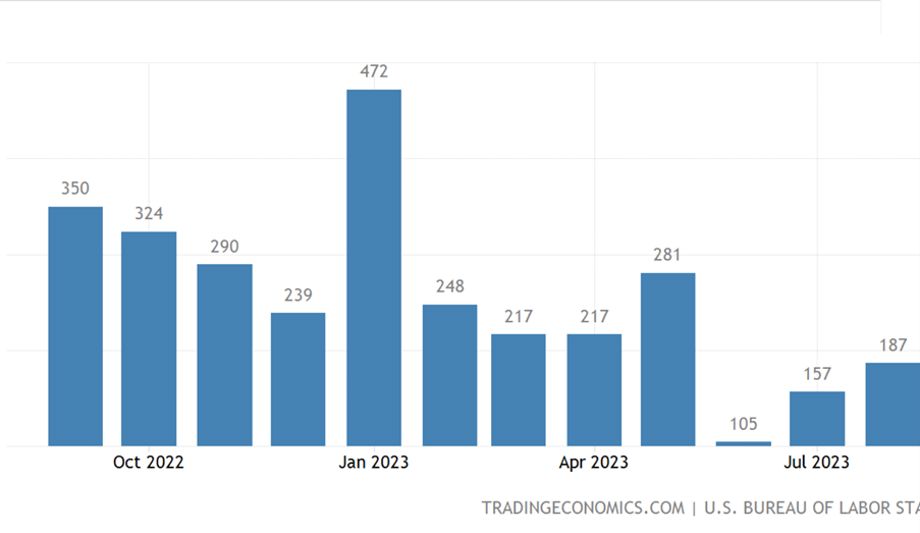
Economic forecasts can be likened to a ship's compass during a storm. The third quarter 2023 Survey of Professional Forecasters recently hinted at an economic reprieve on the horizon, with anticipated slowdowns in GDP growth and inflation. The earlier bleak recession forecast has given way to a more optimistic outlook, thanks to encouraging data from the beginning of the third quarter.
Question: What signals are indicating a more robust economy for the latter half of 2023?
Answer: Several markers give reason for hope. Retail sales, automotive sales, and industrial production figures from July have all shown positive growth. This has led some institutions, like the Federal Reserve Bank of Atlanta, to predict a growth rate as high as 5.9% for the third quarter.
But perhaps one of the most telling indicators is the labor market. Private sector job openings are significantly higher than their pre-pandemic levels. The resultant demand for labor has also ushered in better wage gains for workers. With the CPI inflation increasing, workers have experienced real wage gains.
And it's not just wage growth that's heartening. Asset appreciation, in the form of rising stock prices and home values, has bolstered consumer confidence. But as with all things economic, there's a caveat. The upswing in mortgage rates to near 7.5% does pose risks.
Question: What's the bottom line for everyday folks?
Answer: It's a mixed bag. While challenges remain, especially in the housing market, undeniable gains exist. For the general populace, wage growth, the positive trajectory of job openings, and controlled food prices are clear wins. The key lies in how governments and central banks navigate these tumultuous waters to ensure that the anchor of economic stability holds firm.
Economic trends can seem overwhelming, but understanding them brings clarity. As the curtains pull back further, only time will reveal if these trends solidify into long-term stability.
Fiscal Policy Actions: A Double-Edged Sword
Source: Pixabay
In recent years, fiscal policy has dynamically shaped the U.S. economy. Notable policies, including the 2021 Infrastructure Investment and Jobs Act and the 2022 CHIPS and Science Act, spurred nonresidential construction activity significantly.
Public highway and street construction grew by nearly 25% from November 2021 to June 2023, and private manufacturing construction surged by 109%. McKinsey & Co. forecasts these policies will inject $2 trillion into federal discretionary expenditures over the coming decade.
However, every action has consequences. While these policies boost GDP and can potentially elevate living standards, they also inflate federal budget deficits and the debt-to-GDP ratio. This expansionary approach has been a key player in the persistent inflation since early 2021.
The byproduct of these financial movements? Rising interest rates. Currently, 10-year government bond yields are at their highest in over a decade.
This uptick can dampen interest-sensitive spending, impacting sectors like autos and housing and potentially affecting stock valuations. As the U.S. navigates these financial waters, three key themes dominate the economic horizon: robust GDP growth, a strengthening labor market, and the ever-present challenge of inflation.
With stubborn inflation, policymakers might need to revisit strategies to align with the Fed's two percentage point target. And that's a wrap heading into the final stretch!
(Devdiscourse's journalists were not involved in the production of this article. The facts and opinions appearing in the article do not reflect the views of Devdiscourse and Devdiscourse does not claim any responsibility for the same.)


 Google News