

Kharif Crop Sowing Surpasses Last Year by 1.4%, Boosting Hopes Despite Dependence on Imports
Kharif crops in India have been sown across 979.89 lakh hectares this year, a 1.4% increase from last year, according to the Agriculture Ministry. Despite higher sowing in several commodities, India's reliance on pulse imports remains significant. Monsoon rainfall remains crucial for the agricultural sector.
- Country:
- India
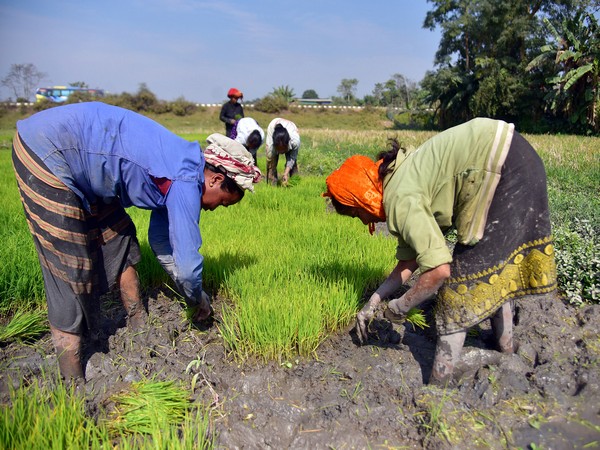
According to the latest data from the Agriculture Ministry, Indian farmers have sown Kharif crops on 979.89 lakh hectares so far this year, compared to 966.40 lakh hectares during the same period last year. This marks a 1.4% increase in sowing on a yearly basis.
Commodity-wise, paddy, pulses, oilseeds, millets, and sugarcane have seen an increase in sowing, while cotton and jute/mesta have experienced a decline. Agriculture Minister Shivraj Singh Chouhan reaffirmed the central government's commitment to 100% procurement for Urad, Arhar, and Masur pulses in all states and emphasized the need for increased awareness to encourage more farmers to cultivate pulses.
India remains a substantial consumer and grower of pulses, partly meeting its consumption needs through imports. Despite various measures and incentives for farmers, the country is still dependent on pulse imports, which have nearly doubled in the 2023-24 period. The Department of Agriculture and Farmers' Welfare reported the progress of Kharif crop area coverage as of August 12, 2024.
India operates on three cropping seasons: Summer, Kharif, and Rabi. The Kharif season, spanning June-July with harvests in October-November, largely depends on monsoon rains. The Indian Meteorological Department (IMD) and private forecaster Skymet have both predicted a normal monsoon this year.
With over 70% of India's rainfall occurring during the southwest monsoon period, timely rainfall is essential for the agricultural sector, which supports nearly 45% of the population. Thus, the monsoon's performance significantly impacts the Indian economy. (ANI)


 Google News