

Bank Project Helps Thousands of Congolese Children Leave Cobalt Mines for School
The project forms part of the Bank’s broader skills revolution agenda, which recognizes youth and women as central to Africa’s economic future.
- Country:
- Ivory Coast
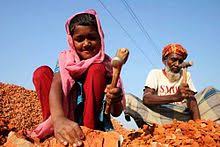
As the year-end holiday season drives global demand for smartphones, laptops, power tools, and other devices powered by lithium-ion batteries, few consumers realize the human cost behind one of their essential components: cobalt. Much of the world's cobalt comes from the Democratic Republic of Congo (DRC), where thousands of children have long worked in hazardous artisanal mines to help their families survive.
One of those children was Divine Komba, who spent years working in informal cobalt pits in the DRC. She endured harsh conditions—long days, exposure to toxic dust, skin rashes, and chronic illness—while earning as little as two dollars a day. "We didn't like this job, but we had no choice," she recalled. "For us to eat, we had to work in the mine."
Extreme poverty, rising food prices, and limited economic opportunities force families to bring children into mining, especially in Lualaba and Haut-Katanga Provinces, which hold over 65% of the world's cobalt reserves. Cobalt is indispensable to modern technology—from electric vehicle batteries and mobile phones to medical equipment and renewable energy infrastructure.
African Development Bank Project Changing Lives
To break this cycle, the African Development Bank (AfDB) launched the Alternative Well-Being Support Project for Children and Youth Involved in the Cobalt Supply Chain, a landmark initiative helping thousands of children leave mining behind and return to school or enter vocational training.
The project forms part of the Bank's broader skills revolution agenda, which recognizes youth and women as central to Africa's economic future. With support from the Government of the DRC and the German development agency GIZ, the program is delivering transformative results:
Direct Impact on Children
-
16,800+ at-risk children identified in cobalt mining areas
-
13,587 children reintegrated into formal schooling
-
Thousands more enrolled in vocational and life-skills training
Divine Komba is one of those success stories. She now trains as a mechanic at the Ruashi Social Promotion Centre supported by the Bank. "Mining made us sick," she said. "Today, I earn a living fixing cars. I encourage other girls to join the programme and study."
Another former child miner, 13-year-old Beni Ciel Yumba Musoya, once collected ore at the Kasulo mine. She is now back in school, dreaming of becoming a doctor. Her family says the project has helped their entire community: "The children are back in school and dreaming again," said relative Jocelyne Kazadi.
Supporting Families Through Sustainable Agriculture
Recognizing that child labor is driven largely by poverty, the project also helps parents and young adults transition into sustainable agricultural livelihoods, creating viable alternatives to mining.
Economic Transformation Achievements
-
10,500 young parents supported—over half of them women
-
Establishment of agricultural cooperatives (77% of 1,250-target completed)
-
Creation of two youth agribusiness centers
-
Installation of equipment units offering agricultural machinery
-
Development of livestock facilities and fish farms
Komba's mother, for example, received training to raise chickens and joined a local poultry cooperative, providing stable income and security for her family.
AfDB Gender Officer Juliette Ayuknow Egbe said the model demonstrates that addressing child labor means transforming entire communities. "Gender equality is a catalyst for lasting change," she noted.
Infrastructure, Education and Health Investments
Because mining communities are often remote and underserved, the project is also rehabilitating or equipping 40 schools, clinics, and water and sanitation facilities across the target provinces. This strengthens social services and ensures children and families have access to safe learning and living environments.
Long-Term Outcomes and Ambitions
Once fully implemented, the project is expected to deliver wide-ranging benefits, including:
-
11,250 direct jobs created, plus thousands of indirect jobs
-
Increase in locally produced staple foods from 10% to 50%
-
1.4 million direct beneficiaries in Lualaba and Haut-Katanga
-
Potential outreach to over 5.6 million people
Project Coordinator Alice Mirimo Kabetsi highlighted the critical role of agriculture in creating stable livelihoods. "Providing economic options to parents is providing a future for their children," she said. Quick-turnaround activities like poultry farming offer rapid income, reducing the desperation that pushes children into mines.
A Path Toward a Future Free from Child Mining
The AfDB's project is proving that protecting children requires a holistic approach—one that addresses humanitarian needs, builds economic resilience, strengthens education systems, and empowers women and youth.
In a world increasingly dependent on cobalt-powered technologies, the initiative stands as a powerful example of how targeted development efforts can break cycles of exploitation and give children the chance to reclaim their futures.


 Google News