

AfDB Launches $20.5 M Resilience Project for Displaced Communities in Somalia
The programme focuses on the town of Doolow in Somalia’s Gedo region, an area heavily affected by prolonged conflict, climate shocks, displacement, and humanitarian instability.
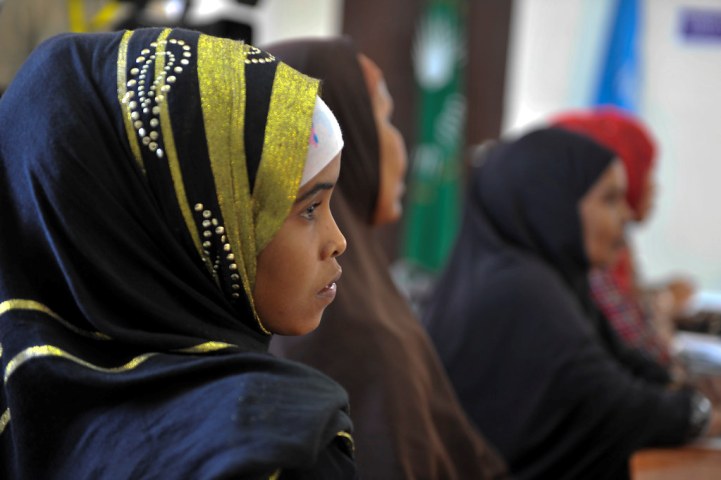
The African Development Bank Group (AfDB), in partnership with the United Nations Refugee Agency (UNHCR) and the Federal Government of Somalia, has launched a major $20.55 million initiative aimed at transforming living conditions for thousands of internally displaced people and vulnerable host communities in southern Somalia.
The project, known as the Strengthening Urban Resilience of Displaced and Host Communities in Doolow (SURDHT) initiative, represents one of the most significant long-term urban resilience and displacement response programmes currently underway in the Horn of Africa.
The programme focuses on the town of Doolow in Somalia's Gedo region, an area heavily affected by prolonged conflict, climate shocks, displacement, and humanitarian instability.
Major Shift Toward Long-Term Solutions for Displacement
The initiative signals a strategic shift away from short-term humanitarian responses toward sustainable development and resilience-building for internally displaced persons (IDPs).
Valued at more than $20 million, the SURDHT project aims to improve living conditions across four urban IDP settlements in Doolow by helping displaced families integrate more effectively into host communities through improved infrastructure, housing, and economic opportunities.
The programme will deliver investments in:
-
Climate-resilient housing
-
Water and sanitation systems
-
Livelihood and entrepreneurship support
-
Skills development for women and youth
-
Social cohesion and conflict mitigation
-
Land administration systems
-
Climate adaptation and resilience measures
-
Government coordination capacity
Officials say the project is designed not only to address immediate humanitarian needs, but also to strengthen long-term social and economic stability in one of the world's most fragile regions.
Somalia Facing One of Africa's Largest Displacement Crises
Somalia continues to experience one of the most severe displacement crises in Africa, driven by overlapping factors including armed conflict, political instability, drought, flooding, and food insecurity.
According to current estimates:
-
More than 3.9 million Somalis are internally displaced
-
Somalia has the second-largest internally displaced population in eastern and southern Africa
-
Millions remain dependent on humanitarian aid for survival
Extreme climate events linked to prolonged droughts and floods have intensified displacement in recent years, while insecurity from militant violence has further undermined livelihoods and weakened public infrastructure.
Humanitarian agencies warn that repeated cycles of crisis have left many displaced families trapped in long-term vulnerability with limited access to stable housing, employment, healthcare, education, or social protection.
AfDB Says Project Supports Somalia's Transition from Fragility to Stability
Alex Mubiru, Director General for the African Development Bank's East Africa regional office, said the project reflects Somalia's growing focus on durable solutions and national ownership of displacement responses.
"This investment illustrates how the Federal Government of Somalia, working with its citizens, is shifting its response to displacement towards lasting outcomes," Mubiru said.
He described the initiative as part of a broader effort to help communities transition "from fragility to stability and from vulnerability to dignity."
"With secure land tenure, climate-resilient housing, and livelihood opportunities for women and youth, Somali communities in Doolow are building resilience and restoring opportunity," he added.
The AfDB says the initiative aligns with wider regional strategies promoting the humanitarian-development-peace nexus — an approach increasingly adopted by international organisations to integrate emergency response, long-term development, and peacebuilding efforts.
Somali Government Frames Initiative as State-Building Strategy
Somalia's Prime Minister Hamza Abdi Barre described the project as a major milestone in the Government's effort to develop durable solutions for internally displaced populations while strengthening social stability.
"The launch of the SURDHT project signifies a significant milestone in the Federal Government of Somalia's dedication to fostering durable solutions for internally displaced persons and enhancing the resilience of host communities," Barre said during the launch event.
"In Doolow, this initiative is poised to improve access to housing, water, sanitation, livelihoods, and social services, while also advancing dignity, self-reliance, and social cohesion."
The Prime Minister emphasised that displacement policy must be viewed not only as a humanitarian issue, but also as a critical component of national recovery and governance.
"The Government regards durable solutions not merely as a humanitarian imperative but as a fundamental component of state-building, stability, and inclusive development," he said.
Focus on Women, Youth and Climate Resilience
A major component of the programme will focus on supporting women and young people through targeted skills training, entrepreneurship opportunities, and economic empowerment initiatives.
The project also includes measures aimed at strengthening resilience to climate shocks, which are increasingly recognised as a key driver of displacement throughout the Horn of Africa.
Somalia is among the countries most vulnerable to climate change globally despite contributing minimally to global emissions.
Repeated droughts, water shortages, livestock losses, crop failures, and flooding have devastated rural livelihoods and intensified migration into urban settlements like Doolow.
Officials say the project's climate adaptation measures are intended to reduce future displacement risks while improving long-term sustainability.
UNHCR Highlights Humanitarian-Development-Peace Nexus
UNHCR Somalia Deputy Representative and Officer-in-Charge Jing Song said the initiative demonstrates the importance of moving beyond emergency aid alone.
"Beyond addressing immediate humanitarian needs, it is essential to invest in sustainable livelihoods and resilience through the humanitarian-development-peace nexus approach," she said.
International agencies increasingly argue that humanitarian responses alone are insufficient for countries facing protracted displacement crises spanning many years or decades.
Instead, integrated approaches linking aid delivery with infrastructure, governance, economic development, and peacebuilding are being prioritised across fragile states.
Broad International Partnership Behind the Project
The SURDHT initiative will be implemented by Somalia's National Centre for Rural Development and Durable Solutions in partnership with multiple international organisations including:
-
International Organization for Migration (IOM)
-
Food and Agriculture Organization (FAO)
-
UN-Habitat
-
UN Women
The project is supported through the African Development Bank Group's Transition Support Facility, which focuses on fragile states and conflict-affected regions.
Officials say the broader goal is to strengthen long-term resilience and stability throughout the Horn of Africa, where displacement, conflict, and climate-related crises continue to intersect at unprecedented levels.
ALSO READ
-
Can Africa’s Great Green Wall Turn Degraded Landscapes Into Jobs and Economic Growth?
-
Africa’s Great Green Wall Push Gains New Momentum as Funding Drive Expands
-
Polio Remains a Global Health Emergency as Vaccination Gaps Persist
-
AfDB and ECCAS Shape Five-Year Integration Plan for Central Africa
-
Africa Pushes to Close the $42 Billion Financing Gap Facing Women


 Google News