

AfDB Pushes New Financial Sovereignty Agenda as Civil Society and Diaspora Join $400 Billion Financing Drive
NAFAD emerges at a time when African economies are confronting mounting fiscal pressures, rising debt vulnerabilities, climate financing needs, and declining access to concessional international finance.
- Country:
- Ivory Coast
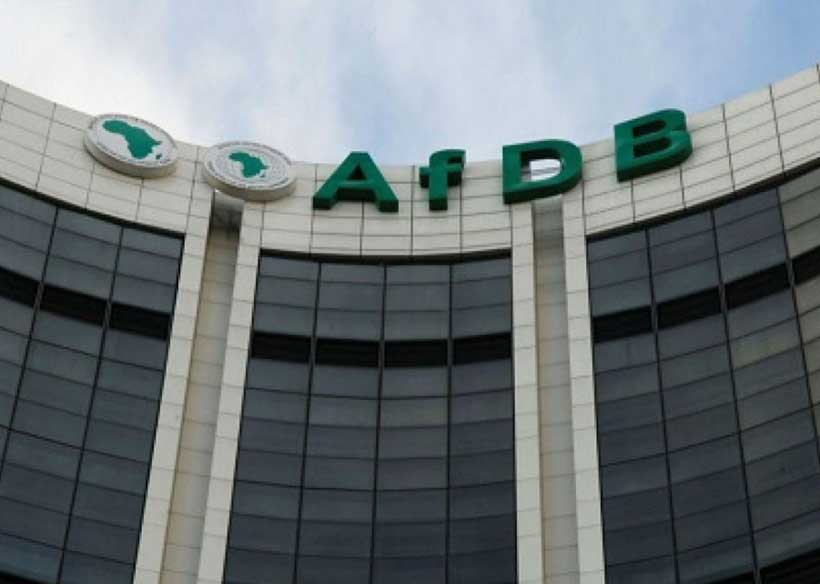
In a major shift aimed at redefining Africa's development financing model, the African Development Bank Group (AfDB) has formally positioned civil society organisations, diaspora networks, and philanthropic institutions at the centre of a bold new initiative designed to close the continent's massive annual development financing gap and strengthen Africa's financial sovereignty.
At a high-level policy dialogue held on 4 May 2026 at the Bank's headquarters in Abidjan, stakeholders from across Africa's civic, philanthropic, and diaspora sectors agreed to jointly shape the operational framework of the New African Financial Architecture for Development (NAFAD) — a flagship initiative that seeks to mobilise African capital for African development priorities.
The initiative represents one of the most ambitious efforts yet to transform how Africa finances its growth, shifting away from traditional donor dependency toward domestically driven investment systems powered by citizens, local communities, diaspora wealth, and philanthropic capital.
The collaborative framework developed during the Abidjan meeting will be formally presented during the African Development Bank Group's 2026 Annual Meetings in Brazzaville later this month at a special side event titled "Civil Society, Diaspora, and Philanthropy as Accelerators of NAFAD."
The Annual Meetings, scheduled from 25–29 May in the Republic of Congo, are expected to place Africa's evolving financial architecture and development sovereignty at the forefront of continental policy discussions.
Africa Seeks Solutions to a $400 Billion Financing Gap
NAFAD emerges at a time when African economies are confronting mounting fiscal pressures, rising debt vulnerabilities, climate financing needs, and declining access to concessional international finance.
According to the African Development Bank, Africa faces an estimated $400 billion annual development financing gap, severely constraining the continent's ability to invest in infrastructure, industrialisation, climate resilience, healthcare, agriculture, and youth employment.
The initiative aims to reposition Africa's citizens and communities not as passive recipients of development assistance, but as active investors and architects of economic transformation.
"Whether it is a diaspora engineer mobilising capital for their home country or a private foundation directing endowments toward smallholder agriculture, NAFAD places human impact at the heart of every financial decision," said Didier Acouetey, NAFAD Coordinator and Special Adviser to the President of the African Development Bank Group.
Analysts say the framework reflects a broader continental push for economic self-determination amid growing frustration with dependence on external financing systems that many African policymakers argue have failed to adequately support long-term development priorities.
Mobilising Africa's Vast Untapped Wealth
One of the most transformative elements of NAFAD is its focus on unlocking Africa's own financial resources.
Championed by African Development Bank President Dr Sidi Ould Tah, the initiative aims to mobilise:
-
Approximately $4 trillion in domestic African savings
-
Around $100 billion in annual diaspora remittances
-
Expanding pools of African philanthropic capital
-
Community-based investment resources
Rather than treating remittances and philanthropy solely as social support mechanisms, NAFAD seeks to integrate them into structured investment vehicles capable of financing large-scale development projects.
Experts say this could fundamentally reshape development finance across Africa by leveraging capital that already exists within African economies and diaspora communities but remains largely disconnected from formal investment systems.
Potential sectors targeted for investment include:
-
Infrastructure development
-
Renewable energy and climate resilience
-
Agriculture and food systems
-
Small and medium-sized enterprises
-
Digital transformation
-
Healthcare and education
-
Youth entrepreneurship and innovation
Civil Society and Diaspora to Become "Co-Architects" of Development
A defining feature of the initiative is the formal inclusion of civil society organisations and diaspora communities as strategic financial actors rather than peripheral advocacy groups.
Participants at the Abidjan dialogue emphasized that civic organisations possess deep local knowledge and trusted relationships with communities, making them essential partners in designing inclusive financial systems.
"NAFAD is not merely a reform proposal; it is a declaration of financial sovereignty for Africa," Acouetey said.
"This dialogue demonstrates the continent's capacity to build its future on its own foundations, fully integrating civic actors that were previously sidelined from major financial decisions."
Observers say the approach reflects a growing recognition that development strategies designed without grassroots participation often fail to generate sustainable impact.
Fatoumata Sidibé Diarra, Co-founder of the Think Tank Manssah, described the initiative as a major transition from consultation-based models toward genuine financial partnership.
"Africa no longer requires new aid frameworks," she said.
"It needs ownership structures that allow communities and philanthropists to invest sustainably in inclusive well-being."
Diaspora Communities Seen as Strategic Economic Force
The African diaspora is expected to play a particularly significant role in the NAFAD framework.
African diaspora remittances already exceed many forms of foreign direct investment and development assistance combined, providing critical economic lifelines for millions of households across the continent.
However, experts say these flows have historically remained fragmented and focused primarily on consumption rather than long-term productive investment.
NAFAD seeks to channel portions of diaspora wealth into structured financing platforms supporting sustainable development and wealth creation across African economies.
Ndidi Okonkwo Nwuneli, Executive Director of the ONE Campaign, noted that diaspora communities and African civil society organisations are already helping build alternative financial ecosystems across the continent.
She urged the African Development Bank to institutionalise these partnerships at scale.
"NAFAD will only succeed if those closest to local populations are involved as co-architects of the process," she said.
Push for African Financial Sovereignty Gains Momentum
The initiative comes amid growing calls across Africa for reforms to the global financial system, including demands for fairer access to climate finance, debt restructuring, and greater African influence in international financial institutions.
Many African leaders argue that the current global financial architecture leaves developing countries disproportionately vulnerable to external shocks, currency instability, and rising borrowing costs.
NAFAD is increasingly being framed not only as a financing mechanism, but also as a political and economic sovereignty project designed to strengthen Africa's control over its own development agenda.
Closing the Abidjan dialogue, Zeneb Touré, Manager of the Civil Society and Community Engagement Division at the African Development Bank, said the discussions reflected a collective determination to move beyond rhetoric toward implementation.
"The road ahead leads directly to the Annual Meetings in Brazzaville, where civil society, the diaspora, and the philanthropic sector will take their rightful place in co-constructing Africa's financial future," she said.
As African economies continue to confront mounting development pressures, the success of NAFAD could become a defining test of whether the continent can build a more self-sustaining, inclusive, and locally driven financial system capable of reducing reliance on external aid and unlocking Africa's vast untapped wealth.
ALSO READ
-
Africa’s Tax Reform Debate Puts Women’s Working Lives at the Centre
-
Africa Pushes for Climate Promises to Deliver Real Change
-
Korea and AfDB Deepen Partnership to Turn Africa’s Potential Into Jobs
-
Korea and Africa Set Out Plans to Turn AI Promise Into Jobs and Growth
-
Côte d’Ivoire Pushes to Close Its $6.56 Billion Energy Funding Gap


 Google News