

Repo rate to remain unchanged, despite banking on rate cut
“In this persistently uncertain environment, future policy decisions will continue to be highly data-dependent, sensitive to the balance of risks to the outlook, and will seek to look-through temporary price shocks.”
- Country:
- South Africa
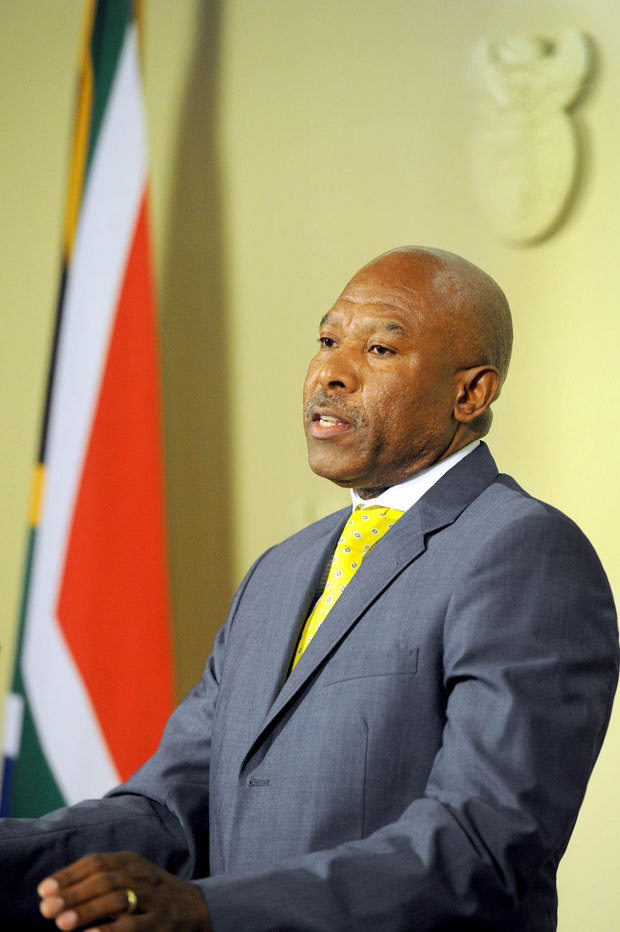
Reserve Bank Governor Lesetja Kganyago has announced that the repo rate will remain unchanged for the time being, despite some economists' banking on a rate cut.
"The MPC [Monetary Policy Committee] decided to keep the repurchase rate unchanged at 6.5% per annum. Three members preferred to keep interest rates on hold and two members preferred a cut of 25 basis points," he told a media briefing in Pretoria, following the MPC's meeting.
He said monetary policy actions will continue to focus on anchoring inflation expectations near the mid-point of the inflation target range in the interest of balanced and sustainable growth.
"In this persistently uncertain environment, future policy decisions will continue to be highly data-dependent, sensitive to the balance of risks to the outlook, and will seek to look-through temporary price shocks."
Despite a rebound in local GDP in the second quarter of this year, indicators suggest that economic activity will remain weak for the rest of the year.
Recent monthly inflation has been lower than the mid-point of the inflation target range, as owners' equivalent rent, food, and services inflation remain subdued.
"Since the September MPC, the rand has depreciated slightly by 0.6% against the US dollar, and by 0.8% against the Euro. The implied starting point for the rand is R14.94 against the US dollar, compared with R14.88 at the time of the previous meeting. While Rand has benefited from improvements in global sentiment, investors remain concerned about domestic growth prospects and fiscal risks.
"Although GDP growth rebounded to 3.1% in the second quarter, longer-term weakness in most sectors remains a serious concern," said the Governor.
He said based on recent short term economic indicators for the mining and manufacturing sectors, the third quarter GDP outcome is expected to be weak.
The forecast for GDP growth for 2019 is revised lower at 0.5% (from 0.6%).
The forecasts for 2020 and 2021 have decreased to 1.4% (from 1.5%) and 1.7% (from 1.8%), respectively, due to slower growth than previously expected in the third and fourth quarters and downward revisions to global growth.
"The MPC assesses the risks to the growth forecast to be to the downside. The escalation in global trade tensions, geopolitical risks, further domestic supply constraints and/or sustained higher oil prices could generate headwinds to growth.
"Public sector financing needs have risen, raising the prospect of further pressure on the currency and pushing borrowing costs for the broader economy higher. Implementation of prudent macroeconomic policies and structural reforms that lower costs and increase investment, potential growth and job creation, remains urgent," said Kganyago.
The overall risks to the inflation outlook are assessed to be balanced, but uncertainty about inflation risks is unusually high.
The next statement of the Monetary Policy Committee will be released on 16 January 2020.
(With Inputs from South African Government Press Release)


 Google News