

U.S. broadcaster RFE/RL asks European court to defend it from Russian crackdown
"We are hopeful that the European Court of Human Rights will view these actions by the government of Russia for what they are: an attempt to suppress free speech and the human rights of the Russian people," RFE/RL President Jamie Fly said in the statement. During the Cold War, the outlet, which was founded in the 1950s and was initially funded via the CIA, was for years at odds with Soviet authorities.
- Country:
- United Kingdom
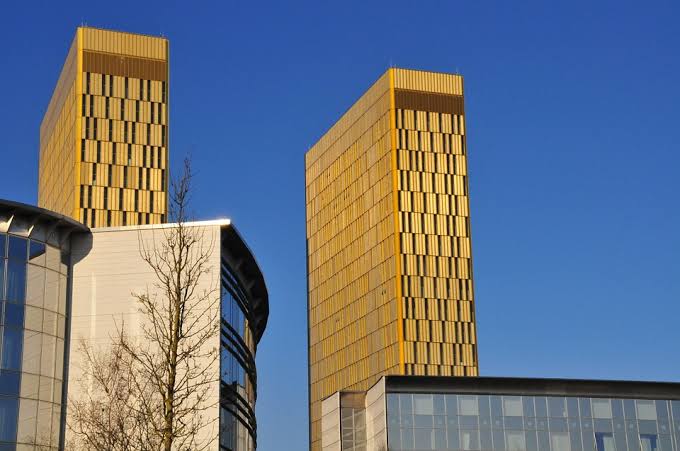
U.S. broadcaster Radio Free Europe/Radio Liberty has appealed to the European Court of Human Rights to order Russian authorities to refrain from enforcing fines on its Moscow bureau that would cause "irreversible harm". The U.S. multimedia news outlet has been heavily fined this year for what Russia says is its repeated failure to label itself as a media outlet "performing the functions of a foreign agent".
RFE/RL says Russian authorities have the power to place it into insolvency and/or to block access to its media sites if the fines are unpaid and that Andrey Shary, the director of its Russian service, faces the prospect of a prison sentence of up to two years and personal bankruptcy. The outlet, which has a vast network of freelancers across Russia, covers Crimea, which Moscow annexed from Ukraine in 2014, in great detail, and provides extensive coverage - in Russian -- of opposition protests and the fate of jailed Kremlin critic Alexei Navalny.
It says it has almost doubled its Russian audience over the last five years. FRICTION
The standoff has added to friction in Washington's ties with Moscow, which are already at post-Cold War lows amid disagreements over Ukraine, Syria, sanctions, and the jailing of Navalny. RFE/RL, which is funded by a grant from the U.S. Congress through the United States Agency for Global Media, says it has full editorial independence, protected by U.S. law, and that the labeling requirement amounts to defacing its own product.
It said fines on its Moscow bureau and Shary, its general director, could reach some $33 million by the end of the year if they continued at the current rate. Russian authorities have the power to label foreign-funded NGOs, media, or individuals they deem are engaged in political activity "foreign agents". The term, which carries a negative Soviet-era connotation, requires designees to attach the label to their publications and report their funding and spending.
Russia's communications watchdog, Roskomnadzor, did not immediately respond to a comment request. It says the "foreign agent" label is needed to make clear to a Russian audience that organizations "pursue the interests of other states". "We are hopeful that the European Court of Human Rights will view these actions by the government of Russia for what they are: an attempt to suppress free speech and the human rights of the Russian people," RFE/RL President Jamie Fly said in the statement.
During the Cold War, the outlet, which was founded in the 1950s and was initially funded via the CIA, was for years at odds with Soviet authorities. After the 1991 Soviet breakup, President Vladimir Putin's predecessor in the Kremlin, Boris Yeltsin, invited RFE/RL to open an office in Russia.


 Google News