

Africa Must Assert Its Advantage in Industrial Mineral Demand, Says Gwede Mantashe at Mining Indaba
Mantashe focused on South Africa's role within the mining sector, noting that the country holds 37% of the world’s manganese ore reserves, but only 2% is processed locally.
- Country:
- South Africa
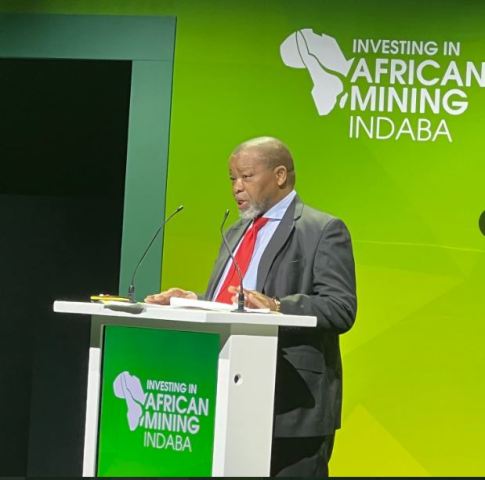
Mineral and Petroleum Resources Minister, Gwede Mantashe, stressed that Africa must "assert its advantage" in response to the booming global demand for industrially valuable minerals. Speaking at the 31st Investing in Africa Mining Indaba, currently taking place at the Cape Town International Convention Centre, Mantashe emphasized that Africa's rich mineral resources should be leveraged to drive the continent's socio-economic development.
Africa's Mineral Wealth and the Global Opportunity
Mantashe highlighted that the African continent is home to significant reserves of minerals critical to industrial development, including manganese, copper, coal, nickel, cobalt, titanium, vanadium, lithium, and rare earth minerals. "With the growing demand for these minerals, Africa needs to assert its advantage and take charge of the growing demand," he stated.
The Minister noted that despite holding vast mineral reserves, Africa remains underdeveloped. He pointed out that the continent controls 90% of the world's chromium and platinum, 40% of the world's gold, and the largest reserves of cobalt, vanadium, manganese, and uranium. "Africa is the world's richest mining jurisdiction. Despite this, it remains poor. This must change," he said, urging African nations to take control of their development while continuing to foster strategic partnerships with global partners.
South Africa's Potential and Local Beneficiation
Mantashe focused on South Africa's role within the mining sector, noting that the country holds 37% of the world's manganese ore reserves, but only 2% is processed locally. To address this, the government plans to intensify efforts with manganese producers and investors to promote local beneficiation and add value to these minerals.
"We are aware that local beneficiation can succeed only if we ensure a consistent, reliable, and affordable electricity supply," Mantashe added, acknowledging past electricity challenges but highlighting the country's progress in reducing power interruptions. He emphasized that the government is actively working on measures to reduce administered prices and lower the cost of doing business in South Africa.
South Africa's Vision as an Exploration Hub
The Minister also outlined the country's vision to become an exploration hub, noting that exploration is essential for mining and beneficiation. "There can be no mining or beneficiation without exploration, and we are committed to reigniting exploration investment," Mantashe said. He proudly shared that since the launch of the country's exploration fund at the previous Mining Indaba, three of the eight projects funded were 100% black-female-owned, with the others being more than 50% black-owned.
In addition, Mantashe revealed that the government is investing in small-scale mining and artisanal miners, with R67 million set aside to support 20 projects.
Mining Licensing System Overhaul
On the administrative side, Mantashe assured investors that South Africa's new mining licensing system is progressing well. The PMI Consortium and the Department of Mineral Resources are currently finalizing the design and configuration phase of the new system, which will streamline mining regulations, including client management, rights application submissions, and tracking functionality. This phase is expected to be completed shortly, followed by the testing and deployment of the new system.
Addressing backlogs in prospecting and mining applications, the Minister confirmed that 114 mining rights, 982 prospecting rights, and 385 mining permits have been processed and finalized.
South Africa's Role in the Global Mining Stage
As South Africa holds the Group of 20 (G20) Presidency, Mantashe urged African countries to leverage this historic opportunity. "This is the first time an African economy leads the G20 for a full year. Let us use this chance to shape a new era for the African mining industry, one that meaningfully contributes to the socio-economic development of our continent and helps build the Africa we want," he concluded.
Looking Ahead
Minister Mantashe's address underscored the need for Africa to capitalize on its mineral wealth and take ownership of its development trajectory. With rising global demand for critical minerals, the continent's mining sector is poised for significant transformation, with the potential to drive both economic growth and job creation across the region.


 Google News