

AI Revolutionizing Govt Communication: Balancing Innovation with Human Touch
Highlighting the importance of inclusivity, Morolong underscored the need to harness AI to enhance the skills of government communicators and promote diverse cultures and languages.
- Country:
- South Africa
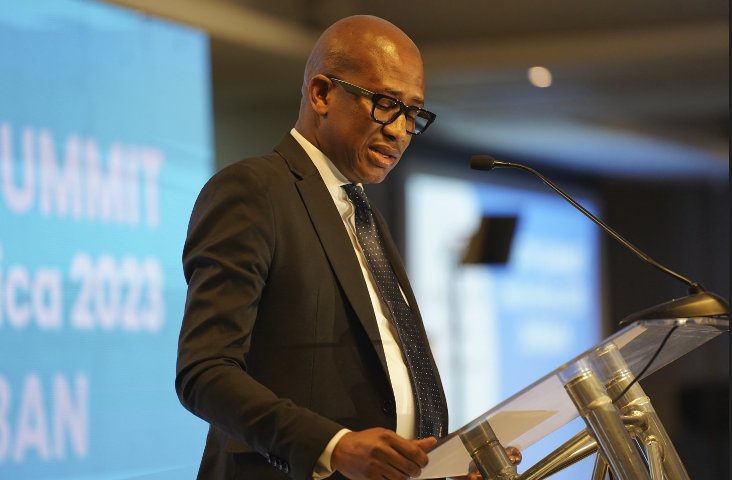
The rapid advancement of artificial intelligence (AI) is transforming the landscape of government communication, reshaping how the State engages with citizens, disseminates information, and ensures its voice reaches every corner of the nation. This sentiment was echoed by Deputy Minister in the Presidency, Kenny Morolong, during his address at the Government Communicators Networking Session held at Artscape in Cape Town on Wednesday night.
Morolong emphasized that the pivotal question is not whether to adopt AI technologies but how to integrate them in ways that enhance communication objectives without undermining authenticity and human connection. "We must explore how AI can break down language barriers, reach underserved communities, and preserve our indigenous knowledge systems, while ensuring that our communication remains credible and authentic," he stated.
Highlighting the importance of inclusivity, Morolong underscored the need to harness AI to enhance the skills of government communicators and promote diverse cultures and languages. However, he cautioned against losing the essential human touch that is fundamental to effective public service communication. "We must do so with a drive to leave no one behind, including our diverse skills and cultures," he asserted.
The networking session, held on the eve of the State of the Nation Address, featured a panel discussion on AI's growing influence on media and government communication. The former Dean of the Johannesburg Business School (JBS), Professor Randall Carolissen, led a thought-provoking discussion on AI's transformative potential and societal impact. Carolissen stressed the need to balance technological progress with privacy protection, accountability, and fairness.
He also highlighted AI's dual nature, noting its potential for both positive transformation and negative consequences, such as the proliferation of "highly convincing" deepfake images. "While AI can revolutionize content creation and distribution, we must remain vigilant about its ethical implications," Carolissen warned.
The panel drew attention to global AI strategies, referencing the Pan-Canadian AI strategy as a model. Canada was the first nation to develop a national AI strategy, and in 2022, it introduced the AI and Data Act (AIDA) under Bill C-27, part of the Digital Charter and Implementation Act, to promote responsible AI use.
In the South African context, practical applications of AI such as transcription services and multilingual support were discussed as critical tools for media and government communication. The panellists emphasized the role of AI in enhancing data processing and verification, thereby promoting truth and trust in media.
Lea-Anne Moses, Chief Operations Officer of Supple, a technology company operating in Britain and South Africa, highlighted the increasing pressures on newsrooms amid declining revenues. "AI offers opportunities to streamline processes like transcription and research, allowing journalists to focus on deeper storytelling. But we must not outsource our critical thinking to AI," she cautioned.
Associate Professor Sisanda Nkoala, Chair of Media Inclusion and Diversity at the University of the Western Cape and a representative of the Press Council of South Africa, emphasized the importance of ethical journalism and transparency in AI use. She stressed the need to adapt AI technologies to the African context, particularly to overcome language barriers and ensure media inclusivity.
The panel also raised concerns about AI ownership by large tech corporations and its potential to exacerbate the digital divide. Discussions included AI's impact on education, job displacement, and the urgent need for regulatory frameworks to ensure responsible AI deployment.
Tshepo Setshedi, Chief Financial Officer of Kagiso Tiso Holdings, pointed out that companies slow to embrace AI risk falling behind competitors. "We need to start preparing as a country by investing in AI and its applications," he advised.
As South Africa navigates the AI revolution, the government aims to leverage technology for inclusive and effective communication while safeguarding ethical standards and human connection. President Cyril Ramaphosa is set to deliver the State of the Nation Address this evening at 7 pm, where these themes are expected to resonate.
ALSO READ
-
AI in Courts Could Open Doors to Justice or Leave Vulnerable People Further Behind
-
Smartwatch AI Reaches 91% Accuracy in Heart Rhythm Study, With Important Trade-Offs
-
Free AI Training Opens Doors for African Public Officials to Build Smarter Services
-
UN Women Launches New AI Hub to Put Women’s Rights at Heart of Digital Future
-
Pope Leo XIV Calls for Peace and Safer AI for Young People at UNESCO Visit


 Google News