

Ramaphosa Calls for Unified Action to Advance Worker Rights and Inclusive Growth
workers' rights, South Africa, Cyril Ramaphosa, employment equity, National Minimum Wage, labour laws, inclusive growth, gender equality, informal sector, G20 Presidency
- Country:
- South Africa
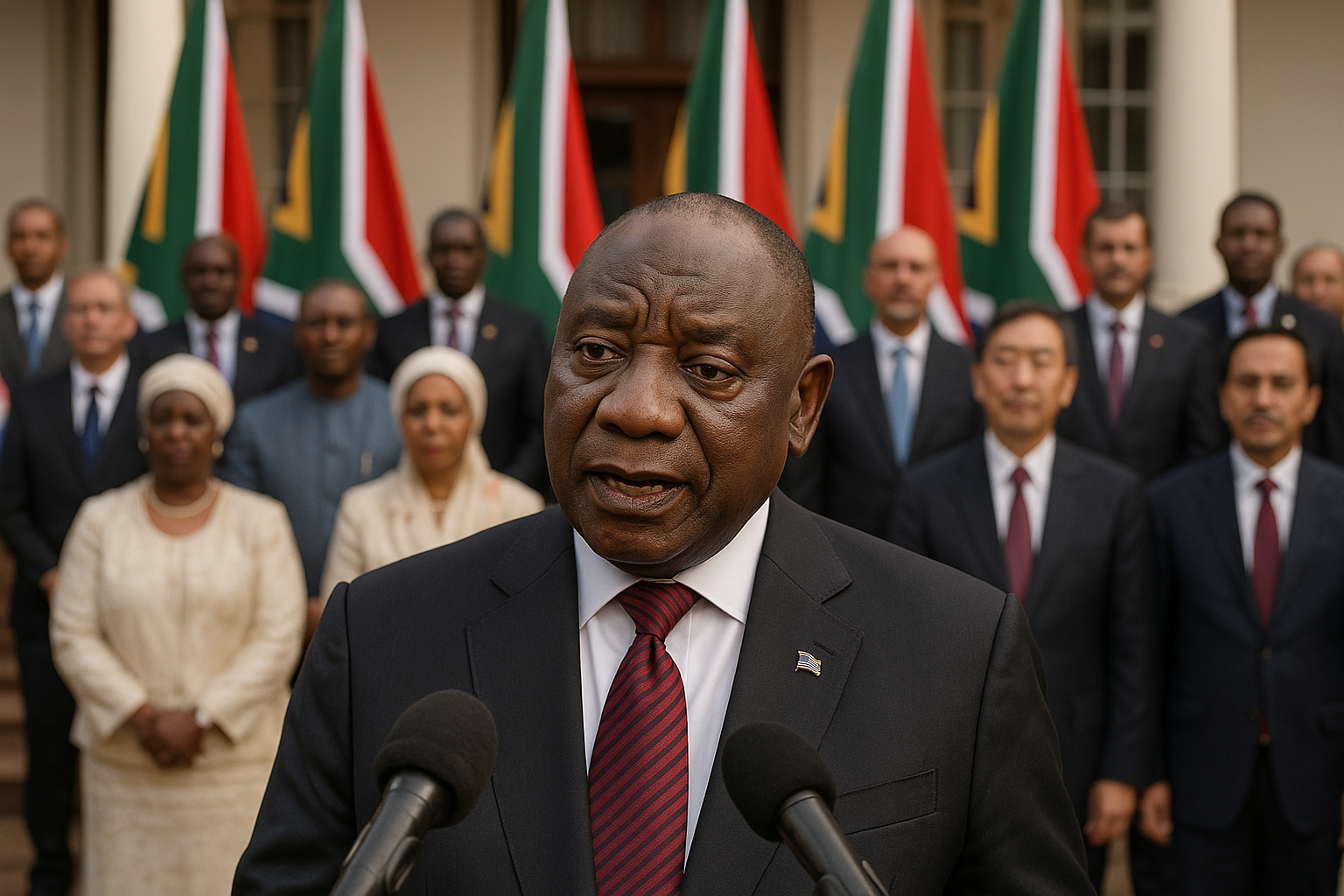
President Cyril Ramaphosa has urged South Africans across all sectors—government, business, labour and civil society—to work in unison to create a more inclusive economy that prioritises job creation while upholding the constitutional rights of all workers. His call to action came in his weekly newsletter published shortly after the nation celebrated Workers' Day on May 1, a day commemorating the historical struggles and achievements of workers globally.
Honouring Workers' Struggles and Hard-Won Gains
Reflecting on South Africa's journey since the end of apartheid, President Ramaphosa emphasised the significant progress made in safeguarding labour rights. "We have emerged from a painful history where black workers were systematically excluded from rights and opportunities," he wrote. Under apartheid, black workers were barred from unionising, denied access to skilled professions through job reservation laws, and often worked under dangerous conditions.
In democratic South Africa, however, the Constitution guarantees equal rights for all, including workers. Ramaphosa noted that since 1994, the government has passed numerous progressive laws such as the Labour Relations Act, Basic Conditions of Employment Act, Employment Equity Act, and the Occupational Health and Safety Act. These laws aim to protect workers' dignity, ensure fair treatment, and address past injustices.
The Impact of the National Minimum Wage
One of the most transformative developments in recent years, the President noted, was the introduction of the National Minimum Wage in 2019 following extensive consultation with stakeholders. This wage floor ensures that no worker in South Africa is paid below a legally stipulated amount. "Studies have shown that the National Minimum Wage has improved hourly earnings for low-income workers and reduced wage disparities," said Ramaphosa.
He highlighted the government's deliberate strategy to dismantle exploitative systems of the past. This includes advancing worker participation in ownership structures, with a growing number of employees becoming beneficiaries of worker share ownership schemes.
Advancing Gender Equality in the Workplace
President Ramaphosa underscored the need to ensure gender equality and eliminate discrimination in the labour market. He praised the role of the Employment Equity Act in prohibiting discrimination on grounds including sex, pregnancy, and marital status. South Africa's labour framework, he said, guarantees maternity and family responsibility leave, and includes safeguards against workplace sexual harassment and gender-based violence.
"Female workers are entitled to protection and equal opportunity," he wrote, urging companies to implement policies that reflect both legal obligations and constitutional values.
The Ongoing Debate on Labour Law Flexibility
Acknowledging current economic constraints and high unemployment levels, President Ramaphosa addressed calls by some quarters, including political parties, to relax labour laws to stimulate growth. He cautioned against this narrative, arguing that strong worker protections are not a hindrance to economic expansion.
"Stimulating economic growth and job creation can—and must—coexist with worker rights. In fact, fair labour practices can boost productivity and foster economic stability," he explained. He pointed out that South Africa's legal protections are part of a broader effort to overcome entrenched structural inequalities rooted in the apartheid era.
Tackling Employment Equity and Informal Sector Challenges
Despite the strides made, the President expressed concern over persistent racial and structural disparities in employment. Citing the Employment Equity Commission's latest findings, Ramaphosa noted that top management positions in the private sector remain overwhelmingly dominated by white males, while black South Africans are largely confined to semi-skilled and unskilled roles.
"This highlights how far we still have to go in transforming our economy's ownership and management structures," he said. Moreover, he acknowledged the compliance challenges in enforcing labour laws, especially within the rapidly growing informal sector. The International Labour Organisation (ILO), he noted, has raised concerns regarding limited protections for informal workers and gaps in law enforcement.
Global Engagement and the G20 Presidency
As part of South Africa's G20 Presidency, Ramaphosa stated that the country has engaged actively with international stakeholders to strengthen worker rights. Discussions with the International Trade Union Confederation and other global partners have focused on aligning labour standards and addressing contemporary challenges such as automation, informalisation, and gender disparities.
"These global forums are essential for sharing best practices and ensuring that worker rights are upheld not just domestically but globally," he said.
A Call to Action for the Business Community
The President ended his message with a direct appeal to the business sector. He encouraged companies to move beyond mere compliance with labour legislation. "Let your workplaces become spaces where the values of respect, inclusion, and human dignity are truly lived. Go beyond the law to embrace the spirit of transformation and social justice," he urged.
Companies should also take deliberate steps to promote diversity and inclusion by creating opportunities for historically disadvantaged groups, including women, youth, and persons with disabilities, he added.
Looking Ahead
President Ramaphosa's address serves as a reminder that the journey towards a fair and inclusive economy requires collective commitment and sustained action. He reiterated that South Africa's progressive labour laws are not obstacles but tools for empowerment and equality.
"As we honour the struggles and victories of workers past and present, let us use their legacy to build a future of opportunity, dignity, and shared prosperity for all," he concluded.


 Google News