

Ramaphosa Launches High-Stakes Inquiry into Alleged Police Corruption Syndicate
In his weekly “From the Desk of the President” newsletter, Ramaphosa reiterated government’s commitment to rebuilding institutions damaged during the era of state capture.
- Country:
- South Africa
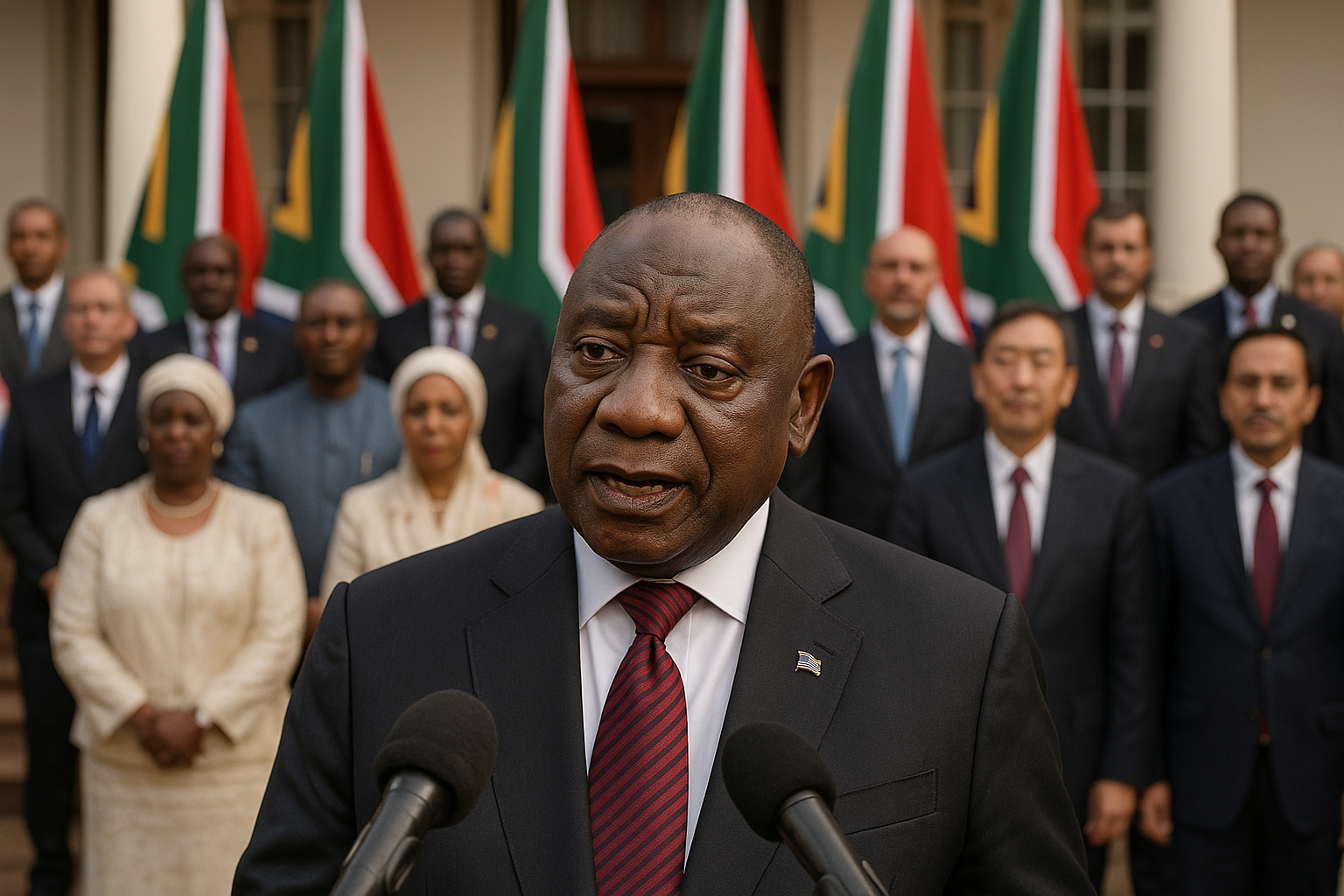
President Cyril Ramaphosa has taken a decisive and unprecedented step to restore public trust in South Africa's criminal justice system. On Monday, the President announced the formation of a powerful commission of inquiry to investigate grave allegations made by Lieutenant General Nhlanhla Mkhwanazi, KwaZulu-Natal's Provincial Police Commissioner, who claims that political figures and senior officials have interfered in police investigations and enabled criminal networks to infiltrate law enforcement.
In his weekly "From the Desk of the President" newsletter, Ramaphosa reiterated government's commitment to rebuilding institutions damaged during the era of state capture. "We are determined that the important work that has been done to rebuild our law enforcement agencies and security services should not be compromised," he said. "This is particularly important as we seek to put the era of state capture behind us."
Acting Deputy Chief Justice to Lead the Probe
The commission of inquiry will be chaired by Acting Deputy Chief Justice Mbuyiseli Madlanga and will be tasked with probing systemic corruption and criminal collusion within South Africa's law enforcement and intelligence structures. The commission will have sweeping powers to investigate:
-
Interference in or suppression of investigations
-
Organised crime facilitation
-
Coercion by senior officials into unlawful actions
-
Victimisation or silencing of whistleblowers
-
Political or financial gain from criminal networks
-
Failure to act on intelligence or warnings
The institutions under scrutiny include the South African Police Service (SAPS), National Prosecuting Authority (NPA), State Security Agency (SSA), Judiciary and Magistracy, and metropolitan police departments in Johannesburg, Ekurhuleni, and Tshwane.
Ministers and Officials in the Crosshairs
In a dramatic move underscoring the seriousness of the inquiry, President Ramaphosa placed Police Minister Senzo Mchunu on a leave of absence with immediate effect. While not yet implicated, Mchunu's temporary removal will allow the commission to operate independently and without potential obstruction. Mchunu has pledged full cooperation.
Law professor and respected anti-corruption advocate, Professor Firoz Cachalia, has been appointed Acting Minister of Police. Cachalia, currently chairperson of the National Anti-Corruption Advisory Council, previously served as Gauteng MEC for Community Safety and is known for his integrity and commitment to the rule of law.
Scope and Powers of the Commission
The commission will examine whether any serving or former members of the National Executive were complicit or negligent in enabling corruption. It will evaluate the performance of oversight mechanisms and assess whether current laws and institutional safeguards are sufficient to prevent criminal infiltration.
Crucially, the commission will:
-
Make recommendations for criminal prosecutions and disciplinary action
-
Propose institutional reforms
-
Refer urgent matters for immediate criminal investigation and prosecution
-
Recommend suspension or removal of implicated officials
According to Ramaphosa, "It is essential that we maintain this momentum and that we intensify this work. We will ensure that the SAPS and other law enforcement agencies continue to function without hindrance as the commission undertakes its work."
A Call to South Africans
The President urged citizens and law enforcement personnel to stand firm in upholding the Constitution and the rule of law. "I call on all South Africans to support the commission in its work and, where appropriate, to provide any information or assistance the commission may require," he said.
Ramaphosa emphasized that the commission is being established not from a position of crisis but of institutional recovery. Recent years have seen notable progress by agencies like the Special Investigating Unit (SIU), the Asset Forfeiture Unit, and SAPS in tackling complex corruption and crime.
Restoring Trust in Justice
This commission of inquiry stands as a bold and potentially historic effort to cleanse South Africa's law enforcement structures from within. It reaffirms the Ramaphosa administration's stated dedication to transparency, accountability, and constitutional democracy—values deeply tested during state capture.
As South Africa watches closely, the integrity and courage of this process may determine not just the fate of a few individuals, but the credibility of the entire justice system.


 Google News