

Illegal Mining Costs SA Economy Billions, Mantashe Tells SAHRC Inquiry
The Minister concluded by emphasising that government policy does not excuse or legitimise illegal mining.
- Country:
- South Africa
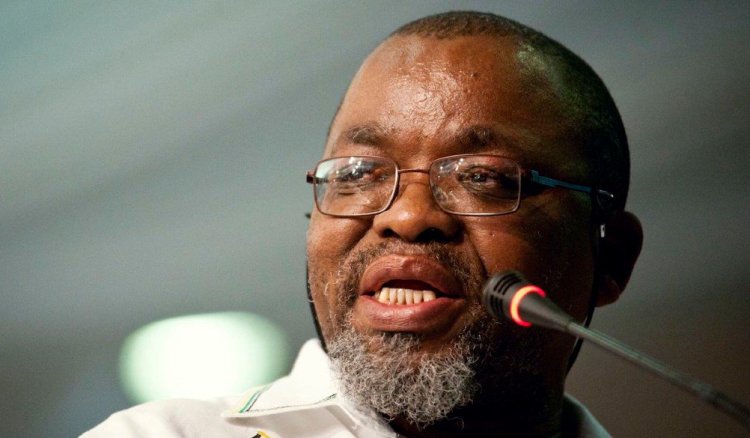
Minister of Mineral and Petroleum Resources Gwede Mantashe has warned that illegal mining poses one of the most serious threats to South Africa's mining sector, costing the economy tens of billions of rand and fuelling organised crime, violence and human rights abuses.
The Minister was addressing the South African Human Rights Commission (SAHRC) National Inquiry into the Policy Framework around Artisanal Mining, which is currently in its second phase.
The inquiry is examining the regulation of artisanal mining, its impact on surrounding communities, and the scope and enforcement measures of Operation Vala Umgodi, government's flagship crackdown on illegal mining.
Democratic Reforms Reshaped the Mining Sector
Mantashe reflected on South Africa's post-1994 transition, saying democracy brought with it both opportunity and responsibility.
"The dawn of democracy in 1994 marked a decisive break with the past. It ushered in a constitutional order grounded in human dignity, equality and freedom, and gave us the responsibility to correct historical injustices," he said.
For mining, this meant building a regulatory system that promotes inclusive participation, sustainable mining practices and socio-economic development.
"While progress has been made, significant challenges remain," he said.
Illegal Mining Versus Artisanal Mining: A Critical Distinction
Mantashe stressed that illegal mining is often incorrectly conflated with artisanal and small-scale mining, despite fundamental differences between the two.
He said illegal mining is a criminal activity carried out in direct violation of South African law and forms part of organised economic crime, frequently linked to:
-
Illicit financial flows
-
Extreme violence
-
Human trafficking
-
Gender-based violence and femicide
-
Smuggling of weapons and explosives
By contrast, artisanal and small-scale mining is a legitimate economic activity conducted within a regulated framework, usually by South African citizens or legally documented residents.
Undocumented Foreign Nationals a Growing Concern
The Minister said a "disturbing trend" has emerged in illegal mining operations, with a growing involvement of undocumented foreign nationals.
He cited recent incidents, including:
-
Stilfontein, where 1 826 illegal miners resurfaced from underground, the majority undocumented nationals from Mozambique, Zimbabwe and Lesotho
-
Barberton, where around 1 000 illegal miners were arrested, many from the same neighbouring countries
"We must be clear: an individual who enters the country illegally and engages in unlawful economic activity cannot be sanitised or reclassified as an artisanal miner," Mantashe said.
He warned that illegal mining has expanded beyond abandoned sites and is now encroaching on operational and licensed mines, posing serious threats to worker safety, mine security and economic stability.
Illegal Mining Cost Economy R49 Billion
Mantashe told the inquiry that illegal mining cost South Africa's economy and mining sector an estimated R49 billion in 2019 alone.
In response, government adopted a multi-pronged strategy that includes:
-
Accelerating the rehabilitation of derelict and ownerless mines
-
Implementing Operation Vala Umgodi to disrupt illegal mining syndicates
-
Streamlining regulations to formalise artisanal mining while strengthening penalties for illegal activity
Rehabilitation Progress and Funding Commitments
Significant progress has been made in rehabilitating abandoned mining sites. To date:
-
Four asbestos mines have been rehabilitated
-
280 mine openings have been safely closed
This work was supported by R180 million in additional funding allocated in the previous financial year.
For the current financial year, R134.7 million has been transferred to Mintek to continue rehabilitation efforts.
Mantashe noted that the number of mines rehabilitated annually depends on allocations from the National Treasury.
Law Reform Underway to Close Gaps
A comprehensive review of the Mineral and Petroleum Resources Development Act (MPRDA) is currently underway. The review aims to:
-
Formalise artisanal and small-scale mining
-
Prohibit illegal mining
-
Criminalise the transportation and trade of minerals without prescribed documentation
Mantashe said the department has already acted by publishing the Policy on Artisanal and Small-Scale Mining in 2022.
"This policy creates pathways for lawful, regulated participation — primarily for South African citizens and legally documented individuals," he said.
No Amnesty for Criminal Activity
The Minister concluded by emphasising that government policy does not excuse or legitimise illegal mining.
"Let me be clear: this policy does not legitimise illegal mining. It enables lawful economic participation while ensuring that criminal activity is firmly and decisively addressed," Mantashe said.
The inquiry continues as government seeks to balance economic inclusion, community rights and national security in one of the country's most complex sectors.


 Google News