

From Waste to Wealth: Gujarat Educational Campus Achieves LPG-Free Cooking Through Biogas Innovation
Located near Adalaj and managed by the Vasumati Charitable Trust, the campus now meets its entire cooking fuel requirement through renewable energy generated from organic waste.
- Country:
- India
In a powerful demonstration of how sustainability and innovation can converge at the grassroots level, an educational institution in Gujarat has emerged as a national model for clean energy adoption and scientific waste management. Under the broader vision of the Swachh Bharat Mission-Urban 2.0, the Shrimati Manekba Vinay Vihar Educational Complex in Gandhinagar has successfully transitioned to a fully biogas-based cooking system, eliminating its dependence on conventional LPG.
Located near Adalaj and managed by the Vasumati Charitable Trust, the campus now meets its entire cooking fuel requirement through renewable energy generated from organic waste. The system supports daily meal preparation for more than 500 individuals, including around 250 hostel students who are served two meals a day, as well as 15 staff families residing within the campus.
A Closed-Loop Model of Sustainability
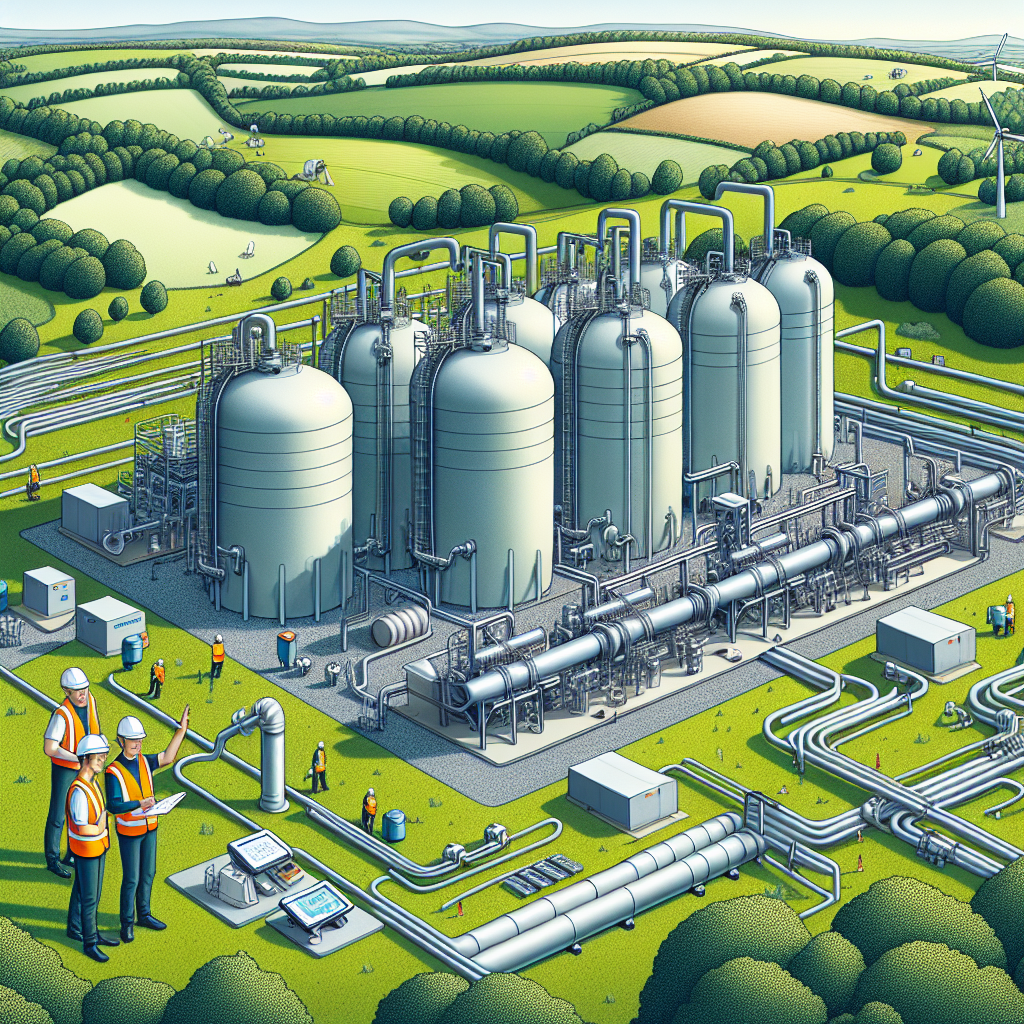
At the heart of this transformation are two biogas plants with a combined capacity of 90 cubic metres per day. These plants process a steady supply of organic waste, including dung from 222 cows maintained in the institution's gaushala, along with kitchen waste and agricultural residue sourced from nearby fields.
Through anaerobic digestion, this waste is converted into clean biogas, which now powers the institution's kitchens entirely. Officials confirm that the shift has removed the need for approximately 30 LPG cylinders per month—delivering not just environmental benefits, but also significant cost savings.
"We have achieved complete self-reliance in cooking fuel under the Gujarat government's Institutional Biogas Plant Scheme. The cows provide ample dung, and the slurry generated is used as organic manure in our fields, supporting chemical-free farming," campus authorities stated.
Dual Benefits: Clean Energy and Organic Farming
Beyond energy generation, the initiative exemplifies the principles of a circular economy. The nutrient-rich slurry produced as a by-product of biogas generation is reused as organic fertilizer, reducing dependence on chemical inputs while improving soil health and agricultural productivity.
Biogas, widely recognized as a clean and renewable energy source, significantly reduces greenhouse gas emissions compared to fossil fuels. It also addresses the challenge of managing organic waste in a scientific and environmentally responsible manner.
Policy Support Driving Adoption
The success of such initiatives is closely linked to proactive government support. The Gujarat Energy Development Agency (GEDA) offers financial assistance for institutional biogas plants with capacities ranging from 25 to 85 cubic metres. Non-profit organizations can avail subsidies of up to 75%, making large-scale adoption economically viable.
Over the past five years, Gujarat has witnessed the inauguration of nearly 193 institutional biogas plants, reflecting a growing shift towards decentralized, sustainable energy systems. These installations are particularly impactful in settings such as educational institutions, gaushalas, and community centres where organic waste is generated in significant volumes.
A Scalable Model for Urban India
The Gandhinagar campus stands as a compelling example of how integrated waste management can deliver multiple outcomes—clean energy generation, waste reduction, cost efficiency, and sustainable agriculture. It aligns closely with the goals of Swachh Bharat Mission-Urban 2.0, which emphasizes scientific waste processing, resource recovery, and community-driven sustainability.
As India continues to urbanize rapidly, such models offer a scalable blueprint for cities and institutions seeking to reduce their environmental footprint while enhancing self-reliance. By transforming waste into a valuable resource, these initiatives are redefining urban sustainability and paving the way for greener, cleaner, and more resilient communities.


 Google News