

SA Accelerates R12.5 Billion Smart Border Revolution as Bidders Appointed
The large-scale redevelopment will focus on six high-volume ports that collectively handle the vast majority of South Africa’s land-based trade and passenger traffic:
- Country:
- South Africa
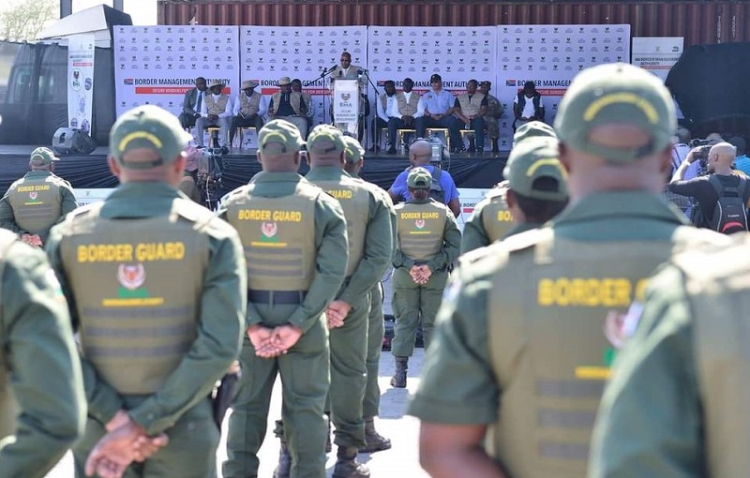
South Africa has moved decisively into the implementation phase of its historic R12.5 billion border modernisation programme, with the Border Management Authority (BMA) confirming the appointment of successful bidders to redevelop six of the country's busiest land ports of entry.
The announcement marks a critical transition from policy ambition to on-the-ground delivery, reinforcing government's commitment to transforming border infrastructure into a high-tech, secure, and globally competitive system capable of driving economic growth and regional integration.
Speaking at a media briefing in Pretoria, BMA Commissioner Dr Michael Masiapato described the development as a "turning point" in South Africa's approach to border management, signalling the beginning of a new era defined by smart infrastructure, advanced technology, and streamlined cross-border operations.
"This project represents a fundamental shift in how South Africa manages the movement of goods and people. It is about efficiency, security, and unlocking economic potential," Masiapato said.
Six Strategic Gateways to Be Rebuilt from the Ground Up
The large-scale redevelopment will focus on six high-volume ports that collectively handle the vast majority of South Africa's land-based trade and passenger traffic:
-
Beitbridge (Zimbabwe)
-
Lebombo (Mozambique)
-
Oshoek (Eswatini)
-
Kopfontein (Botswana)
-
Maseru Bridge (Lesotho)
-
Ficksburg Bridge (Lesotho)
These ports are central to regional supply chains, linking South Africa to key Southern African Development Community (SADC) markets. However, years of underinvestment, outdated infrastructure, and fragmented systems have constrained their performance, leading to congestion, delays, and increased costs for businesses.
Public-Private Partnerships Drive Delivery
The redevelopment will be implemented through a carefully structured public-private partnership (PPP) model, designed to mobilise private sector expertise and capital while ensuring strong governance and accountability.
The selection of bidders followed an extensive procurement process initiated in 2024, with evaluation carried out through a multidisciplinary team of financial, legal, and technical experts to ensure transparency and value for money.
Each port will be redeveloped by a dedicated concessionaire or consortium comprising leading infrastructure, engineering, and investment firms:
-
Beitbridge – Baobab Concession (3-year phased construction)
-
Lebombo – Raulux Consortium (3-year phased construction)
-
Oshoek – Baobab Concession (2-year phased construction)
-
Maseru Bridge – Kgorong Consortium (2-year phased construction)
-
Kopfontein – Kopfontein Consortium (2-year phased construction)
-
Ficksburg Bridge – Imbani Consortium (2-year phased construction)
These partnerships bring together a mix of local and international expertise, financial backing, and operational capacity to deliver complex infrastructure projects at scale.
Phased Construction to Minimise Disruption
Construction is expected to begin as early as late 2026 or early 2027 at selected sites, with a phased rollout over two to three years depending on the complexity and operational demands of each port.
The phased approach is designed to maintain border functionality during redevelopment, ensuring that trade and travel continue with minimal disruption.
"Based on current projections, we anticipate phased construction over a two-to-three-year period," Masiapato confirmed.
Smart Borders and One-Stop Border Posts
A defining feature of the project is the integration of cutting-edge "smart border" systems, which will replace manual processes with digital, data-driven operations.
The upgraded ports will enable the implementation of the One-Stop Border Post (OSBP) model — a system where border agencies from neighbouring countries operate jointly in a single facility to streamline clearance procedures.
Key innovations include:
-
Integrated digital processing of cargo and passengers
-
Real-time data sharing across agencies and countries
-
Automated risk assessment and targeted inspections
-
Non-stop freight movement systems
-
Advanced surveillance and monitoring technologies
"These upgrades will allow us to activate smart borders with non-stop freight movement and improved coordination with neighbouring countries," Masiapato said.
Closing Gaps Exploited by Illicit Activity
The modernisation programme is also a direct response to vulnerabilities that have historically plagued South Africa's borders, including smuggling, illegal migration, and corruption within procurement and operational systems.
By leveraging the PPP model and advanced technology, government aims to close these gaps, enhance enforcement, and strengthen revenue collection.
"The PPP model is a critical strategy to close vulnerabilities and eliminate opportunities for corrupt practices," Masiapato emphasised.
Stakeholder Engagement at the Core
Recognising the socio-economic importance of border regions, the BMA has committed to extensive stakeholder engagement throughout the project lifecycle.
Consultations will involve:
-
Local communities and traditional leaders
-
Municipal governments
-
Business chambers and freight associations
-
Cross-border traders and logistics operators
This inclusive approach aims to identify operational challenges, minimise disruption, and ensure that the upgraded infrastructure responds to real-world needs.
"We will be amplifying our engagement with all critical stakeholders to understand their pressure points before construction begins," Masiapato said.
A Catalyst for Regional Trade and Economic Growth
The border overhaul is widely viewed as a catalytic investment that could reshape South Africa's role as a regional trade hub.
By reducing delays, improving reliability, and enhancing security, the upgraded ports are expected to:
-
Boost intra-African trade flows
-
Lower logistics and transport costs
-
Increase export competitiveness
-
Strengthen regional economic integration
With global supply chains increasingly dependent on speed and efficiency, the success of this initiative could position South Africa as a leader in smart border management across the continent.
A Defining Infrastructure Reform
As construction prepares to get underway, the R12.5 billion programme stands as one of the most significant infrastructure and institutional reforms in South Africa's recent history.
It reflects a strategic shift toward leveraging technology, partnerships, and targeted investment to unlock economic growth while safeguarding national security.
If successfully delivered, the project will not only modernise physical infrastructure but also redefine how borders function — transforming them from points of friction into engines of opportunity.


 Google News