

Budget Debates and Govt Accountability Take Centre Stage in Parliament
Parliamentary activities will begin on Monday with a media briefing led by chairpersons from Parliament’s social services cluster committees.
- Country:
- South Africa
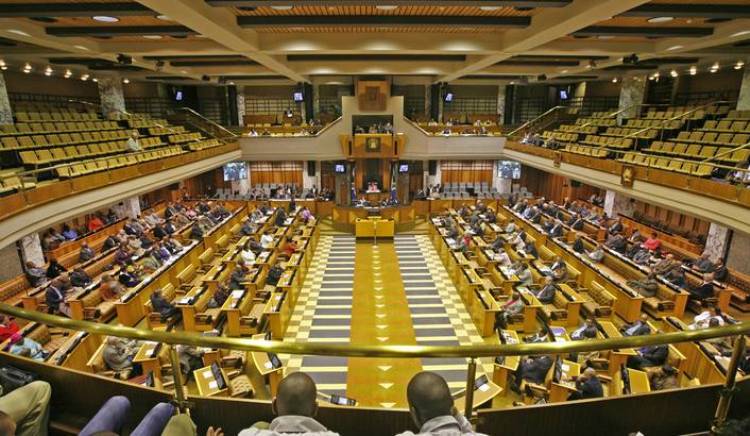
South Africa's Parliament is set for a busy and politically significant week as lawmakers debate departmental budget allocations, assess government performance, and scrutinise service delivery across multiple sectors. Budget Votes, oversight reports, policy discussions, and accountability sessions are expected to dominate proceedings in both the National Assembly and the National Council of Provinces (NCOP).
The week's parliamentary programme reflects the growing focus on fiscal accountability, social service delivery, governance reforms, and public sector performance amid ongoing socio-economic pressures facing the country.
Parliamentary activities will begin on Monday with a media briefing led by chairpersons from Parliament's social services cluster committees. The engagement aims to provide the public with updates on critical challenges affecting sectors such as social development, healthcare, science, innovation, and research.
Among the key issues expected to be discussed are concerns regarding the financial sustainability and operational capacity of social development institutions, verification processes for social grant beneficiaries, and challenges affecting vulnerable communities dependent on government support programmes.
Healthcare infrastructure and service delivery are also expected to come under close scrutiny following oversight visits conducted by parliamentary committees. Lawmakers are likely to raise concerns related to hospital conditions, staffing shortages, infrastructure maintenance, and healthcare accessibility in several provinces.
Another major issue on the agenda is the ongoing legal and policy debate surrounding South Africa's National Health Insurance (NHI) programme. The NHI remains one of the country's most closely watched healthcare reforms, aimed at expanding universal healthcare access while generating intense political, legal, and economic debate.
Innovation, research, and youth development are also expected to feature prominently during discussions. Parliamentary committees are set to examine initiatives aimed at supporting youth innovators, improving transformation in the science and innovation sector, and strengthening research capabilities at historically disadvantaged institutions.
On Tuesday, attention will shift to the National Council of Provinces, where lawmakers will consider the Division of Revenue Bill for the 2026/27 financial year. The legislation plays a critical role in determining how nationally collected revenue is distributed among national, provincial, and local government structures.
The bill is considered one of the most important pieces of financial legislation because it directly affects the funding available for essential public services such as healthcare, education, housing, infrastructure, and municipal operations. Provincial governments and municipalities rely heavily on these allocations to finance service delivery and development programmes.
At the same time, the National Assembly will continue deliberations on departmental Budget Votes through a series of mini-plenary debates. Members of Parliament will review and debate expenditure plans for several key departments, including Tourism, Higher Education, International Relations and Cooperation, Trade, Industry and Competition, Basic Education, and Forestry, Fisheries and the Environment.
These budget debates provide MPs with an opportunity to assess departmental priorities, spending efficiency, policy implementation, and service delivery outcomes. Opposition parties are also expected to use the debates to challenge government performance and demand greater accountability from ministers.
On Wednesday, the National Assembly will continue budget discussions focusing on allocations for Human Settlements as well as Planning, Monitoring and Evaluation. These sectors are considered central to improving housing delivery, urban development, infrastructure planning, and government performance monitoring.
A major highlight of Wednesday's parliamentary proceedings will be a question-and-answer session involving ministers from the Justice, Crime Prevention and Security Cluster. Ministers responsible for Police, Justice, Defence, Correctional Services, Home Affairs, International Relations, and State Security will face questions from MPs on a range of governance, safety, and national security issues.
The session is expected to cover topics such as crime prevention, corruption, border security, prison conditions, immigration management, law enforcement capacity, and broader concerns regarding public safety and state accountability.
The NCOP will also hold policy debates on budget allocations for Human Settlements and Basic Education, both of which remain critical sectors due to ongoing infrastructure challenges, housing shortages, and education system pressures.
Attention will then turn to Parliament itself on Thursday when National Assembly Speaker Thoko Didiza and NCOP Chairperson Refilwe Mtshweni-Tsipane table Parliament's own Budget Vote.
The parliamentary budget allocation funds the institution's constitutional responsibilities, including law-making, executive oversight, public participation processes, committee operations, and intergovernmental coordination. The funding also supports the functioning of MPs and political parties represented in Parliament.
The National Assembly is additionally expected to pay tribute to the late Ntandoyenkosi Nkosentsha Shezi of the uMkhonto Wesizwe Party, who served on several parliamentary committees following his election to Parliament in 2024.
MPs are also scheduled to consider reports arising from oversight visits to correctional facilities, with discussions expected around prison conditions, inmate welfare, rehabilitation programmes, overcrowding, and institutional management challenges within the correctional services system.
Parliament will further deliberate on two draft resolutions. One calls for an inquiry into the capacity and sustainability of South Africa's post-school education and training sector, while the other seeks intervention regarding the recognition of certain traditional and indigenous communities.
Beyond plenary sessions, parliamentary committees are expected to hold approximately 30 meetings during the week covering a wide range of policy and governance areas including healthcare, communications, education, mining regulation, agriculture, public finances, municipal governance, and infrastructure development.
Political analysts say the week's programme highlights Parliament's central oversight role in ensuring government accountability, monitoring expenditure, and assessing whether public resources are being used effectively to address citizens' needs.
The extensive focus on budgets, governance performance, and service delivery also comes at a time when South Africa continues to face economic pressures, unemployment challenges, infrastructure constraints, and increasing public demands for efficient governance and improved public services.


 Google News