

Ronald Lamola Calls for Faster Integration to Protect Africa from External Shocks
The Minister argued that South Africa’s foreign policy remains firmly rooted in supporting Africa’s collective interests and strengthening the continent’s economic and political resilience.
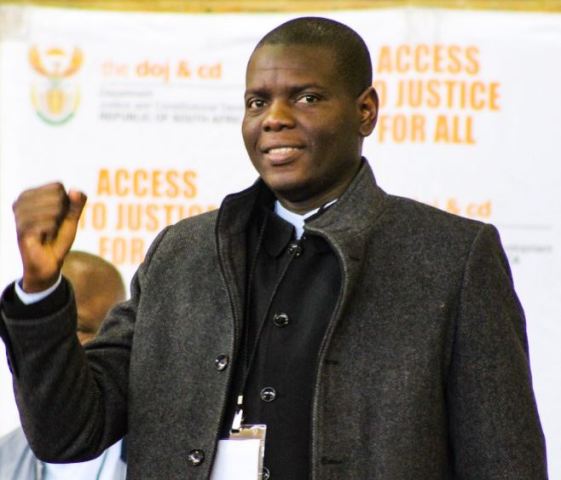
- Country:
- South Africa
South Africa's Minister of International Relations and Cooperation, Ronald Lamola, has urged African countries to urgently accelerate regional integration and expand intra-African trade in order to protect the continent from external economic shocks, geopolitical instability, and global power competition.
Presenting the Department of International Relations and Cooperation's (DIRCO) 2026/27 Budget Vote in Parliament on Tuesday, Lamola said Africa remains highly vulnerable because of its continued dependence on external markets and foreign economic systems.
Africa Facing Growing Global Pressures
Lamola said the international environment is becoming increasingly unstable due to:
-
Rising unilateralism
-
Economic coercion
-
Wars and geopolitical conflicts
-
Resource extraction competition
-
"Winner-takes-all" global power politics
"We table this budget at a time when international cooperation is under sustained pressure from unilateralism, economic coercion, wars of aggression, deals of extraction and a winner-takes-all approach to global relations," Lamola said.
The Minister argued that South Africa's foreign policy remains firmly rooted in supporting Africa's collective interests and strengthening the continent's economic and political resilience.
AfCFTA Seen as Key to Africa's Economic Future
A major focus of Lamola's address was the African Continental Free Trade Area (AfCFTA), which he described as one of Africa's most important economic transformation projects.
According to the Minister, AfCFTA has the potential to create:
-
A common market worth approximately 3.4 trillion US dollars
-
Greater economic diversification
-
Reduced dependence on external markets
-
Stronger continental resilience
The agreement is intended to improve trade integration among African countries by reducing tariffs, strengthening regional supply chains, and encouraging industrial development.
Intra-African Trade Still Too Low
Despite the ambitions of AfCFTA, Lamola warned that trade within Africa remains critically low compared to other regions of the world.
He revealed that:
-
Intra-African trade currently stands at only 16% across the continent
-
Trade within the Southern African Development Community (SADC) is approximately 21%
By comparison:
-
Europe records around 68% intra-regional trade
-
Asia records approximately 59%
"Africa's trade is also still heavily concentrated outside the continent," Lamola said.
According to the Minister, more than half of Africa's imports and exports remain tied to just five economies outside Africa, leaving the continent highly exposed to external disruptions.
"Regional Integration Must Move From Aspiration to Implementation"
Lamola stressed that Africa's vulnerability to external shocks demonstrates why regional integration can no longer remain only a political aspiration.
"It is also why regional integration must move from aspiration to implementation," he said.
The Minister emphasized the need for practical measures aimed at:
-
Reducing trade barriers
-
Expanding cross-border infrastructure
-
Strengthening regional value chains
-
Improving industrial cooperation
-
Enhancing financial integration
South Africa Supporting Agenda 2063
Lamola noted that South Africa currently chairs the African Union Ministerial Committee on the Follow-up and Implementation of Agenda 2063.
Agenda 2063 is the African Union's long-term strategic framework aimed at promoting:
-
Economic integration
-
Industrialization
-
Infrastructure development
-
Peace and stability
-
Sustainable development
South Africa, according to Lamola, is actively working to accelerate implementation of the continent's broader development objectives.
SADC Must Prepare for Future Crises
The Minister also highlighted the strategic importance of the Southern African Development Community (SADC), warning that the region must become better prepared for future economic and geopolitical disruptions.
Lamola recently hosted a SADC Ministers of Foreign Affairs Retreat in Skukuza, located in the Kruger National Park, where regional leaders discussed geopolitical risks affecting Southern Africa.
According to the Minister, SADC countries agreed that the region must improve preparedness for:
-
Global conflicts
-
Climate-related disasters
-
Food and fuel price volatility
-
Public health emergencies
-
External geopolitical decisions affecting Africa
Southern Africa's Mineral Wealth Highlighted
Lamola emphasized Southern Africa's vast critical mineral reserves as a major strategic opportunity for industrial development and economic transformation.
He stated that the region possesses:
-
30% of the world's proven critical mineral reserves
-
Approximately 50% of global cobalt reserves
-
Around 20% of global graphite reserves
-
About 10% of global copper reserves
"These resources, if harnessed properly, can propel our region's structural transformation," Lamola said.
Global demand for critical minerals has increased sharply due to the worldwide transition toward:
-
Renewable energy technologies
-
Electric vehicles
-
Battery storage systems
-
Advanced manufacturing
-
Digital infrastructure
South Africa's SADC Chairship Priorities
South Africa is expected to assume full chairship of SADC in August 2026.
Lamola outlined several strategic priorities that the country intends to pursue during its leadership term, including:
-
Deepening political cohesion
-
Consolidating the SADC Free Trade Area
-
Reducing non-tariff trade barriers
-
Expanding regional value chains
The Minister said specific attention would be given to sectors such as:
-
Agro-processing
-
Critical minerals beneficiation
-
Pharmaceuticals
-
Strategic manufacturing industries
Analysts note that regional value-chain development is increasingly viewed as essential for reducing Africa's dependence on raw commodity exports.
Continued Commitment to Peacebuilding
Lamola also reaffirmed South Africa's commitment to peacebuilding and conflict-resolution efforts across the African continent.
He referenced South Africa's diplomatic engagement in regions including:
-
Eastern Democratic Republic of Congo
-
South Sudan
"In all these areas, South Africa discharges its responsibility through diplomacy, mediation, regional solidarity and a firm belief that Africa must shape its own future," Lamola said.
Foreign Policy Linked to African Development
The Minister's speech reflected South Africa's broader foreign policy strategy of linking diplomacy with economic development, regional integration, and continental stability.
South Africa has increasingly positioned itself as a leading advocate for:
-
African economic integration
-
Reform of global governance institutions
-
South-South cooperation
-
Multipolar global systems
-
Greater Global South representation
DIRCO Budget Allocation
The Department of International Relations and Cooperation (DIRCO) has been allocated:
R7.227 billion
for the 2026/27 financial year.
The budget is expected to support South Africa's diplomatic missions, multilateral engagements, regional integration efforts, peacebuilding activities, and economic diplomacy initiatives.
Africa's Integration Becoming Strategic Priority
Experts increasingly argue that accelerating intra-African trade and regional integration is becoming strategically important as global geopolitical tensions intensify.
The AfCFTA is widely viewed as one of the world's largest free trade projects and a potentially transformative platform for:
-
Industrialization
-
Job creation
-
Economic diversification
-
Regional resilience
-
Reduced external dependency
However, analysts note that implementation challenges, infrastructure gaps, and non-tariff barriers continue to slow progress.
Lamola's remarks signal South Africa's intention to push more aggressively for practical continental integration measures as part of its broader diplomatic and economic agenda.
ALSO READ
-
Africa’s Informal Workers Power Trade but Have Little Say in Rules Shaping Lives
-
From Debt Pressure to AfCFTA: Africa Searches for a New Formula to Finance Growth and Jobs
-
AfDB and Germany Join Forces to Connect Africa Through Better Rail
-
From Market Access to Market Power: What African Firms Need to Capture AfCFTA’s Trade Gains


 Google News