

North West, KwaZulu-Natal province most vulnerable in upcoming polls: Ministry
Through our intelligence-driven operations, hotspots in the country have been identified and will be prioritised. As part of the deployment strategy, a capacity of five teams will be maintained at the national level.
- Country:
- South Africa
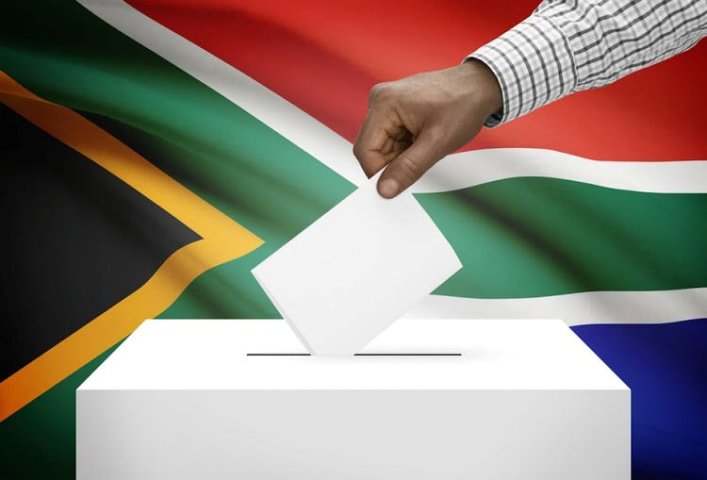
As South Africa heads for national and provincial elections on 8th May, authorities aim to conduct smooth and safe polls. The ministry of Justice, Crime Prevention and Security (JCPS) iterates its readiness for the 6th general elections. JCPS has been continuously working with different stakeholders to ensure voters can exercise their Constitutional right to vote freely and fairly.
JCPS during media interaction said, "at this stage, we can reemphasise our confidence that all safety and security measures have been put in place to create an environment for free and fair elections starting from the 6th to the 8th of May 2019.
Through our intelligence-driven operations, hotspots in the country have been identified and will be prioritised. As part of the deployment strategy, a capacity of five teams will be maintained at the national level to be deployed to any part of the country where the situation requires urgent intervention to deal with high-risk situations. The highest risk areas are the North West and KwaZulu-Natal Provinces.
All relevant security-aligned departments within the three spheres of government are continuously working tirelessly to ensure the successful delivery of the 6th general elections. As a force multiplier, we will be deploying around 3,504 reservists nationwide.
The elections security plan is managed by National, Provincial, District and Local JOINTS structures of the JCPS Cluster. These JOINTS structures consist of the SANDF, SAPS, Home Affairs, IEC, the Demarcation Board, Department of Justice and Constitutional Development, the State Security Agency (SSA) and other stakeholders. As the cluster, we want to reassure the public that all areas will be accessible for all citizens to exercise their constitutional right to vote.
On the day of the elections, 22,924 voting stations will be opened for all citizens to vote. There will also be 9 results centres in each province and TSWABAC designated for the national results. Members of the South African Police Service (SAPS) will enhance visibility and prevent any form of criminal activity in and around voting stations and the results centres.
Furthermore, police officials will monitor all forms of protestation or 'shutdowns' to ensure that no individual's constitutional right to vote will be infringed. Police officers will escort Presiding Officers who will visit homes of those people who will participate in special voting on the 6th and 7th May 2019. Law enforcement agencies will also provide security services to the presiding and voting officers when they collect and deliver ballot papers/boxes to voting stations. In total, 51,306 police officers will be deployed in the voting stations on Election Day.
The Department of Correctional Services (DCS) which houses a population of over 170,000 inmates is mandated by the Electoral Amendment Act of 2013, to ensure that every inmate, irrespective of the type of sentence imposed, or the type of offence committed, is entitled to register as a voter and vote in the election of the National Assembly and a provincial legislatures.
Therefore the Department will be deploying voting officials in the 243 correctional facilities around the country to allow all the registered inmates with relevant identification documents to exercise their constitutional right to vote.
A protocol has been established between the Department of Justice and Constitutional Development, SAPS Detectives and the NPA to prioritise all election-related cases. No specialised courts have been established.
To ensure access to the correct documentation, the Department of Home Affairs will extend operational hours at frontline offices from the 6th to the 8th May 2019 in a drive to assist eligible voters to collect identity documents (IDs) they had applied for, or to apply for new Identity Documents (IDs) or Temporary Identity Certificates. The frontline offices of the Department of Home Affairs will also align its operational hours for identification services to those of the Independent Electoral Commission (IEC).
This means that Home Affairs offices' operational hours will be extended from 16h00 to 19h00 to cater to people seeking access to services on these two special voting days. This will provide further opportunities for citizens to collect their uncollected documents (from 08h00 to 19h00). Home Affairs frontline offices will also provide public services on Election Day, from 07h00 until 21h00.
Anyone in possession of an enabling document like a smart ID card, green ID book or Temporary Identity Certificate will be afforded an opportunity to cast his/her vote. To assist the people who lost their belongings and identification documents in the flood-ravaged areas in KwaZulu-Natal and Eastern Cape, the Department of Home Affairs will issue more than 300 identity documents in Eastern Cape and 121 in eThekwini, KwaZulu-Natal. The Umngeni Office will open on Saturday to assist the victims. The Department will continue to issue more temporal identification documents to those affected by the floods.
The Department, therefore, appeals to citizens to collect their smart ID cards or green ID books or to apply for Temporary Identity Certificates so that they may exercise their democratic right to vote.
The South African National Defence Force (SANDF) will work with all the JCPS cluster departments to ensure that these elections happen in a safe and secure environment. Under the ambit of the National JOINTS, the SANDF will be on standby to provide support to the IEC. In the case of a disaster, the SANDF is on standby and ready to support, as they have contributed to assisting in the recent floods in KwaZulu-Natal and Eastern Cape.
Ladies and gentlemen, the JCPS cluster will ensure that the 6th general elections will be conducted in a safe and secure environment. As the cluster, we reemphasise that we are operationally ready to execute our mandate and ensure a safe and secure environment for free and fair elections to prevail.
Many South Africans sacrificed their lives so that we can enjoy a democracy that is strong and vibrant which allows everyone, irrespective of race, colour, gender or religion to make their voice heard through voting. Together we can build on the achievements of the past 25 years by going to the different voting stations to make sure that we build on the gains we have made since 1994. We wish all South Africans well as they exercise their constitutional right to vote for the party of their choice in the 6th general elections.
Earlier, South Africa's Independent Electoral Commission's (IEC) chairperson Glen Mashinini urged voters to exercise their franchise in the upcoming national and provincial election. IEC CEO Sy Mamabolo said Election Day will be a culmination of two years of preparing, planning and training and it was now up to the voters to cast votes.


 Google News