

Gaza on the Brink of Full-Scale Famine as Food and Nutrition Crisis Deepens
The first famine threshold—food consumption—has deteriorated rapidly since the last IPC assessment in May 2025.
- Country:
- West Bank and Gaza
The Gaza Strip is rapidly descending into one of the most acute humanitarian catastrophes in recent history, as the Integrated Food Security Phase Classification (IPC) issued its most severe alert yet. According to the July 2025 IPC update, two of the three famine thresholds have already been breached in large parts of the territory, prompting warnings from FAO, WFP, and UNICEF that a full-scale famine is imminent.
The crisis—driven by prolonged conflict, restricted humanitarian access, and the collapse of local infrastructure—is marked by soaring rates of food insecurity, acute malnutrition, and starvation-related deaths. More than 500,000 people, nearly a quarter of Gaza's population, are now enduring famine-like conditions, while the remaining population is trapped in a cycle of extreme hunger.
Unprecedented Collapse of Food Access
The first famine threshold—food consumption—has deteriorated rapidly since the last IPC assessment in May 2025. The data reveals that 39% of Gazans are now going days without eating, a devastating statistic that reflects both the physical unavailability of food and the total breakdown of distribution systems.
Humanitarian food aid, even where available, has struggled to reach the most vulnerable due to military blockades, damaged roads, and limited access to fuel. With local agrifood systems destroyed and commercial imports restricted, families have resorted to consuming grass, animal feed, or nothing at all.
"People are starving not because food is unavailable, but because access is blocked," said FAO Director-General QU Dongyu. "We need safe and sustained humanitarian access and immediate support to restore local food production. The right to food is not optional—it is a human right."
Children Suffer Most: Malnutrition Soars to Emergency Levels
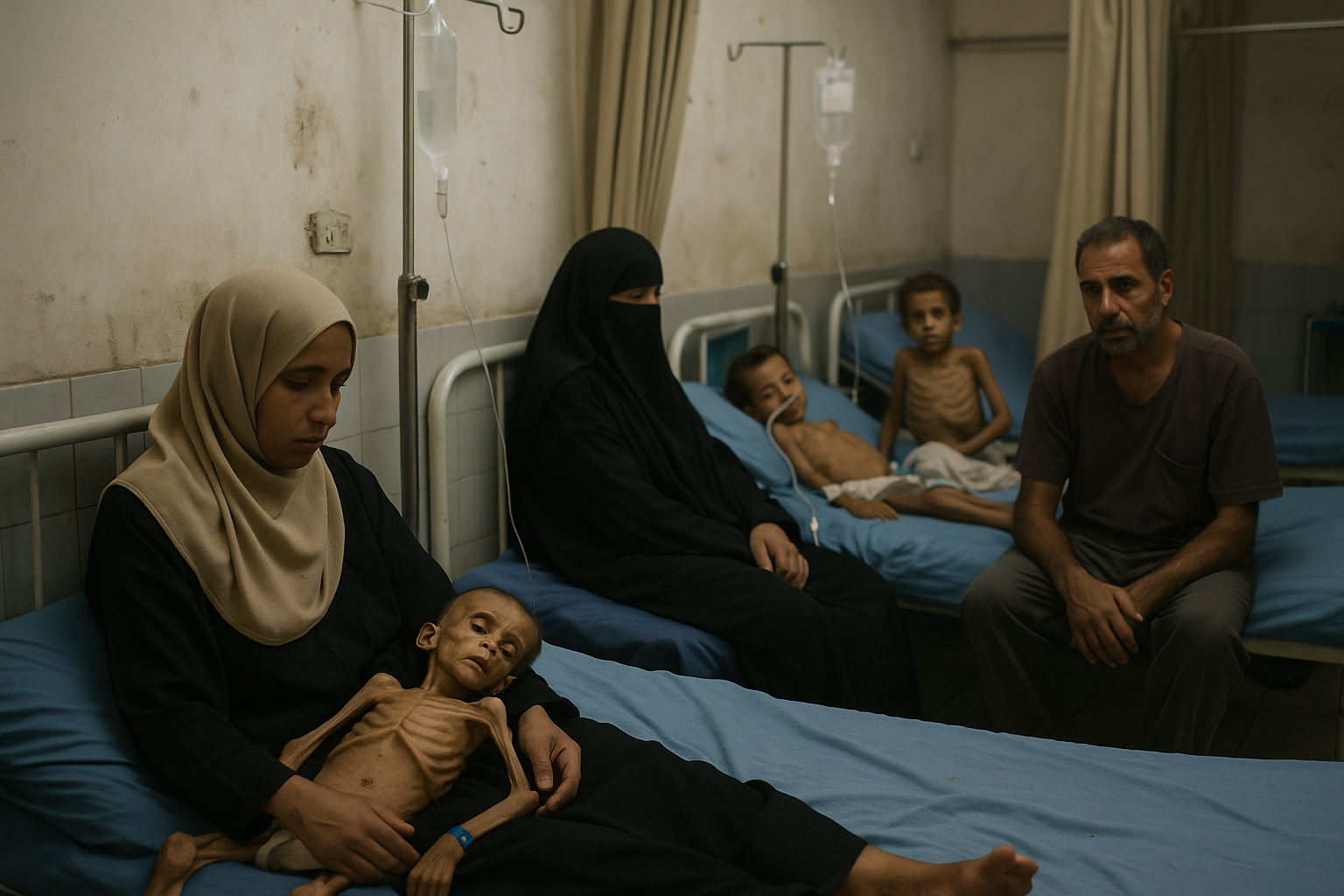
The **second famine threshold—acute malnutrition—**has reached catastrophic proportions, especially among children under five. According to the IPC and UNICEF, malnutrition rates in Gaza City have quadrupled in two months, with 16.5% of children under five now acutely malnourished, a level considered critical.
As of July 2025, the entire under-five population—more than 320,000 children—is at risk of acute malnutrition, with thousands already diagnosed with severe acute malnutrition (SAM), the deadliest form of undernutrition.
In June alone, 6,500 children were admitted for treatment, and in just the first two weeks of July, that number surged by another 5,000. However, with fewer than 15% of essential nutrition services currently functional, thousands of children are being turned away from life-saving treatment, heightening the risk of death.
"Emaciated children and babies are dying from malnutrition in Gaza," said UNICEF Executive Director Catherine Russell. "We need immediate, safe and unhindered access to deliver food, water, and medicine. Without that, parents will continue to face the horror of watching their children die from a condition that is entirely preventable."
Third Threshold Nearing: Deaths from Hunger and Collapse of Services
While concrete data on mortality is difficult to collect due to decimated health systems, reports of starvation-related deaths are increasing. The **third famine threshold—mortality—**is likely close to being breached. Health professionals are sounding the alarm about rising death rates among children, the elderly, and people with chronic illness.
Humanitarian agencies warn that unless aid is scaled up immediately, the situation could spiral into mass starvation, with fatalities rising daily.
"Waiting for official confirmation of famine while children starve is unconscionable," said WFP Executive Director Cindy McCain. "We need to flood Gaza with large-scale food aid—now—and keep it flowing every day to prevent a historic catastrophe."
Barriers to Aid: Partial Access, Inadequate Supplies
Despite limited reopenings of crossings into Gaza, the volume of humanitarian aid is only a fraction of what is needed. To meet the basic monthly food and nutrition needs of Gaza's population, over 62,000 tons of aid are required. Currently, only a small percentage is being delivered due to logistical bottlenecks, security concerns, and restrictions on movement.
Critical services such as fuel supply, water, sanitation, and electricity remain paralyzed. These deficits are severely undermining food delivery, storage, and preparation, further complicating efforts to respond effectively to the famine threat.
Urgent UN Recommendations and Call to Action
The UN agencies behind the IPC Alert—FAO, WFP, and UNICEF—are calling on the international community to take immediate and coordinated action. Their joint recommendations include:
-
An immediate and sustained ceasefire to end hostilities, ensure the safety of civilians, and facilitate humanitarian operations.
-
Full, safe, and unimpeded humanitarian access via all crossings, allowing the delivery of essential food, medicine, fuel, and water.
-
The restoration of commercial food imports, including fresh produce, meat, and dairy, to diversify diets and reduce pressure on aid systems.
-
The revitalization of local food systems, including bakeries, small farms, and markets, to promote long-term food security.
-
Investment in emergency nutrition services, including therapeutic feeding and safe feeding solutions for infants.
A Catastrophe That Can Still Be Averted
With Gaza facing what may become the most severe famine of the 21st century, UN agencies stress that time is of the essence. The current humanitarian infrastructure is incapable of keeping pace with the escalating crisis unless international partners act urgently to expand access and increase funding.
"The suffering of Gaza's people is undeniable and visible," said McCain. "But this tragedy is not yet inevitable. With the right political will and humanitarian commitment, we can still save countless lives."


 Google News