

Lebanon’s Ceasefire Failing Women and Girls as Deaths, Hunger and Mass Displacement Continue, UN Women Warns
“I am speaking to you from Lebanon, where I have witnessed the impact of the ongoing killing and displacement of women and girls under a fragile ceasefire,” the official said.
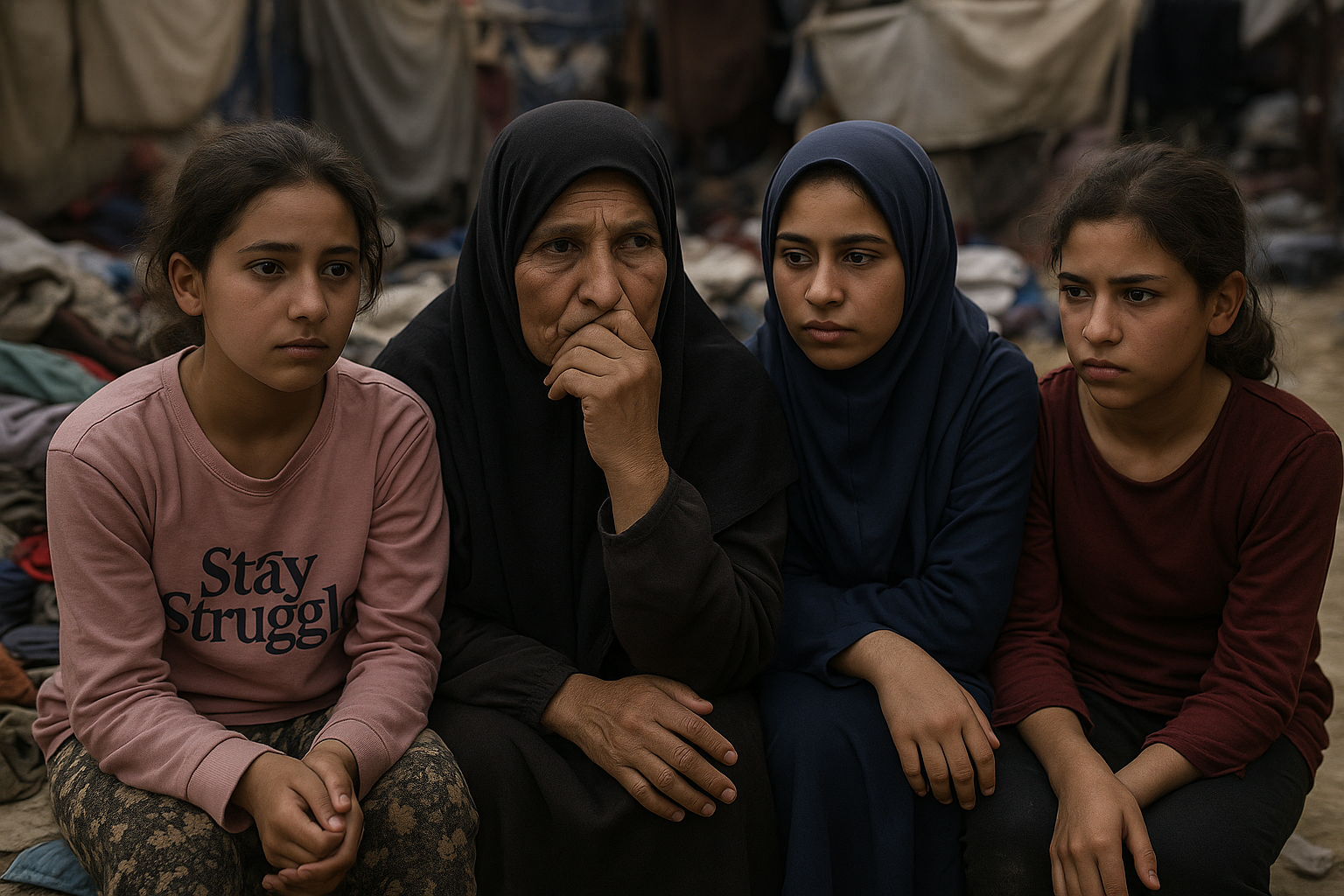
Women and girls in Lebanon continue to face deadly violence, displacement, and worsening hunger despite a fragile ceasefire, according to a stark warning from UN Women, which says the ongoing conflict has created a humanitarian crisis marked by shattered communities, destroyed homes, and deepening despair.
Speaking from Lebanon after meeting displaced families and women-led organizations on the ground, a senior UN Women official described a devastating reality in which civilians — particularly women and girls — remain trapped between insecurity, displacement, and collapsing living conditions even after the ceasefire agreement that took effect on 17 April.
"I am speaking to you from Lebanon, where I have witnessed the impact of the ongoing killing and displacement of women and girls under a fragile ceasefire," the official said. "These are violations of the most basic rights and protections afforded to civilians under international law."
Women Continue to Be Killed Despite Ceasefire
Although the ceasefire was intended to halt hostilities and allow civilians to safely return home, violence has continued across parts of southern Lebanon.
According to figures cited by UN Women, at least 25 women have reportedly been killed and 109 injured during the three weeks following the ceasefire agreement, underscoring the persistent dangers facing civilians.
The organization warned that continued Israeli airstrikes, evacuation orders, movement restrictions, and bans preventing residents from returning to certain areas have left large portions of the population unable to safely go home.
More than half a million women and girls are estimated to remain displaced across Lebanon.
Humanitarian workers say many displaced families are living in overcrowded shelters, temporary housing, or with relatives while struggling to secure food, healthcare, education, and income.
Entire Villages Reduced to Rubble
Women displaced from southern Lebanon described scenes of widespread devastation as they attempted to return to villages south of the Litani River.
Many reported finding homes completely destroyed and communities rendered unrecognizable by months of bombardment and military operations.
"One woman described how her village was completely unrecognizable because of the destruction it has suffered," the UN official said.
The damage to civilian infrastructure, housing, agricultural land, roads, and public services has compounded fears that recovery could take years.
Observers note that the destruction in southern Lebanon has generated a level of psychological trauma and hopelessness not seen in previous conflicts.
"Unlike past wars and conflicts that Lebanon has suffered over the past decades, this current conflict has eroded hope among many," the official said after speaking with displaced residents.
Yet amid the destruction, many displaced women continue to express determination to return and rebuild their communities despite enormous uncertainty.
Hunger Crisis Deepens for Women and Families
Alongside displacement and insecurity, food scarcity is rapidly worsening.
Women interviewed by humanitarian workers described increasingly desperate coping strategies as household incomes collapse and food prices continue to rise.
"One woman described to my colleague that she has been forced to forage for wild herbs to feed her family," the official said.
Based on the latest Integrated Food Security Phase Classification (IPC) projections, UN Women estimates that an additional 144,000 women and girls are expected to face crisis-level hunger or worse in the coming months.
This would bring the total number of women and girls facing severe food insecurity in Lebanon to approximately 639,000.
Aid organizations warn that women and girls are disproportionately affected during food crises, often reducing their own food intake to prioritize children and other family members while also facing increased risks of exploitation, child marriage, and gender-based violence.
The worsening economic collapse in Lebanon — already one of the world's most severe financial crises in modern history — has further intensified vulnerabilities.
Women's Organizations Leading Frontline Humanitarian Response
Despite deteriorating conditions, UN Women highlighted the crucial role played by Lebanese women and women-led organizations in sustaining humanitarian response efforts across affected communities.
"Under such dire conditions, I have also witnessed the incredible resilience in the response of women and women's organizations," the official said.
Women-led groups have been delivering humanitarian aid, supporting livelihoods, mediating tensions, and helping maintain social cohesion in communities fractured by displacement and violence.
Since 2 March, UN Women says it has directly supported more than 15,000 women and girls, with assistance reaching over 70,000 people through broader community-based programs.
The agency is also supporting 534 women leaders working at the local level to help communities navigate the crisis, identify urgent humanitarian needs, connect displaced families with assistance, and ensure women are included in recovery and peacebuilding processes.
Analysts say women's grassroots networks have become increasingly central to crisis response efforts in Lebanon as state institutions struggle under mounting political and economic pressures.
UN Women Calls for Permanent Peace and Full Protection of Civilians
The UN agency stressed that the current ceasefire remains dangerously fragile and warned that without a transition toward a sustainable political solution, civilian suffering will continue.
"The ceasefire must be fully upheld and transitioned to comprehensive peace," the statement said.
UN Women called for all parties to respect international humanitarian law and international human rights obligations, particularly protections afforded to civilians during armed conflict.
The agency also emphasized the importance of implementing the global Women, Peace and Security agenda, ensuring women's full, equal, and meaningful participation in peace negotiations, humanitarian planning, and post-conflict recovery.
Human rights advocates say women are often excluded from formal peace processes despite playing central roles in community survival and humanitarian response.
As southern Lebanon confronts widespread destruction, displacement, and growing hunger, international organizations warn that immediate humanitarian assistance alone will not be enough without long-term reconstruction support, accountability mechanisms, and a durable peace agreement.
For many displaced women across Lebanon, the struggle now is not only survival — but preserving hope amid one of the country's most devastating crises in decades.
ALSO READ
-
Lebanon’s Children Cannot Lose More of Their Childhood, UNICEF Chief Urges Action
-
Food Price Shock Could Push 11.7 Million More Women and Girls Into Hunger in 2026
-
Lebanon’s Children Face Hunger, Lost Schooling and Work as Families Reach the Brink
-
Lebanon’s Small Business Owners Build Skills and Market Links With EU and ILO Support
-
Women Leaders Push for Real Power and a Stronger Voice at UNGA81


 Google News