

UNHCR, IMO and ICS Launch Revised Rescue Guide to Protect Refugees and Migrants at Sea
IMO Secretary-General Arsenio Dominguez said the continuing deaths at sea represent an ongoing humanitarian tragedy that requires urgent and coordinated action.
- Country:
- United Kingdom
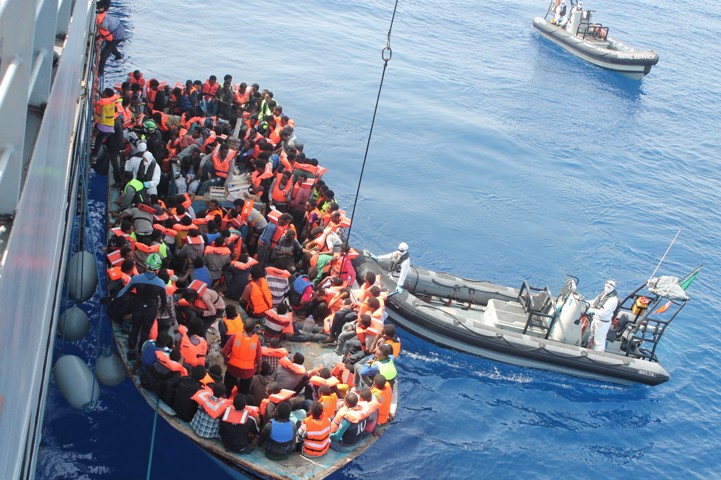
The United Nations Refugee Agency (UNHCR), the International Maritime Organization (IMO), and the International Chamber of Shipping (ICS) have jointly released a revised edition of the Rescue Guide aimed at strengthening global efforts to save refugees and migrants in distress at sea. The updated guide comes amid continuing deadly shipwrecks across major migration routes and renewed international concern over the growing humanitarian crisis unfolding on the world's oceans.
Titled Rescue at Sea: A guide to principles and practice in the context of refugee and migrant movements, the revised publication provides practical and legal guidance to governments, shipmasters, maritime authorities and humanitarian organizations involved in sea rescue operations.
The organizations emphasized that rescuing people in distress at sea is both a legal obligation and a humanitarian imperative that must be upheld without discrimination.
New Rescue Guide Released Amid Rising Maritime Tragedies
The revised guide arrives during the 75th anniversary year of the 1951 Refugee Convention, highlighting the continued importance of international protection for people fleeing conflict, persecution, violence and humanitarian crises.
Global maritime migration routes have continued to witness alarming numbers of deaths and disappearances as refugees and migrants attempt dangerous journeys in overcrowded and unsafe vessels.
UNHCR, IMO and ICS said the updated guide is intended to strengthen international cooperation and ensure that rescue operations are conducted efficiently, safely and in line with international law.
The publication builds on the original 2015 edition but includes expanded legal guidance and more detailed operational procedures for rescue and disembarkation processes.
UNHCR Warns Deadly Shipwrecks Are Preventable
Elizabeth Tan, Director of UNHCR's Division of International Protection and Solutions, stressed that people do not risk their lives at sea unless they are facing desperate circumstances and lack safe alternatives.
"Nobody risks their life at sea, or that of their family, unless desperate to find safety and stability in the absence of safer pathways," she said.
Tan emphasized that the growing number of deadly shipwrecks cannot be treated as unavoidable tragedies.
"These appalling wrecks cannot be accepted as inevitable. They are preventable," she added.
According to UNHCR, the revised guide serves as a practical tool to help governments and maritime actors fulfill one of the clearest moral and legal obligations at sea — rescuing people in distress and ensuring they are brought safely ashore.
She also noted that the guide reflects a shared commitment among UN agencies, the shipping industry, humanitarian organizations and civil society groups to support States in protecting lives at sea.
Mediterranean and Asian Sea Routes Remain Among the Deadliest
The updated guide comes against the backdrop of continuing high death tolls along major refugee and migrant sea routes.
According to UNHCR data and information collected from authorities and humanitarian partners, the Mediterranean Sea remained one of the world's deadliest migration corridors in 2025, with 1,953 people reported dead or missing.
The South and South-East Asia maritime route recorded an even higher mortality rate relative to crossings. More than 6,500 Rohingya refugees attempted perilous sea journeys during 2025, with at least 892 people reported dead or missing.
The route has become the deadliest worldwide for refugee and migrant sea crossings in terms of mortality rates.
Meanwhile, the Western Africa Atlantic route also witnessed heavy casualties, with at least 424 lives lost last year as migrants attempted dangerous voyages toward Europe.
Humanitarian organizations have repeatedly warned that increasing restrictions on migration pathways, ongoing conflicts and worsening economic hardship are pushing more people toward life-threatening sea journeys.
Guide Reinforces International Maritime and Refugee Law
The revised Rescue Guide provides detailed clarification on legal obligations related to maritime rescue operations under international law.
One of its key principles is the obligation to ensure that rescued individuals are disembarked in safe locations where they are not exposed to persecution, violence or other serious risks, including the danger of refoulement.
Refoulement refers to the forced return of individuals to countries where they may face persecution, torture or serious harm, which is prohibited under international refugee law.
The guide also offers practical operational recommendations to ensure prompt coordination between shipmasters, coastal authorities, rescue agencies and governments during emergencies at sea.
Available in six languages — Arabic, Chinese, English, French, Russian and Spanish — the guide is intended as a global resource for all actors involved in maritime rescue operations, including ship owners, insurance companies, humanitarian groups and national authorities.
IMO Highlights Legal Duty to Rescue People at Sea
IMO Secretary-General Arsenio Dominguez said the continuing deaths at sea represent an ongoing humanitarian tragedy that requires urgent and coordinated action.
"There is an ongoing human tragedy of lives lost at sea during unsafe, dangerous journeys," he stated.
Dominguez praised the efforts of coast guards, navies, search-and-rescue agencies and commercial vessels that regularly respond to distress situations and save lives at sea.
He emphasized that established legal obligations must translate into concrete operational action.
"This revised Guide ensures clarity for Governments and provides practical steps for shipmasters and crews," he said.
The IMO has consistently stressed that maritime rescue obligations apply regardless of nationality, migration status or circumstances surrounding the voyage.
Global Shipping Industry Often Serves as First Responder
The International Chamber of Shipping highlighted the important humanitarian role played by commercial shipping crews during maritime emergencies.
ICS Secretary General Thomas A. Kazakos said merchant vessels are frequently the first responders when migrants or refugees are found in distress at sea.
"Ship masters and crews act with professionalism and humanity, frequently going beyond their commercial duties to save lives," he stated.
Kazakos explained that the revised guide offers practical clarity to support maritime personnel conducting rescue operations while ensuring consistency with international legal standards.
He also stressed the importance of shared responsibility among governments and international stakeholders to guarantee timely and safe disembarkation after rescues occur.
Calls Grow for Safer Migration Pathways
Humanitarian organizations continue to call for expanded legal migration opportunities and safer refugee pathways to reduce reliance on dangerous sea crossings.
UNHCR and partner organizations argue that many maritime tragedies could be prevented if refugees and migrants had access to safe asylum systems, humanitarian visas, family reunification channels and organized resettlement programs.
The revised Rescue Guide reinforces the principle that the seas must remain a humanitarian space where the duty to rescue individuals in distress is protected and respected.
As conflicts, climate-related displacement and economic instability continue to drive migration globally, international agencies warn that coordinated rescue systems and stronger protection mechanisms will remain essential to preventing further loss of life at sea.
ALSO READ
-
Deepening Funding Cuts Push Nearly 6 Million Refugee Children Out of School
-
Malaysia’s Return of 1,476 People to Myanmar Raises UNHCR Fears Over Their Safety
-
Refugee Protection Nears Breaking Point: UN Funding Cuts Put 8.3 Million Lives at Risk
-
Sudanese Families Flee to Chad as Violence Surges and Refugee Support Falls Behind
-
Refugees and Host Communities in Ethiopia at Heart of New ILO and UNHCR Work Pact


 Google News