

NASA’s asteroid hunter 'Lucy' moving toward next big mission milestone
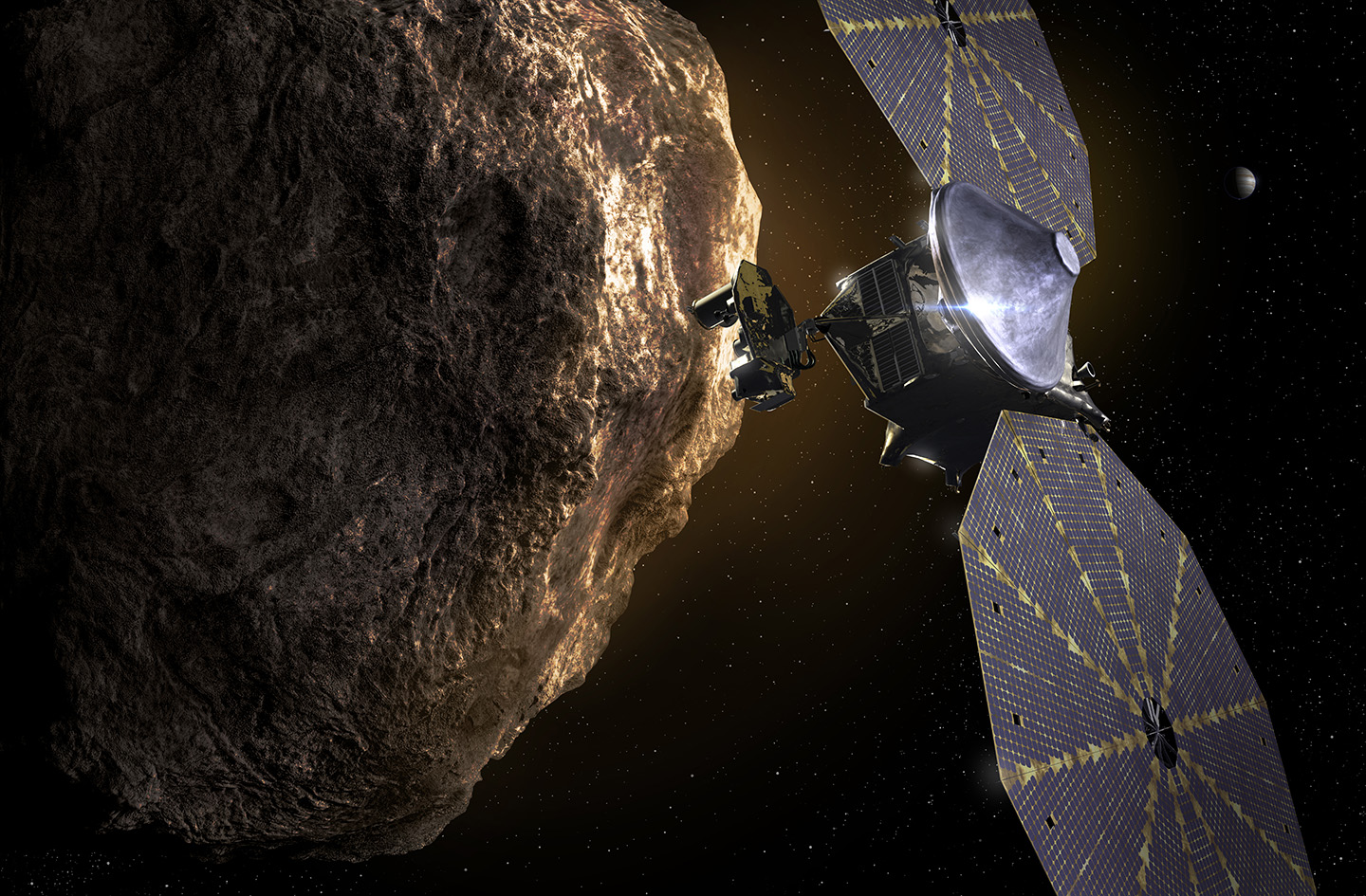
NASA's asteroid-bound Lucy spacecraft is now ready and able to complete the next big mission milestone - an Earth-gravity assist in October 2022, the agency announced on Wednesday.
Following a successful launch in October 2021, one of Lucy's solar arrays powering the spacecraft's systems failed to latch after deployment. Staying focused during many long days and nights, the mission team worked through options to troubleshoot the problem.
After months of simulations and testing, NASA decided to move forward with a multi-step attempt to fully redeploy the solar array. The mission team estimates that the solar array is between 353 degrees and 357 degrees open (out of 360 total degrees for a fully deployed array) and the spacecraft is now stable enough to operate as needed for mission operations.
Shortly after launch, the #LucyMission spacecraft ran into trouble with one of its solar arrays. Across millions of miles, the team found a way to troubleshoot the problem, and the mission is moving toward its next milestone. Learn how they did it: https://t.co/IEd1N9jFJZ pic.twitter.com/AYJKJLOOQ3
— NASA Solar System (@NASASolarSystem) August 3, 2022
Named for the fossilized skeleton of one of our earliest known hominin ancestors, Lucy is NASA's first-ever Trojan asteroids mission aimed at observing one main belt asteroid and seven Trojan asteroids that share an orbit around the Sun with Jupiter. It will be the first single spacecraft mission in history to explore so many different asteroids.
NASA says studying Trojan asteroids - remnants of the material that formed giant planets - can reveal previously unknown information about their formation and our solar system's evolution in the same way the fossilized skeleton of Lucy revolutionized our understanding of human evolution.
The mission launched on October 16, 2021, on a United Launch Alliance (ULA) Atlas V rocket from Space Launch Complex 41 at Cape Canaveral Space Force Station in Florida.
The asteroid-hunting spacecraft successfully carried out a trajectory correction manoeuvre on June 21 and is scheduled to arrive at its first asteroid target in 2025.


 Google News