

NASA spacecraft to intentionally crash into an asteroid next month: Everything about world’s first planetary defense test
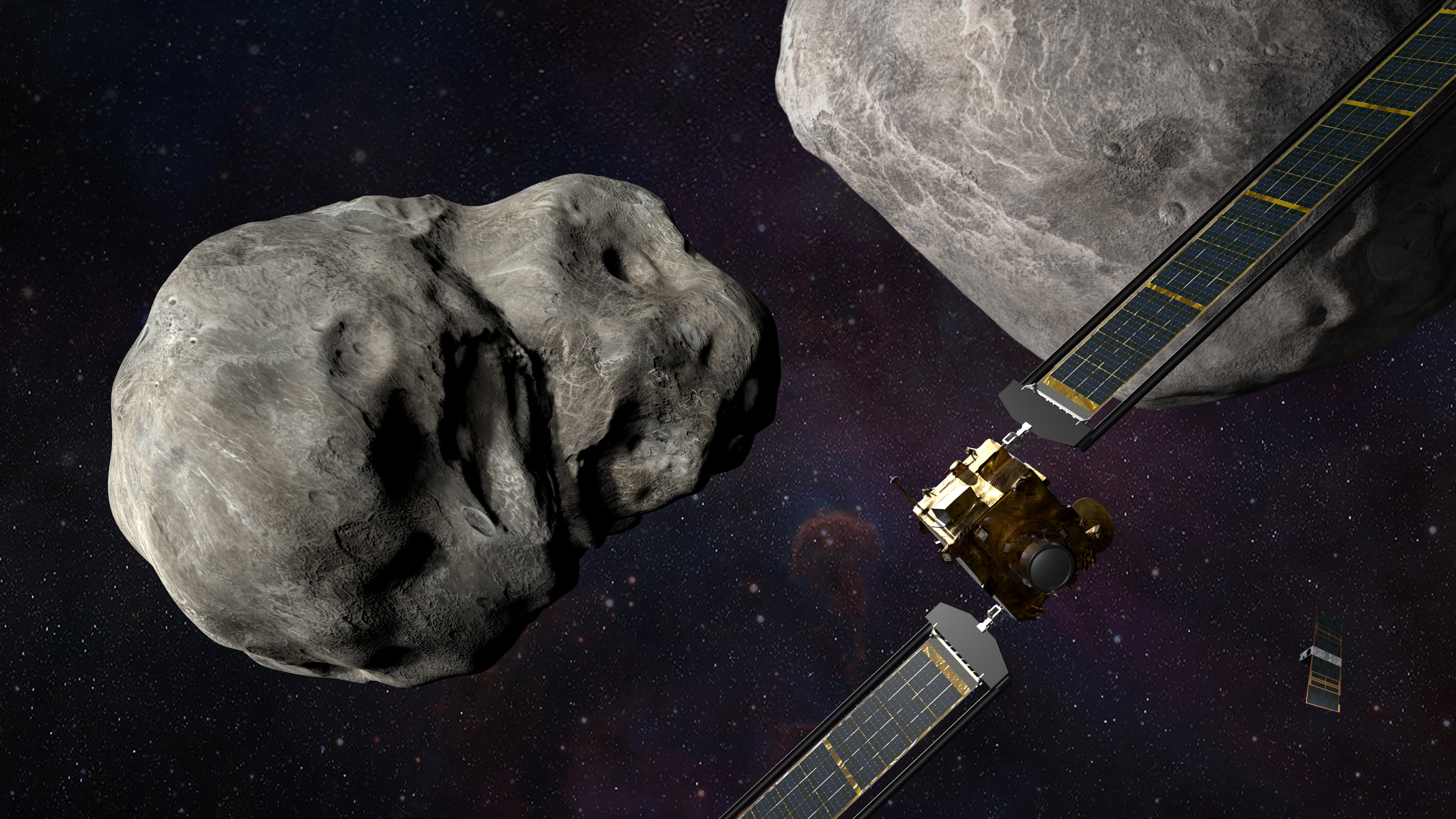
NASA's Double Asteroid Redirection Test (DART), the world's first planetary defense test mission to demonstrate asteroid deflection in space by intentionally executing a kinetic impact, will hit its target asteroid at 7:14 p.m. EDT on Monday, September 26.
The mission will demonstrate that a spacecraft can autonomously navigate to a kinetic impact on a relatively small target asteroid and that this is a viable technique to deflect a genuinely dangerous asteroid, should one ever be discovered.
The target asteroid is the binary, near-Earth binary asteroid system Didymos, composed of the larger asteroid Didymos and its moonlet asteroid Dimorphos. DART will impact Dimorphos to change its orbit within the binary system. The target asteroid is not on a path to collide with Earth and therefore poses no actual threat to the planet, according to NASA.
After DART's kinetic impact with its target asteroid Dimorphos, an investigation team will measure how much the impact changed the asteroid's motion in space using telescopes on Earth. Doing so will evaluate the effectiveness of this mitigation approach and assess how best to apply it to future planetary defense scenarios, says the mission website.
On Sept. 26, @NASA's #DARTMission will impact an asteroid, which poses no threat to Earth, as humanity's first test for #PlanetaryDefense. 🌎Learn more on how to join us for a multitude of events starting Sept. 12 as we countdown to DART impact: https://t.co/OhqJLa7LST pic.twitter.com/C6tXz8VD0K
— NASA Asteroid Watch (@AsteroidWatch) August 23, 2022
Live coverage of DART's impact with the asteroid Dimorphos will air on NASA TV and the agency's website. You also can watch the planetary defense test live on agency social media accounts on Facebook, Twitter, and YouTube.
The spacecraft lifted off on a SpaceX Falcon 9 rocket from Space Launch Complex 4E at Vandenberg Space Force Base in California in November 2021.


 Google News