

NASA's asteroid-bound Lucy will fly by Earth on Oct 16; will be closer than space station
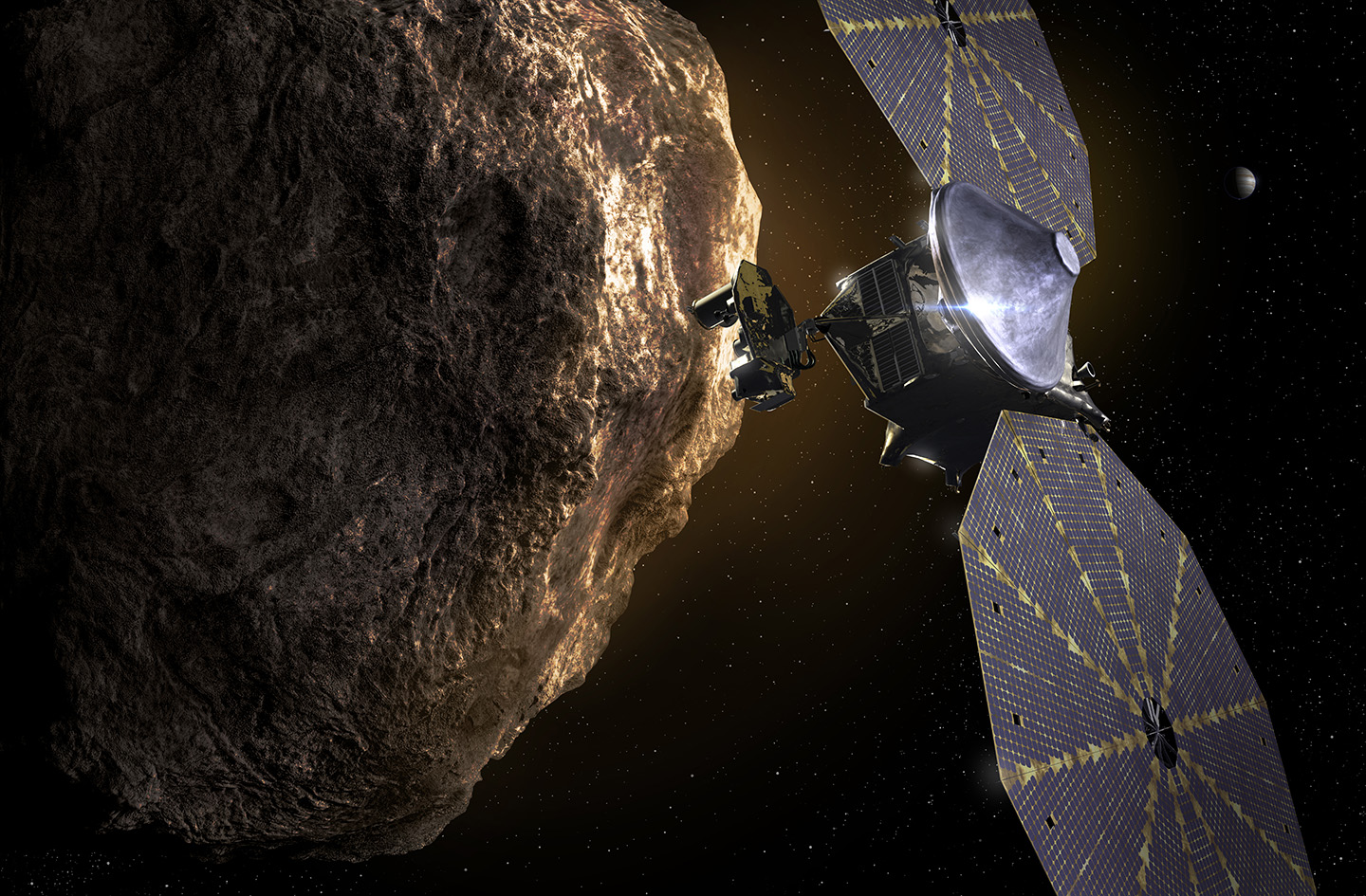
NASA's Lucy is gearing up for its first Earth Gravity Assist, during which the spacecraft will be extraordinarily close to Earth's surface - within 351km (219 miles) - that's closer than the International Space Station (ISS).
During the October 16 flyby, the Lucy spacecraft will use Earth's gravity to propel it farther out into the solar system - a technique known as an Earth Gravity Assist.
Lucy Fun Fact: At closest approach during Lucy's Earth Gravity Assist, the spacecraft will come withing 351km (219 miles) of the planet's surface. Only 28 days to go!#EarthGravityAssist#LucyMission#CountDownToEGA pic.twitter.com/skWpte6Iao
— Lucy Mission (@LucyMission) September 19, 2022
NASA's Lucy mission launched on October 16, 2021, on a United Launch Alliance (ULA) Atlas V rocket from Space Launch Complex 41 at Cape Canaveral Space Force Station in Florida. It is the first spacecraft to study the Trojan asteroids - a population of primitive asteroids orbiting in tandem with Jupiter.
During its incredible 12-year voyage, the Lucy spacecraft will visit a record-breaking number of asteroids that independently orbit the Sun, with the first encounter scheduled for 2025.
Lucy will swing back toward Earth for another gravity assist in 2024, which will propel the spacecraft toward the Donaldjohanson asteroid in 2025. After completing its first four targeted flybys, the spacecraft will travel back to Earth for a third gravity boost in 2031, which will propel it to the trailing swarm of Trojans for a 2033 encounter.


 Google News