

NASA's DART asteroid impact displaced over two million pounds of dusty rock into space
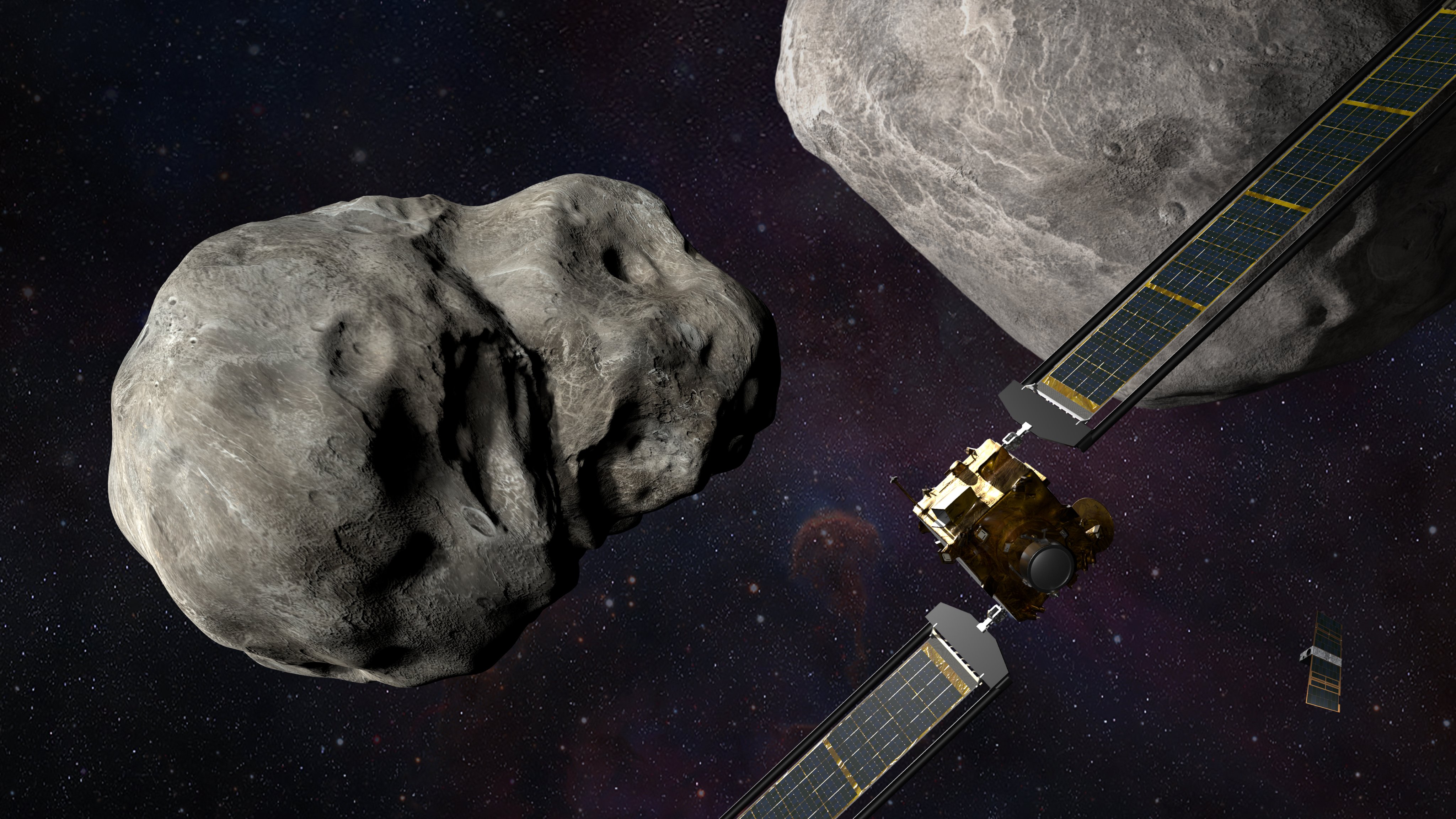
NASA has shared early results from the Double Asteroid Redirection Test (DART) that saw a spacecraft intentionally crashing into the asteroid moonlet Dimorphos on September 26. The impact is estimated to have displaced over two million pounds (one million kilograms) of the dusty rock into space - that's enough to fill six or seven rail cars.
The mission team members provided a preliminary interpretation of their findings about the mission during the American Geophysical Union s Fall Meeting that took place last week in Chicago.
"Impacting the asteroid was just the start. Now we use the observations to study what these bodies are made of and how they were formed – as well as how to defend our planet should there ever be an asteroid headed our way," said Tom Statler, the program scientist for DART at NASA headquarters in Washington, and one of the presenters at last week's briefing.
The team estimates that the momentum transferred during the impact was roughly 3.6 times greater than if the asteroid had simply absorbed the spacecraft and produced no ejecta - asteroidal rock displaced and launched into space by the impact – at all.
"Understanding how a spacecraft impact will change an asteroid's momentum is key to designing a mitigation strategy for a planetary defense scenario," said Andy Cheng, DART investigation team lead from Johns Hopkins APL.
For the unversed, NASA intentionally crashed a spacecraft into an asteroid in a first-ever planetary defense test mission. The key objective of this mission was to test and validate a method to protect Earth in case of an asteroid impact threat.
The binary asteroid system Didymos poses no threat to our planet before or after the impact.
The #DARTMission investigation team discussed early results from DART's impact at #AGU22, revealing that the spacecraft altered Dimorphos' orbit by ~33 mins & displaced over 2 millions lbs of rock into space - enough to fill 6 or 7 rail cars.Learn more: https://t.co/7TPbZJjj84 pic.twitter.com/p3wTQHROfJ
— NASA Asteroid Watch (@AsteroidWatch) December 15, 2022


 Google News