

Hubble telescope captures stunning image of globular cluster NGC 6544
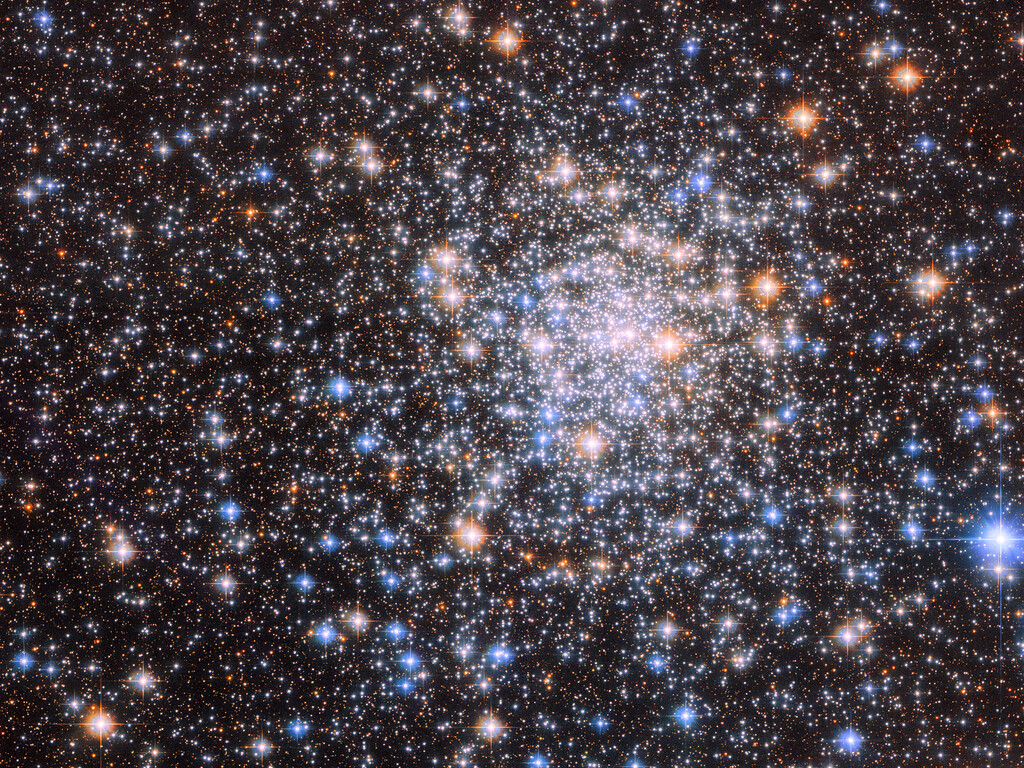
The NASA/ESA Hubble Space Telescope has captured a breathtaking image showcasing the radiant stars of NGC 6544 - a globular cluster that lies more than 8000 light-years away from Earth, in the constellation Sagittarius.
Globular clusters are known for their densely populated regions, housing tens of thousands of stars within their gravitational embrace. NGC 6544 is no exception, as its teeming stars create a celestial tapestry that evokes a sense of awe and wonder.
This image is a composite of data from two of Hubble's powerful instruments - the Advanced Camera for Surveys and Wide Field Camera 3. Additionally, two separate astronomical observations were incorporated to enrich our understanding of this cosmic marvel.
The first observation aimed to identify a visible counterpart to the radio pulsar recently discovered in NGC 6544. For the unversed, pulsars are the remnants of deceased stars, spinning rapidly and emitting twin beams of electromagnetic radiation akin to a giant celestial lighthouse. The fast rotation of this particular pulsar prompted astronomers to seek the aid of Hubble in unravelling the mysteries surrounding its evolution within NGC 6544.
The second observation focused on identifying visible counterparts to faint X-ray sources, offering insights into how clusters like NGC 6544 transform over time. By analyzing these observations, astronomers hope to shed light on the dynamic processes that shape globular clusters and the remarkable phenomena they harbour.
The globular cluster NGC 6544 lies adjacent to the vast and ethereal Lagoon Nebula - a captivating expanse of gas and dust sculpted by the intense stellar winds emanating from newborn stars. Known for its colossal proportions, the Lagoon Nebula spans an astonishing 55 light-years across and 20 light-years from top to bottom. Previous Hubble images of this nebula, employing infrared observations, unveiled hidden treasures such as young stars and intricate structures concealed by nebulous clouds when observed solely in visible wavelengths.
Our ESA/Hubble Picture of the Week features the globular cluster NGC 6544. This cluster of tightly bound stars lies more than 8000 light-years away from Earth. Read more: 🔗 https://t.co/rfiZRW1XnL or 🧵👇 pic.twitter.com/3n1sbHJSxs
— HUBBLE (@HUBBLE_space) June 19, 2023
Since its launch in 1990, the NASA/ESA Hubble Space Telescope has made numerous groundbreaking achievements and significant contributions to our understanding of the universe. Its location above Earth's atmosphere allows it to capture clearer and more detailed images than ground-based telescopes.


 Google News