

Webb telescope views star-forming region NGC 604
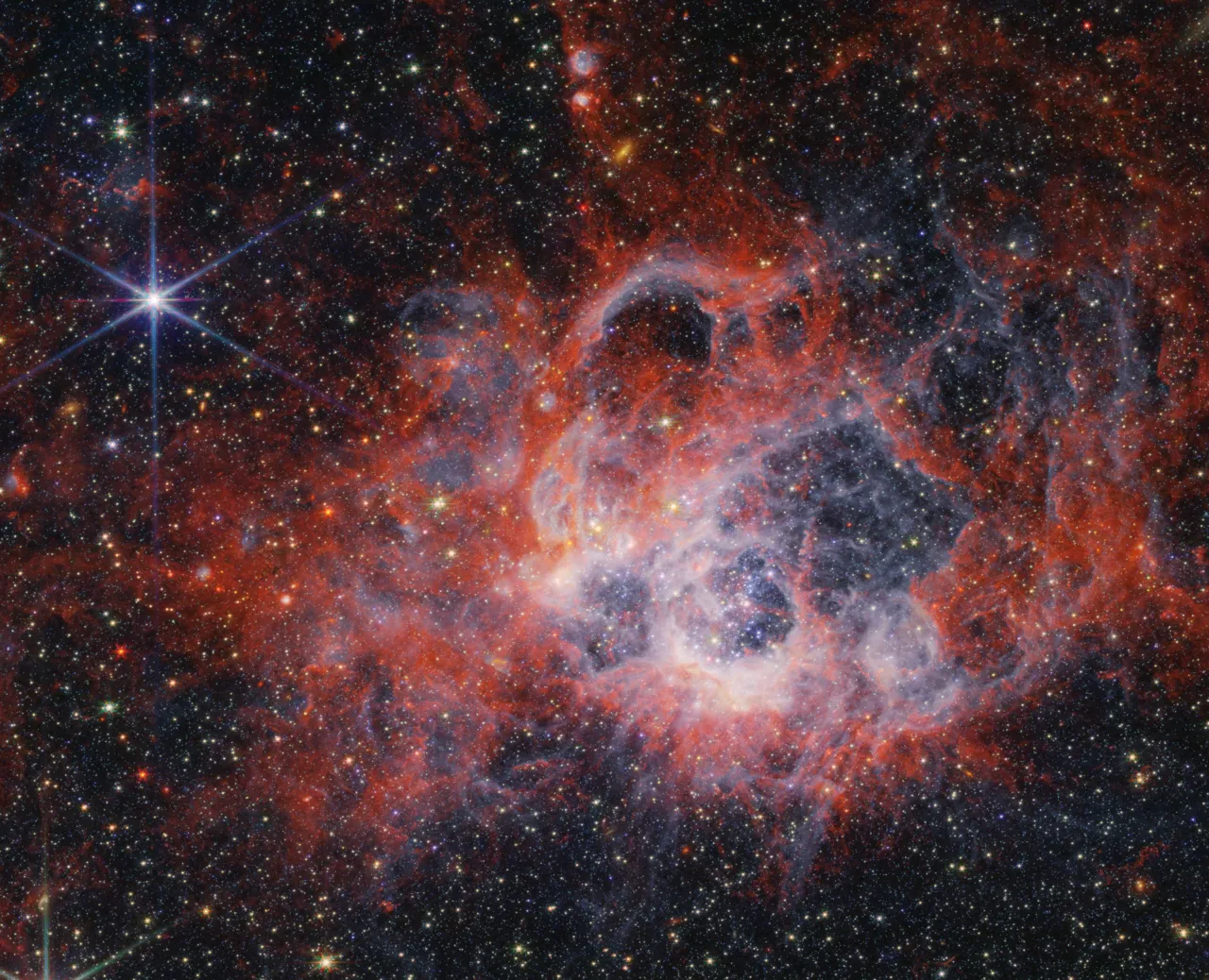
The James Webb Space Telescope (JWST) recently captured NGC 604, a star-forming region located in the Triangulum galaxy (M33), 2.73 million light-years away from Earth.
The new images captured by Webb's NIRCam (Near-Infrared Camera) and MIRI (Mid-Infrared Instrument) show the tendrils of NGC 604 more detailed than seen in the past.
The NIRCam image (above) shows how stellar winds from bright, hot, young stars carve out cavities in surrounding gas and dust while the MIRI view (below) shows how large clouds of cooler gas and dust glow in mid-infrared wavelengths.
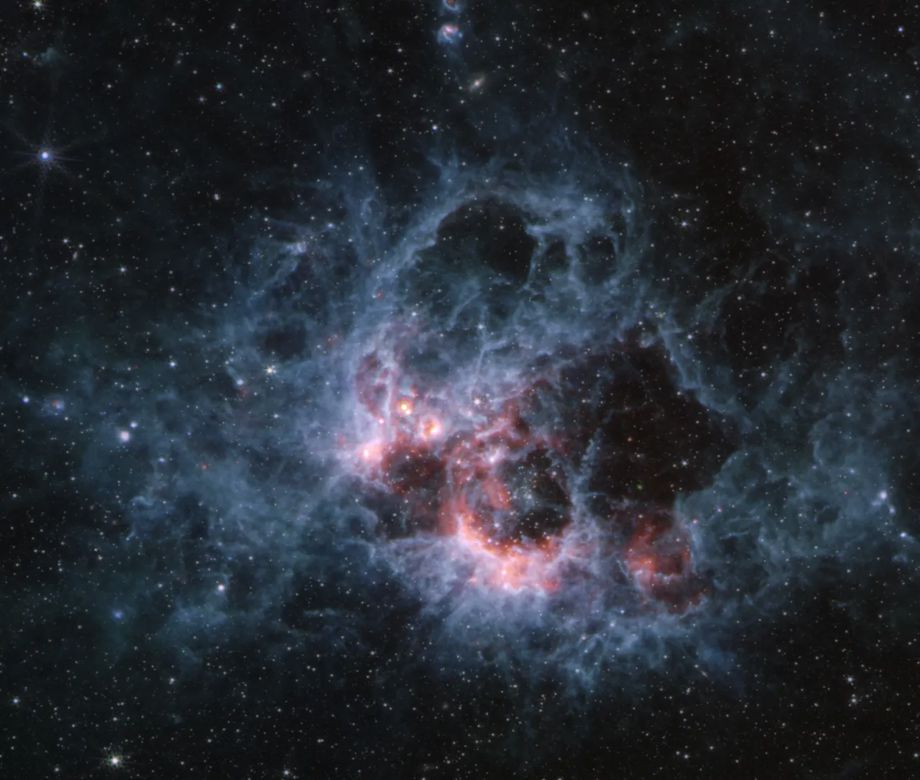 Image Credit: NASA, ESA, CSA, STScI
NGC 604 is home to more than 200 of the hottest, most massive kinds of stars, all in the early stages of their lives. These types of stars are B-types and O-types and the latter can exceed the mass of our own Sun by over 100 times.
The cloud of glowing gases in NGC 604, which is estimated to be around 3.5 million years old, extends to some 1,300 light-years across. The relatively close distance of this star-forming region and the concentration of massive stars allow astronomers to study these objects at a fascinating time early in their lives.
Webb captured NGC 604 rolling out the red carpet for more than 200 new stars. Located in the Triangulum galaxy, this star-forming region contains the most massive and hottest types of stars — there is no analogous region within our own galaxy: https://t.co/9lTMgPkZ98 pic.twitter.com/w03HstOoez
— NASA Webb Telescope (@NASAWebb) March 9, 2024


 Google News