

Portable Lab Enables Rapid Avian Influenza Testing in Remote Antarctic Regions
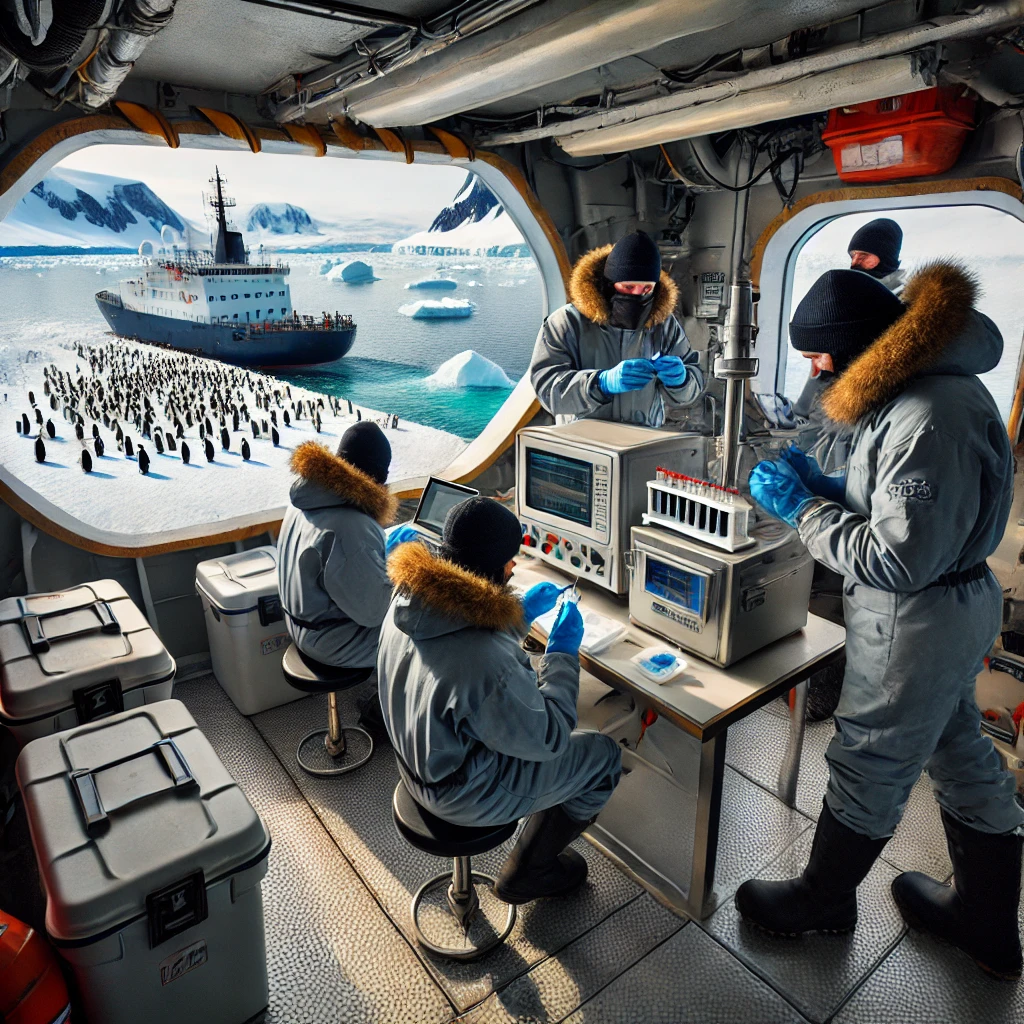
The portable lab was tested aboard the icebreaker MV Argus, where researchers used it to locate, sample, and test for HPAI H5N1 in extreme field conditions.
- Country:
- New Zealand
Biosecurity efforts in remote regions have taken a significant step forward with the development of a portable laboratory, allowing for on-site testing of Highly Pathogenic Avian Influenza (HPAI) H5N1. Minister for Biosecurity Andrew Hoggard announced the breakthrough following successful trials conducted by Biosecurity New Zealand during a recent expedition to Antarctica.
The portable lab was tested aboard the icebreaker MV Argus, where researchers used it to locate, sample, and test for HPAI H5N1 in extreme field conditions. This development is particularly crucial as the virus, which emerged in 2020, has since spread globally and was detected on the Antarctic Peninsula in February 2024. Affected species include brown skuas, Adélie penguins, snowy sheathbills, and Antarctic fur seals.
"This was an incredible opportunity to trial our new capability in one of the most challenging environments on Earth. The ability to conduct testing on-site eliminates the lengthy delays associated with sending samples to traditional laboratories, which can take weeks," said Minister Hoggard. "Instead, a confirmed result for HPAI H5N1 can now be obtained within 48 hours."
During the expedition, the portable lab was set up aboard the MV Argus, and samples were collected from a skua carcass on Torgersen Island in the Palmer Archipelago. Researchers then successfully conducted testing on the vessel despite its limited space and challenging conditions.
The significance of this advancement is underscored by the fact that research stations in Antarctica do not have sequencing capabilities and typically send samples to Australia for testing, a process that causes delays in response efforts. The portable lab allows for immediate results in the field, enabling quicker decision-making on containment and biosecurity measures.
"Having access to real-time data means that conservationists and biosecurity teams can act faster and more effectively in response to an outbreak," Hoggard added. "While HPAI H5N1 remains some distance from New Zealand, we must stay vigilant and proactive. Strengthening our biosecurity measures is essential, and this new technology plays a key role in that."
As avian influenza continues to impact wildlife globally, innovations like this portable laboratory will be crucial in protecting fragile ecosystems and preventing the spread of disease in remote and vulnerable regions.


 Google News