

NZ Escalates Efforts to Eradicate Yellow-Legged Hornets from Auckland’s North Shore
Hoggard said the response has accelerated significantly in recent weeks, with more traps deployed, expanded ground searches, and an increased focus on public awareness to help detect the hornets early.
- Country:
- New Zealand
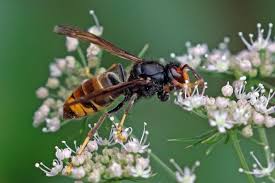
Biosecurity teams are intensifying operations to eradicate yellow-legged hornets from Auckland's North Shore, with Biosecurity Minister Andrew Hoggard warning that the country has only a narrow window to eliminate the invasive pest before it becomes established. The Minister visited the regional control centre today, praising the seven-day-a-week effort underway.
Hoggard said the response has accelerated significantly in recent weeks, with more traps deployed, expanded ground searches, and an increased focus on public awareness to help detect the hornets early.
"There's a narrow window to eradicate this hornet, and our people are absolutely committed to removing this pest," he said.
The Minister receives daily status updates from Biosecurity New Zealand and has directed officials to take all appropriate steps to reduce the threat. He stressed that decisions must be guided by science, which is why Biosecurity New Zealand has established a technical advisory group featuring experts from countries with proven experience managing hornet incursions.
Scientific Advice and Advanced Tracking Technology
Biosecurity New Zealand met with the advisory group again this week to ensure the response remains on track and to explore additional interventions that could improve detection and eradication efforts.
One of the newly adopted tools is electronic tracking technology, successfully used in Europe and parts of Asia to track flying hornets back to their nests. This technology becomes critical if hornet activity increases during the summer months, when nests expand rapidly.
As surveillance intensifies, officials expect more hornet detections, which they say is an anticipated part of the eradication process and not necessarily an indicator of spread.
Public Cooperation Critical: Where to Look and What to Do
Minister Hoggard emphasised that public and beekeeper reporting remains the most powerful tool for finding nests early.
He urged Auckland residents to incorporate hornet checks into their routine:
-
Current nesting season (early phase): Search low-to-ground areas such as under eaves, decks, soffits, garages, sheds, boats, and trailers — particularly in sunny areas near water.
-
Next month (secondary nest phase): Begin searching higher locations, including trees, hedges, mid-canopy zones, and buildings near water. These secondary nests are larger, more complex, and much harder to remove if detection is delayed.
The yellow-legged hornet poses significant risks to native ecosystems, pollinators, and honeybee populations, which play a central role in New Zealand's agriculture and horticulture sectors. A successful eradication effort is therefore critical to preventing long-term environmental and economic damage.
How to Report Sightings
Anyone who sees a suspected hornet or nest should report it immediately via:
-
Online: report.mpi.govt.nz
-
Exotic Pest and Disease Hotline: 0800 809 966
Authorities stress that early reporting could be the turning point in preventing the hornet from establishing in New Zealand.


 Google News