

Galactic Wanderers: The Cosmic Dance of Runaway Black Holes
Recent discoveries show that runaway black holes, moving at extraordinary speeds, are tearing through galaxies, leaving trails of stars in their wake. These celestial phenomena were predicted by theory and confirmed by gravitational wave observations. Although unlikely to affect our Solar System, they enrich our understanding of the universe.
- Country:
- Australia
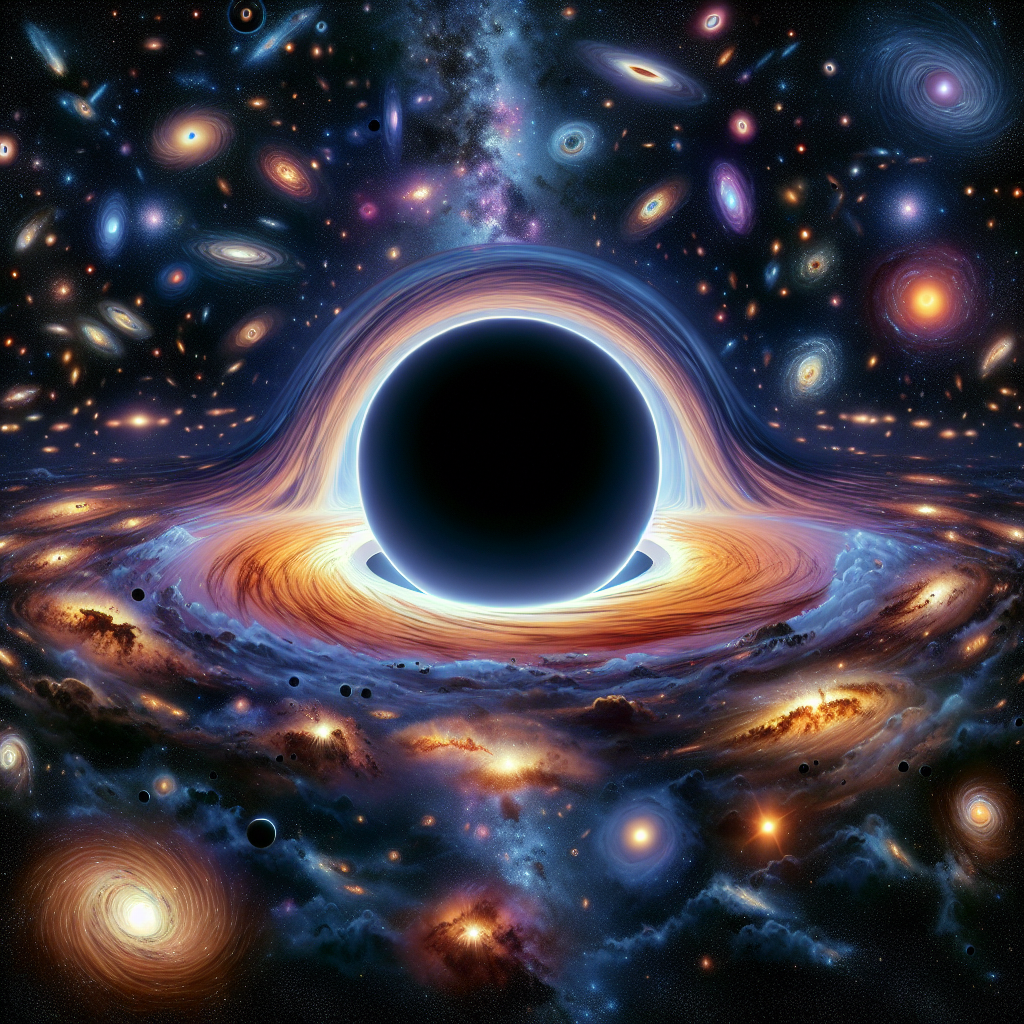
Recent astronomical findings have unveiled the intriguing existence of runaway black holes, tearing through the cosmos at speeds beyond our imagination. These elusive celestial bodies, with masses millions of times that of our Sun, navigate the universe, leaving trails of stars and gas in their wake.
The concept originates from theoretical physicist Roy Kerr's 1960s solution to Einstein’s general relativity equations, predicting that black holes can release vast amounts of rotational energy. This theory found backing through observations by LIGO and Virgo observatories, detecting gravitational waves emitted by such colossal cosmic encounters.
These findings are more than just theoretical musings. Astronomers, leveraging advanced telescopes like the James Webb, have captured evidence of these phenomena in distant galaxies, showcasing the robust trails these black holes carve through space. While the possibility of one entering our Solar System remains slim, these discoveries add exhilarating layers to our celestial narratives.


 Google News