



Central Africa Urged to Unite on Early Warnings as Climate Risks Escalate
WMO Secretary-General Celeste Saulo delivered a clear message: fragmented approaches must give way to coordinated, science-driven action.
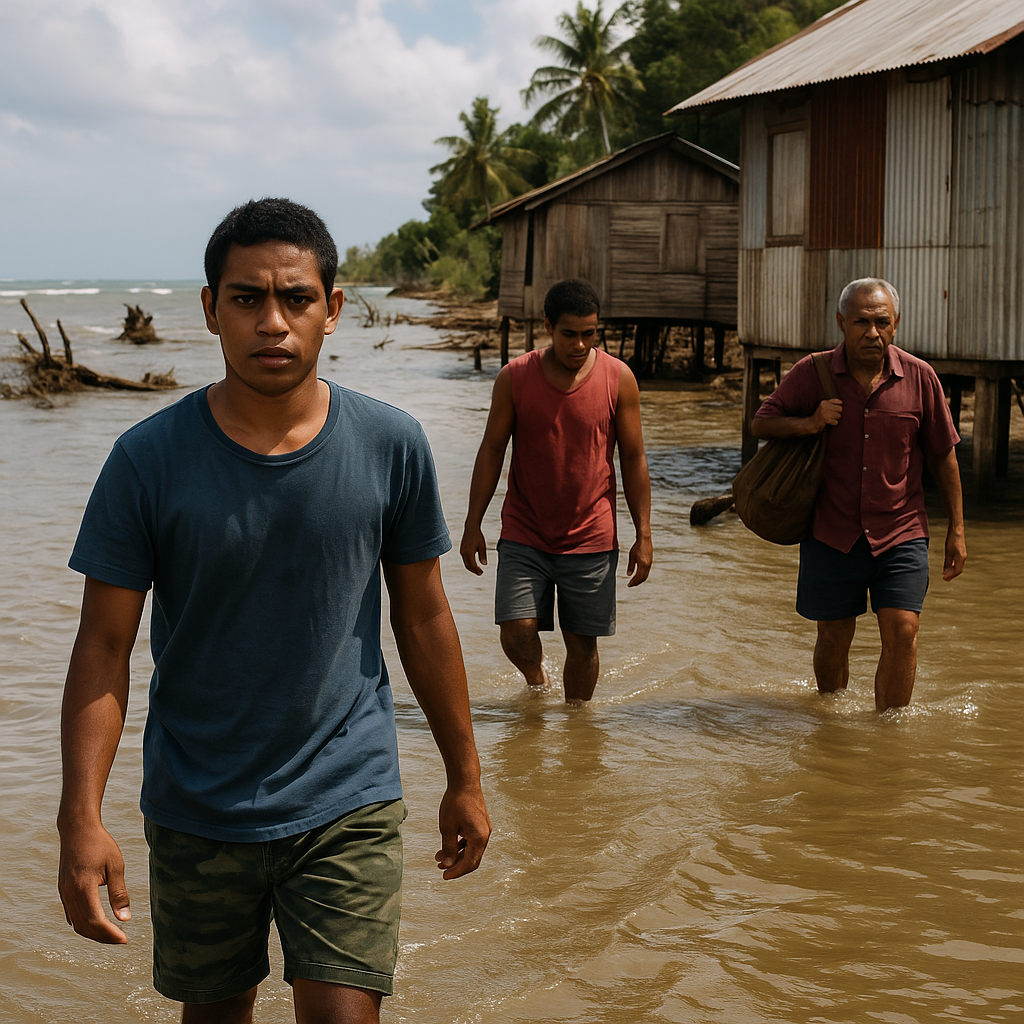
Central Africa’s growing exposure to extreme weather and climate shocks demands urgent coordination, stronger forecasting systems, and sustained political engagement, leaders warned at a high-level regional workshop in Chad.
The meeting, held from 10–12 February in Ndjamena, brought together National Meteorological and Hydrological Services (NMHSs), National Disaster Risk Management Authorities, and regional organizations to strengthen collaboration on early warning systems.
The workshop was co-organized by the World Meteorological Organization (WMO), the United Nations Office for Disaster Risk Reduction (UNDRR), and the Economic Community of Central African States (ECCAS).
“We Cannot Afford Not to Work Together”
WMO Secretary-General Celeste Saulo delivered a clear message: fragmented approaches must give way to coordinated, science-driven action.
“We cannot afford not to work together,” she said, warning against overlapping or competing efforts and urging participants to seize the “opportunities of science.”
At the global level, 40% of countries still lack multi-hazard early warning systems, many of them in Africa and among the world’s least developed nations. The Early Warnings for All initiative aims to ensure universal coverage by the end of 2027.
“Early warnings save lives. This is a reality. It’s not an abstract concept. It’s our collective responsibility,” Saulo said.
National Roadmaps Taking Shape
Several countries in the region — including Chad and the Democratic Republic of Congo — have adopted national roadmaps under the Early Warnings for All initiative. These plans aim to:
-
Strengthen institutional coordination
-
Align investments
-
Ensure warnings reach the “last mile” communities
Saulo emphasized that forecasts must translate into action.
“We can provide the best forecast possible, but if you don’t take action on that forecast, it is useless,” she said.
Climate Shocks Hitting Agriculture and Economies
Chad’s national meteorological chief, Patallet Bianpambé, outlined the mounting challenges facing Central Africa.
An increase in hydrometeorological hazards — including floods and droughts — has severely affected agricultural production in Chad, where the sector:
-
Employs more than 80% of the workforce
-
Accounts for 21% of GDP
These impacts ripple across food and water security, health systems, transport, energy, and broader economic stability.
Regional Forecasting Gains Momentum
Despite the risks, participants highlighted progress in strengthening regional climate services.
WMO has advanced collaboration in:
-
Seasonal and sub-seasonal climate prediction
-
Severe weather forecasting and nowcasting
-
Sand and dust storm forecasting
-
Riverine and flash flood forecasting
Regional climate centers provide advisories that NMHSs use to issue national warnings and protect lives and livelihoods.
Mobilizing Climate Finance for Early Warning Systems
WMO has also helped African countries access and deploy multilateral funding to modernize early warning systems.
Examples include:
-
Burkina Faso: WMO implemented a $5.2 million component of a $33 million Green Climate Fund project to modernize early warning systems.
-
Chad: WMO and the World Bank co-implemented a project under the Climate Risk and Early Warning Systems (CREWS) Initiative to strengthen hydrometeorological services.
The Systematic Observations Financing Facility, co-sponsored by WMO, is working to close gaps in weather observation and data exchange across multiple African countries.
Growing Demand, Limited Capacity
Demand for fit-for-purpose weather, climate, and hydrological services is rising sharply across climate-sensitive sectors such as agriculture, infrastructure, health, and energy.
However, NMHSs across Central Africa face major resource and capacity constraints.
Participants stressed the need for:
-
Increased investment
-
Institutional strengthening
-
Political backing at national level
-
Integration of indigenous knowledge with modern technology
A Race Against Time
With climate extremes intensifying, officials warned that scaling up early warning systems is not optional but essential.
The Ndjamena workshop underscored a central message: greater coordination and political will are critical if Central Africa is to build resilience and safeguard lives, livelihoods, and economic stability in the face of escalating climate risks.


 Google News