

Climate crisis cannot be solved outside of development context: SA President
“Climate change science is clear that the risk for flooding originating from intense landfalling tropical cyclones and for prolonged drought in Southern Africa is increasing under continued global warming,” said the President in the statement.
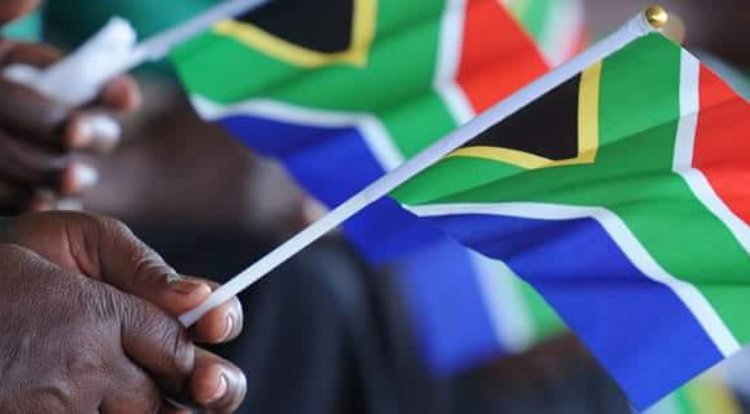
- Country:
- South Africa
The South African government has pledged to continue contributing positively to address the climate change emergency.
In a statement to the United Nations Secretary-General on the occasion of the Climate Summit in New York, President Cyril Ramaphosa said although developing countries historically contributed the least to global emissions, they will continue to be the most affected by climate change and its impacts.
"The world depends on us. We have seen the disastrous effects of climate change across the globe in the increased incidence and severity of extreme weather events such as flooding and droughts.
"Climate change science is clear that the risk for flooding originating from intense landfalling tropical cyclones and for prolonged drought in Southern Africa is increasing under continued global warming," said the President in the statement.
He said extensive research is ongoing in South Africa to quantify the likelihood of major climate change impacts occurring in the region over the next several decades, including multi-year droughts that compromise water security and heatwaves impacting on human health, livestock production and crop yield.
"The view of South Africa and Africa, as developing countries and as global citizens, is that the climate crisis cannot be solved outside of a development context. We see the crisis as an opportunity to strengthen global governance and that in addressing the crisis, we can meet the aspirations of the UN Agenda 2030 for Sustainable Development and the Sustainable Development Goals," the President said.
South Africa's National Development Plan 2030 identifies poverty, inequality, and unemployment as the most serious national development challenges. Overcoming this triple challenge fundamentally informs South Africa's approach to addressing climate change, President Ramaphosa said.
He said building resilience must strengthen development.
"In shifting to a low-carbon, inclusive, climate change resilient development path and embracing the global energy transition, we must ensure that we leave no one behind. At the same time, we must create new opportunities for all in our economy."
South Africa considers itself a good global citizen and it's National Climate Change Response Policy requires the country to make a fair contribution to the global effort in the context of its national development priorities. This, the President said, is what informs SA's Nationally Determined Contribution.
The mitigation challenge posed to South Africa is considerable, with 80% of the country's emissions from its energy sector. President Ramaphosa said South Africa recognizes the urgency with which it must reduce its dependence on fossil fuels and move towards a carbon-neutral future.
"The rapid fall in prices of renewable energy technologies, coupled with our immense renewable energy resources, has created a massive opportunity for us to make this shift. We are already doing so. South Africa's Renewable Energy Independent Power Producers Procurement Programme (REIPPP) is considered one of the world's leading Renewable Energy programs," said President Ramaphosa.
An energy secure future
South Africa's blueprint for energy security, the Integrated Resource Plan (IRP), will soon be finalized. The IRP calls for an energy mix that includes a significantly increased component of energy from renewable sources, as well as from traditional sources such as coal, natural gas, and nuclear energy.
"As many other countries around the world, including developed countries, are experiencing, we have to minimize the impact of such a transition on workers, communities and our economies as a whole," President Ramaphosa said.
He said the country, as part of ensuring a just transition, will need to put measures in place that plan for workforce reskilling and job absorption, social protection, and livelihood creation, incentivizing new green sectors, diversifying coal-dependent regional economies, and developing labor and social plans as and when aging coal-fired power plants are decommissioned.
"Taking all of these factors into consideration, it is clear that strong and durable social compacts will need to be forged between government, labor, business and civil society," he said.
South Africa has introduced a Carbon Tax and the implementation of the voluntary carbon budgets systems for large emitters.
As of the end of March 2019, the country had procured 6 422 Megawatts of electricity from 112 renewable energy Independent Power Producer (IPP) projects, including from wind, solar PV, concentrated solar power, landfill gas, hydro and biomass.
"We are also pursuing a largescale energy and climate change research and development programme geared towards mitigation solutions such as the use of fuel cells, using South Africa's abundant platinum resources," the President said in the statement.
(With Inputs from South African Government Press Release)
ALSO READ
-
Hotter Years, More Cavities? Understanding Link Between Climate and Dental Health
-
Mozambique Shapes New Climate Strategy to Protect Communities From Extreme Weather
-
Climate Change Is Deepening the Crisis for Millions Living Without a Nationality Today
-
Tunisia’s Water Crisis Puts Jobs and Growth at Risk as Economic Recovery Loses Speed
-
Climate Data Gaps Leave Communities Searching for Clear Answers to Growing Local Risks


 Google News