

NASA finalizes name for its Mars 2020 rover; to reveal on March 5
The event will stream live on NASA TV, Facebook, Ustream, YouTube, Twitter, and the agency's official website at 1:30 p.m. EST.
- Country:
- United States
NASA is set to reveal the name of its Mars 2020 rover during a live event on March 5. The Mars 2020 rover naming contest that was held last year drew more than 28,000 essays explaining why the proposed name should be chosen.
The final selection was made by Thomas Zurbuchen, associate administrator of NASA's Science Mission Directorate.
The event will stream live on NASA TV, Facebook, Ustream, YouTube, Twitter, and the agency's official website at 1:30 p.m. EST. Thereafter, a media teleconference will be held at 3:30 p.m to discuss the mission and name of the Mars 2020 rover.
Mars 2020 rover mission
The mission scheduled for launch in mid-July 2020 will probe a region of the Red Planet for signs of past microbial life and characterize the planet's climate and geology, paving the way for human exploration of Mars.
The Mars 2020 rover will collect core samples of soil and rock, and cache them on the Martian surface for their return on a potential future sample-retrieval mission. These samples could be analyzed by scientists in laboratories for evidence of past life on Mars and possible health hazards for future human missions.
Overall, the Mars 2020 mission has four science objectives:
- Looking for Habitability
- Seeking Biosignatures
- Caching Samples
- Preparing for Humans
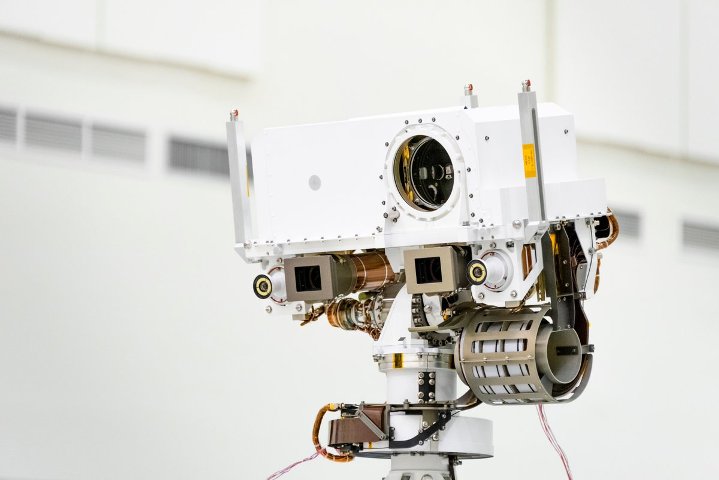
The rover will use the two scientific instruments mounted on its robotic arm to search for signs of past life. These instruments will provide high-resolution imaging and three types of spectroscopy to determine where to collect samples by analyzing the chemical, mineral, physical and organic characteristics of Martian rocks.
The mission is targeted for mid-July 2020 because at this time the rover will take less power to travel to Mars, owing to the good positions of Earth and Mars, relative to each other for landing on the Martian surface. The mission will launch aboard a United Launch Alliance Atlas V 541 rocket from Cape Canaveral Air Force Station, Florida, United States.


 Google News