

You can soon measure respiratory, heart rate in Google Fit app
Google says both the features have been developed in a way that they work in a variety of real-world conditions and for as many people as possible, adding that they completed initial clinical studies to validate them. For instance, while the heart rate algorithm relies on approximating blood flow from color changes in the fingertip, it also has to account for lighting, skin tone, age and other factors to work for everyone.
- Country:
- United States
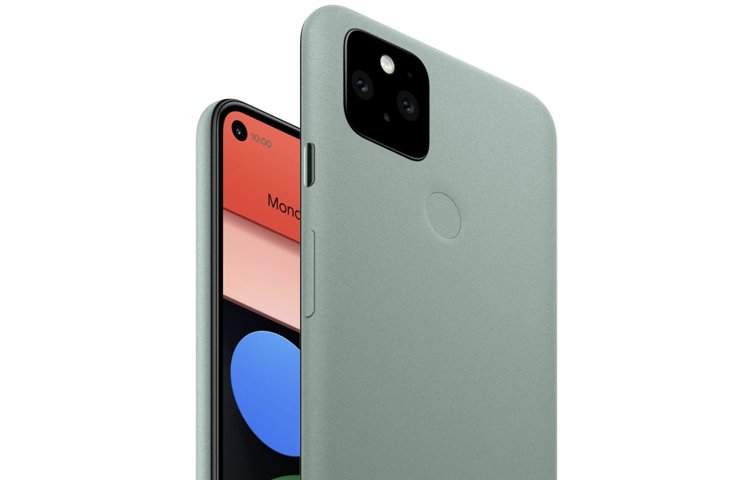
Pixel phone users will soon be able to measure and monitor their heart rate and respiratory rate using the phone' camera via the Google Fit app.
By tracking tiny physical signals at the pixel level such as chest movements and subtle changes in the color of a finger, the new features measure the respiratory rate and heart rate, respectively. The functionality will be available in the Google Fit app for Pixel phones starting next month and will also expand to other Android devices, Google said.
"While these measurements aren't meant for medical diagnosis or to evaluate medical conditions, we hope they can be useful for people using the Google Fit app to track and improve day-to-day wellness," Google said.
Google says both the features have been developed in a way that they work in a variety of real-world conditions and for as many people as possible, adding that they completed initial clinical studies to validate them. For instance, while the heart rate algorithm relies on approximating blood flow from color changes in the fingertip, it also has to account for lighting, skin tone, age and other factors to work for everyone.
How to measure your respiratory rate and heart rate in the Google Fit app?
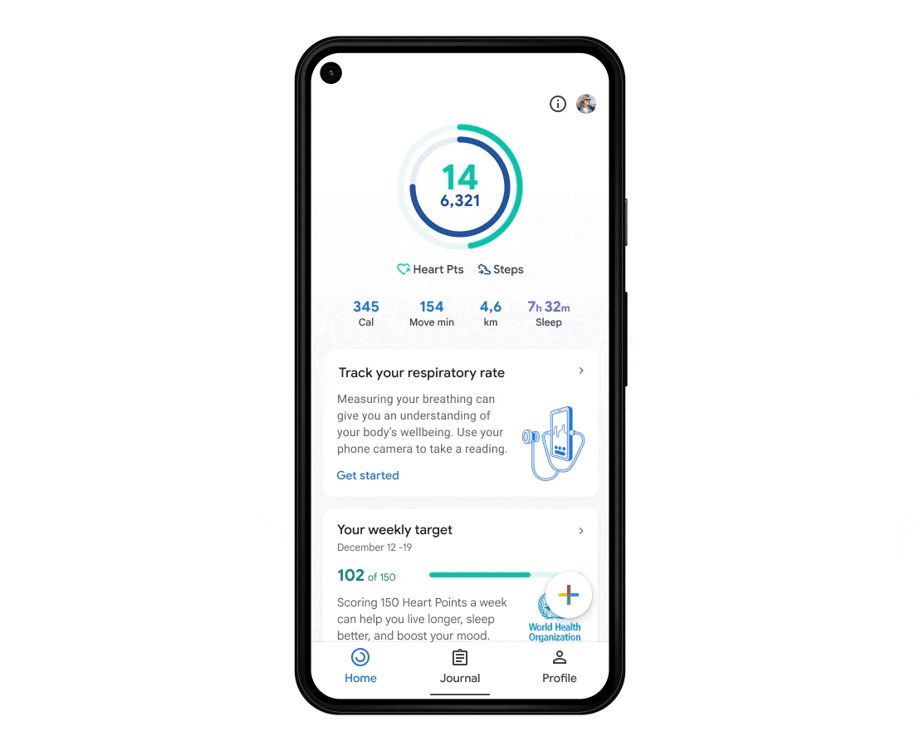
Respiratory rate
- Place your head and upper torso in view of your phone's front-facing camera and breathe normally
Heart rate
- Place your finger on the rear-facing camera lens
Additionally, you can save measurement data on the Google Fit app to monitor trends over time.
"With continued advances in hardware and software, sometimes the device that could be most helpful to your health and wellness is already in your pocket. Our team of researchers, engineers, and clinicians are exploring how everyday devices and inexpensive sensors can give people the information and insights they need to take control of their health.


 Google News