

AI and Spectroscopy join forces to fight the silent pandemic of AMR
Techniques such as Raman spectroscopy, Fourier-transform infrared (FTIR) spectroscopy, nuclear magnetic resonance (NMR), and near-infrared (NIR) spectroscopy provide detailed biochemical fingerprints of bacterial samples. Raman spectroscopy, for example, detects vibrational shifts in molecular bonds to differentiate between bacterial strains.
 COE-EDP
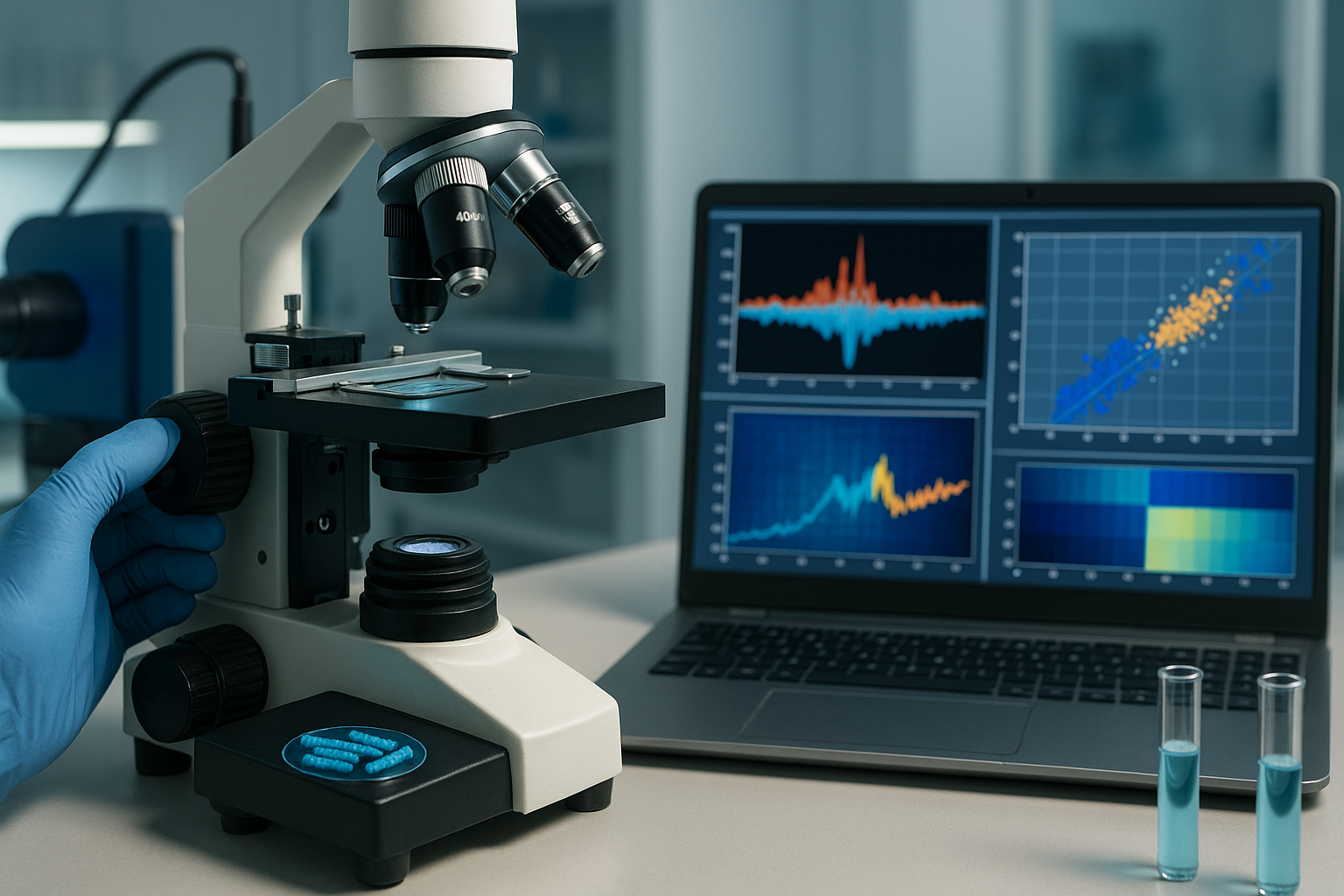
Global health systems are battling a silent pandemic that could claim more lives annually than cancer by 2050. Antimicrobial resistance (AMR), driven by the overuse and misuse of antibiotics in healthcare, agriculture, and industry, has rendered many life-saving drugs ineffective. The World Health Organization (WHO) now ranks AMR among the top 10 global public health threats, citing a growing number of infections that no longer respond to conventional treatment.
To address this health crisis, researchers from the Indian Institutes of Technology at Dharwad and Roorkee have published a comprehensive review in Photonics (2025, Vol. 12, Article 672) titled "Combating Antimicrobial Resistance: Spectroscopy Meets Machine Learning." The study presents a rigorous assessment of how integrating advanced spectroscopic techniques with machine learning models could transform the detection and monitoring of resistant pathogens across clinical, environmental, and agricultural settings.
Why traditional diagnostics are failing to meet the AMR challenge
Standard antimicrobial susceptibility testing (AST) methods, including disk diffusion, microdilution, and gradient diffusion, often require 16 to 24 hours to yield results, an unacceptable delay in many clinical scenarios where infections escalate quickly. Additionally, they rely heavily on culturing bacteria, a time-consuming process that adds subjectivity and complexity to the interpretation of results.
Even recent innovations such as dielectrophoresis and optoelectronic sensors, though faster, have not achieved widespread adoption due to their dependence on specialized equipment and susceptibility to environmental variables. The review argues that in order to deliver real-time, scalable diagnostics, there is a pressing need to transition from biology-centric methods to physics-based platforms that can capture bacterial responses at the molecular level without relying on lengthy culturing steps.
This is where spectroscopy becomes indispensable. Techniques such as Raman spectroscopy, Fourier-transform infrared (FTIR) spectroscopy, nuclear magnetic resonance (NMR), and near-infrared (NIR) spectroscopy provide detailed biochemical fingerprints of bacterial samples. Raman spectroscopy, for example, detects vibrational shifts in molecular bonds to differentiate between bacterial strains.
- FTIR spectroscopy tracks IR absorption linked to key biomolecules like proteins and lipids, offering a label-free diagnostic approach.
- NMR excels at revealing antibiotic-target interactions in structural detail, though its complexity limits clinical use.
- NIR and emerging hyperspectral or terahertz imaging techniques, while offering speed and spatial detail, generate high-dimensional data that cannot be analyzed manually, necessitating the use of machine learning.
How spectroscopy–AI combinations deliver fast, accurate resistance detection
The study analyses how machine learning algorithms can process and interpret the large, complex datasets generated by spectroscopic sensors. Supervised learning models, including support vector machines (SVM), decision trees, logistic regression, and random forests, are highlighted as highly effective tools for classifying bacterial phenotypes and predicting resistance profiles. These models have been successfully used to distinguish between antibiotic-resistant and sensitive strains using data from FTIR and Raman spectroscopy, often delivering results in minutes with accuracy levels exceeding 90 percent.
Unsupervised learning techniques such as principal component analysis and clustering methods are useful when annotated datasets are limited, enabling researchers to explore hidden patterns and anomalies in spectral data. Deep learning architectures, including convolutional neural networks and long short-term memory models, have been employed to analyze hyperspectral imaging outputs and temporal data from bacterial cultures. These networks autonomously extract complex features and eliminate the need for manual pre-processing, making them suitable for real-time, automated diagnostics.
The study also examines ensemble learning approaches, such as gradient boosting and AdaBoost, which combine multiple predictive models to enhance diagnostic reliability, particularly in imbalanced datasets where resistant strains may be underrepresented. The authors further explore emerging methodologies like transfer learning, which adapts pre-trained models to new datasets, and reinforcement learning, which simulates treatment optimization in silico by modeling pathogen responses to different antibiotics.
This integration of machine learning not only speeds up data interpretation but also enhances diagnostic resolution, enabling the identification of subtle phenotypic differences that may go unnoticed through conventional means. When combined with spectroscopy, these models create a dynamic platform capable of rapid, high-throughput, and precise resistance profiling across a wide range of pathogens.
Toward scalable, portable, and globally relevant AMR diagnostics
The authors emphasize that this spectroscopic machine learning paradigm holds tremendous promise for real-world applications across healthcare, agriculture, and environmental surveillance. In hospital settings, it can facilitate faster, more accurate prescriptions and reduce the misuse of antibiotics that accelerates resistance development. In agriculture, these platforms can help monitor and mitigate the spread of resistance genes in livestock, soil, and water. Environmental agencies could use such tools to track resistant pathogens in wastewater or community samples, providing early warnings of emerging public health threats.
Notably, the study highlights significant implementation barriers. These include high capital costs for spectroscopic hardware, lack of standardization in diagnostic protocols, and challenges in interpretability, particularly with deep learning models often perceived as "black boxes." The authors call for the creation of open-access spectral databases, the development of interpretable AI frameworks, and international collaboration to establish diagnostic standards. They advocate for portable, low-cost AST platforms that can be deployed in resource-limited settings, along with cloud-integrated infrastructure to enable mobile diagnostics and telemedicine applications.
In addition to the technical framework, the authors stress that these diagnostic advances must be embedded within broader antimicrobial stewardship strategies. Regulatory reforms, public awareness campaigns, and global funding initiatives like the Global Antibiotic Research and Development Partnership (GARDP) and CARB-X must work in tandem with technological innovation to deliver scalable solutions.
- FIRST PUBLISHED IN:
- Devdiscourse


 Google News